
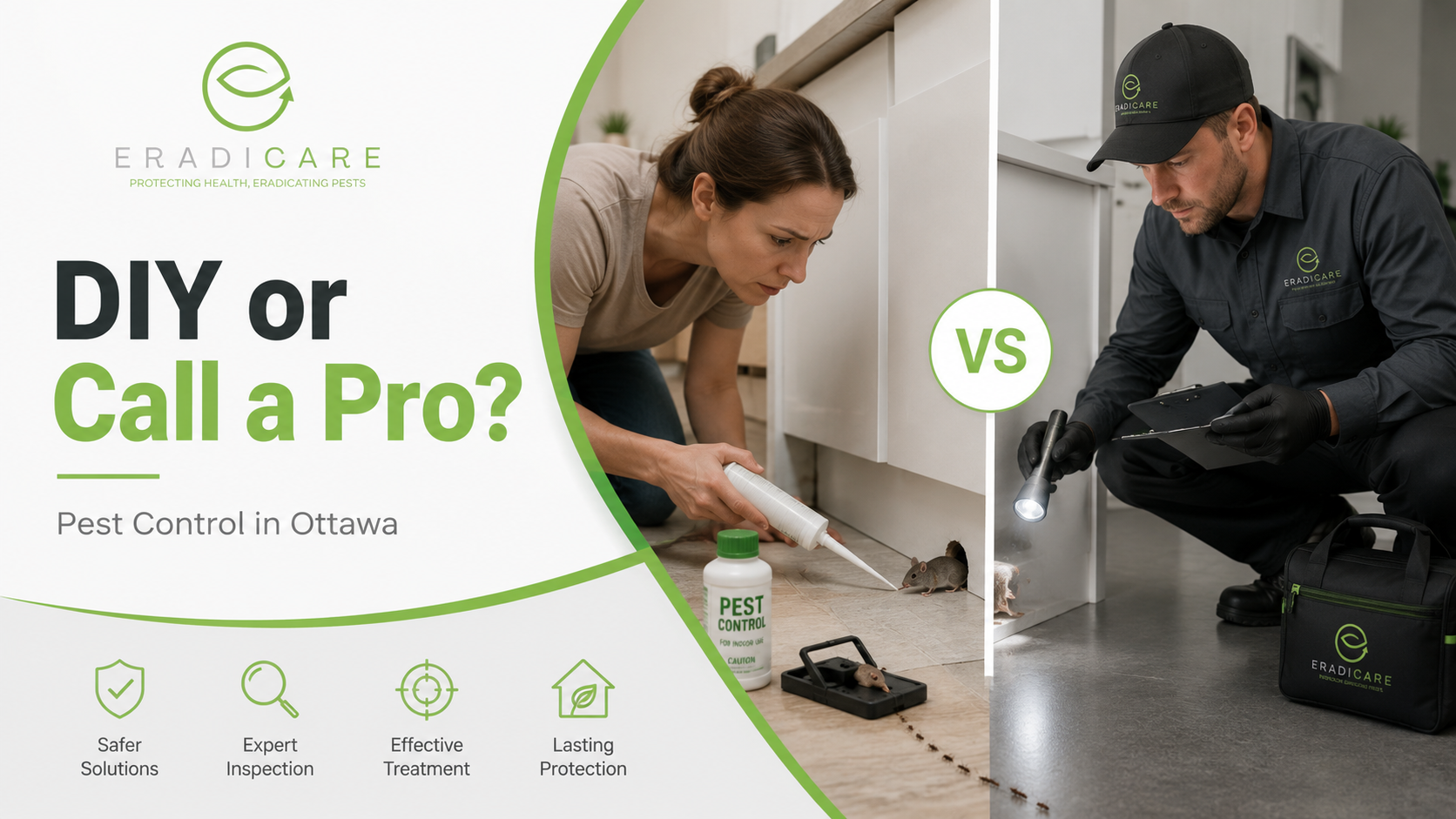
Trying a trap, cleaning an affected area, or sealing a known entry point can be a sensible first step. The problem starts when the pest is misidentified, the source is hidden, or repeated DIY treatments only reduce what you can see.
DIY pest control usually suits a small, clearly identified problem that is easy to reach and monitor. Professional help becomes more practical when activity returns, spreads through the property, involves a concealed nest or harbourage, or creates safety and food-handling concerns.
This guide compares DIY vs professional pest control in Ottawa so you can judge the cost, risk, and likely value of each option before deciding what to do next.
The Quick Answer
DIY pest control may be enough when you know exactly which pest you are dealing with, the evidence is limited to one accessible area, and simple measures can remove the source.
That might mean removing an infested pantry product, repairing a torn screen, cleaning an ant attractant, setting an appropriate mouse trap, or sealing a confirmed exterior gap.
Professional service becomes the stronger option when you cannot identify the pest, activity continues after treatment, several rooms or units are involved, or the source sits inside a wall, mattress, appliance, attic, roofline, or underground cavity.
The same applies when the problem involves bed bugs, established cockroach activity, rats, hidden wasp nests, possible structural pests, or contamination in a food-handling area.
Before buying another product, ask yourself four questions. Do I know which pest this is? How far has it spread? Can I safely reach the source? What could happen if I use the wrong method?
When those answers are unclear, Pest Inspection Ottawa may provide more value than another round of trial and error.
DIY vs Professional Pest Control at a Glance
DIY gives you control over timing and may cost less at the beginning. It works best when the pest is familiar, the affected area is small, and practical changes such as cleaning, trapping, moisture control, or exclusion can address the cause.
Professional pest control adds identification, inspection, property assessment, treatment planning, and follow-up where needed. That extra work matters when visible pests are only a small part of a larger colony, nest, or entry problem.
A store-bought product may kill an insect or capture a rodent that crosses it. It will not necessarily tell you where the pest came from, whether reproduction is taking place, or which property condition is allowing the activity to continue.
DIY also places the responsibility for product selection, application, monitoring, cleanup, and safety on the person carrying out the work.
Professional service costs more upfront in many cases, but it may prevent repeated purchases and delays when the issue requires more than a simple household response.
The better choice is the one that addresses the source with the least unnecessary risk, time, and repeat work.
When DIY Pest Control May Be Reasonable
DIY does not automatically mean ineffective. A careful household response can manage some limited pest problems.
The key is knowing whether the issue is genuinely small enough to handle without specialist access, equipment, or identification.
The Pest Is Correctly Identified
Correct identification should come before treatment.
A small brown insect could be a bed bug, cockroach nymph, beetle, tick, or another household pest. Flying insects using a wall opening could be wasps, bees, flies, or insects that are simply passing through.
Treating the wrong pest wastes time and may remove evidence that would have helped with identification.
Use a clear specimen, a close photograph, the finding location, and the insect’s behaviour to narrow down the possibilities. When possible, preserve the specimen in a sealed container.
DIY becomes more realistic once the pest group is clear and you can confirm that the chosen method suits both the species and the location.
The Problem Is Small and Accessible
A limited problem is easier to inspect, control, and monitor.
One short ant trail beside an exterior door is different from ants emerging from several walls. One mouse caught near a confirmed entry point is different from fresh droppings appearing in a basement, kitchen, and ceiling space.
DIY may be appropriate when evidence is confined to one accessible area and there are no signs of breeding, structural damage, contamination, or movement into connected rooms.
You should also be able to examine the likely source without opening a wall, entering an unsafe space, climbing near active insects, or dismantling equipment.
When you can see the pests but cannot find their route, harbourage, or attractant, the problem may be larger than it first appears.
Non-Chemical Control Is Practical
Some pest problems respond better to practical changes than to immediate pesticide use.
Removing an infested food item, repairing a leak, cleaning grease, setting an appropriate trap, reducing clutter, or sealing a confirmed gap may remove the condition supporting the activity.
These steps can also improve the result if professional service is needed later.
For occasional invading insects, a repaired screen or door sweep may provide more lasting value than repeated indoor spraying. Pantry pests may decline once the affected product is found, discarded, and the storage area is cleaned.
DIY is a stronger choice when practical changes remove the source and monitoring shows that activity is decreasing.
When a Professional Exterminator Makes More Sense
Professional help becomes more valuable as uncertainty, risk, and treatment complexity increase.
The goal is not to call an exterminator for every isolated insect. It is to recognize when further DIY attempts are unlikely to reach the source.
The Pest or Evidence Is Uncertain
Misidentification can lead to unnecessary treatment and lost time.
Bite marks do not confirm bed bugs. A large black ant is not automatically a carpenter ant. Winged insects may be ants, termites, wasps, or bees. Small droppings can also be mistaken for seeds, insect debris, or building material.
A professional inspection can connect the specimen with its behaviour, likely harbourage, entry route, and the conditions around the property.
That matters when the possible pests require completely different responses.
Applying a product before confirming the pest may reduce what you see while leaving the real source untouched.
The Nest or Harbourage Is Hidden
Many pests spend most of their time in protected spaces.
Cockroaches may hide behind appliances, inside cabinet gaps, or around plumbing. Bed bugs may remain inside box springs, furniture joints, and upholstered seating. Ant colonies can occupy soil, roof areas, wall voids, or damp wood.
Mice and rats may travel through ceilings, basements, walls, attics, and utility routes. Wasps can use soffits, ground openings, roof gaps, and concealed structural cavities.
Treating the pests that emerge from these locations may reduce activity for a time without addressing the nest or harbourage.
Professional service becomes more practical when the source cannot be inspected or reached safely.
Activity Is Spreading or Returning
Recurring activity usually means the source, entry route, or supporting condition remains.
The warning signs depend on the pest. Cockroach nymphs can point to continuing development. Bed bug evidence in another room may indicate wider movement. Fresh rodent droppings after trapping can suggest that an entry point remains open.
Ant trails returning after repeated treatment may mean the colony is still active. Wasps appearing indoors can indicate a hidden nest or a route through the structure.
Using several products in different areas may also make the pattern harder to interpret.
Professional Cockroach Control, Bed Bug Treatment, Ant Control Ottawa, or Rodent Control Ottawa may be appropriate when evidence continues despite reasonable cleaning, monitoring, trapping, or entry-point work.
Safety or Property Risks Are Higher
Some pest problems involve more than inconvenience.
A wasp nest beside a doorway, walkway, patio, or play area creates a sting risk. Rodent droppings and contaminated materials require careful handling. Large ants near damp or damaged wood may indicate a moisture problem that needs further investigation.
Pests in food-preparation areas can affect sanitation and daily business operations. Treatment around children, pets, aquariums, or sensitive occupants also requires careful placement and access planning.
Height adds another concern. Working from a ladder near an active wasp nest or inspecting a roof area during pest activity can create both fall and sting risks.
Professional support is more suitable when the work requires controlled access, specialist equipment, structural investigation, or treatment around sensitive spaces.
Why Correct Pest Identification Matters
Pest-control methods need to match the species, behaviour, life cycle, and hiding location.
Ants foraging from an outdoor colony require a different response from carpenter ants using damp wood. Carpet beetle larvae should not be treated as bed bugs simply because they were found near a mattress.
Rodent control also changes depending on whether the animal is a mouse or rat, where it travels, what food is available, and which openings allow entry.
The wrong product may kill visible pests while leaving eggs, young insects, queens, colonies, or entry routes unaffected.
Correct identification also prevents unnecessary treatment of harmless or beneficial insects. Solitary wasps, outdoor spiders, and insects that accidentally enter through an open door may not require indoor pesticide use.
When the evidence is unclear, preserving a specimen or arranging identification is usually more useful than testing several unrelated products.
DIY Product Safety in Ontario
Household pest-control products must be used for the pest, location, and purpose shown on the label.
The label explains where the product can be applied, how it should be used, which precautions are required, and how people or animals should be kept away from the treated area.
Buying a product from a familiar retailer does not remove the need to read those instructions.
Check the PCP Registration Number
Look for a Pest Control Product registration number on the Canadian label before purchasing or applying a pesticide.
Avoid unlabelled, transferred, homemade, or imported products when the ingredients and approved uses are unclear.
A registration number does not mean the product is suitable for every pest or every area of the home. It means the product has approved uses that still need to be followed.
When the label does not list your pest or intended application area, choose a different approach.
Follow the Pest and Location on the Label
A product intended for outdoor use should not be assumed suitable for a kitchen, bedroom, wall void, pet area, or food-storage space.
A product labelled for one insect may also be unsuitable for another, even when the pests look similar.
Read the instructions covering food surfaces, ventilation, storage, disposal, protective equipment, and access after treatment.
Baits, traps, and treated materials should not be placed where children or pets can reach them unless the product design and label permit that placement.
Pet-Safe Pest Control should mean planning around the specific animal, product, placement, property layout, and instructions. It should not be presented as a general promise that applies to every treatment.
Avoid Mixing or Overapplying Products
Using more product does not improve a poorly matched treatment.
Overapplication can increase exposure, affect unsuitable surfaces, and make monitoring more difficult. Mixing products may also interfere with how a bait or treatment is intended to work.
Spraying around insect bait, for example, may change how pests approach the area. Constantly switching between products also makes it difficult to judge which action affected the activity.
Use one clear plan and monitor the results.
When a professional treatment is already in place, speak with the provider before adding a store-bought product.
The Real Cost of DIY Pest Control
DIY often appears cheaper because the first product or trap costs less than a professional visit.
The real expense may include several products, replacement traps, protective equipment, cleaning supplies, discarded food, damaged belongings, travel time, and repeated attempts.
Your time matters as well. Inspecting rooms, moving furniture, checking traps, cleaning evidence, and researching products can take hours.
Delaying the right response may also increase the scope if pests reproduce, spread through belongings, or move into connected rooms or units.
Professional service has its own costs. Depending on the problem, the quote may cover inspection, treatment, preparation guidance, monitoring, and follow-up. Structural repairs, plumbing, cleaning, or damaged-material removal may be separate.
Neither option is automatically cheaper.
DIY may offer better value for a simple and well-understood issue. Professional service may cost less overall when early identification and a targeted plan prevent repeat purchases or wider activity.
Pest Control Cost Ottawa explains how pest type, property layout, access, severity, and service scope can affect a quote.
What Professional Pest Control Includes
Professional pest control should involve more than applying a product.
Its value comes from identifying the pest, assessing the source, selecting a suitable approach, explaining limitations, and reviewing the conditions that may allow the activity to continue.
Inspection and Evidence Mapping
An inspection normally begins where evidence has appeared.
The technician may review specimens, trails, droppings, shed skins, damage, nesting material, food sources, moisture, and possible entry routes.
The affected rooms, exterior areas, furniture, appliances, or structural spaces may also need examination.
Mapping the evidence helps determine whether the problem is limited or connected across several locations.
In apartments and townhouses, shared walls, plumbing routes, or neighbouring units may need consideration.
A useful inspection should help explain where the pest is active, how it may be entering, and which property conditions support it.
A Treatment Plan Based on the Pest
The plan should reflect the identified pest and the way the property is used.
A rodent problem may involve trapping, monitoring, sanitation, and proofing. Cockroach control may require harbourage assessment, food and moisture reduction, targeted treatment, and follow-up.
Bed bugs involve different inspection, preparation, and furniture considerations. Wasp work depends heavily on the nest location, access, and sting risk.
The most visible part of the service is not always the most important.
Ask why the proposed method fits the evidence and which areas are included.
Monitoring and Follow-Up
Monitoring helps show whether pest activity is declining, continuing, or shifting location.
Depending on the pest, this may involve traps, visual checks, activity records, or another visit.
A quiet day does not always confirm that the problem has ended. A steady decline with no fresh evidence provides more useful information.
Before the service begins, ask what activity may continue, what should be reported, and whether follow-up is included or charged separately.
Prevention Recommendations
Treatment cannot correct every property condition.
Damaged screens, open utility gaps, plumbing leaks, food residue, clutter, waste problems, or moisture-damaged wood may continue supporting pest activity.
Some changes can be completed by the occupant. Others may need a plumber, roofer, carpenter, property manager, or another contractor.
Professional pest control does not automatically repair the building.
A clear service plan should explain which work is part of the pest treatment and which conditions need separate attention.
DIY vs Professional Treatment by Pest
The suitability of DIY treatment changes considerably between pests.
An approach that works for a pantry insect may not be appropriate for cockroaches, bed bugs, rodents, or a concealed wasp nest.
Ants
DIY may be reasonable for a short outdoor ant trail entering through a known gap.
Clean the food residue, dry nearby moisture, trace the route, and inspect the exterior entry area.
Professional Ant Control Ottawa becomes more useful when trails return, ants appear in several rooms, winged ants emerge indoors, or large ants are found near damp wood.
Treating visible workers may not reach a concealed colony. Species identification and nest location matter more than the number of ants on the counter.
Cockroaches
Cockroaches become harder to manage once they are reproducing inside kitchens, bathrooms, appliances, or connected units.
Food residue, grease, leaks, cardboard, and clutter need attention alongside treatment. Applying a product without correcting those conditions may leave the property suitable for continued activity.
DIY may help with prevention or one isolated introduction when no further evidence appears.
Professional Cockroach Control is more appropriate when you find nymphs, egg cases, fresh droppings, repeated sightings, or evidence in several rooms.
Unplanned spraying may also interfere with monitoring or a coordinated bait plan.
Bed Bugs
Bites alone do not confirm bed bugs.
A live insect, dark spotting, shed skins, or eggs near a mattress, bed frame, couch, or other harbourage provides stronger evidence.
DIY inspection can help document signs. Random spraying, uncontrolled heating, and moving furniture may complicate the problem or create additional risks.
Professional Bed Bug Treatment makes more sense when the pest is confirmed, evidence appears in more than one area, or the property is an apartment, hotel, residence, or care facility.
Avoid changing sleeping rooms or discarding furniture before receiving a clear plan.
Mice and Rats
A limited mouse issue may respond to suitable trapping, food control, and proofing.
Trapping alone will not resolve the source when an entry point remains open. Rodent bait should not replace sanitation and exclusion.
Professional Rodent Control Ottawa becomes more useful when droppings appear in several places, activity continues after trapping, rats are suspected, or the route involves inaccessible walls, ceilings, roofs, or commercial areas.
Damaged wiring, insulation, contaminated materials, and structural openings may need separate repair or cleanup.
Wasps and Hornets
A visible nest may look easy to remove, but the practical risk depends on the insect, nest position, height, and surrounding activity.
A small nest far from people may sometimes be monitored. A concealed wall nest, a ground colony beside a path, or an aerial nest above a doorway requires greater caution.
Do not seal an active entrance or work from an unstable ladder near defensive insects.
Wasp and Hornet Removal Ottawa may be appropriate when wasps are appearing indoors, access is difficult, traffic is heavy, or children, pets, and allergy concerns affect the area.
Occasional Insects and Pantry Pests
DIY is often suitable for insects introduced in stored food or those that enter accidentally from outdoors.
The most important step is finding the source.
Inspect dry foods, remove affected products, clean shelves, use closed containers, and watch for further activity.
An occasional outdoor insect may call for a repaired screen, door sweep, or sealed gap rather than an indoor pesticide treatment.
Professional identification becomes useful when activity continues after source removal, several rooms are involved, or the insect remains unknown.
Pest Control Around Children and Pets
Children and pets affect how traps, bait, equipment, and treated areas should be managed.
Floor-level products, open traps, powders, and accessible devices can create problems when normal household movement is not considered.
Tell the pest-control provider about children, dogs, cats, birds, reptiles, aquariums, and small animals before treatment.
Pet feeding and sleeping areas may also influence pest activity. Food left out can support ants, cockroaches, and rodents, while pet bedding may need inspection during flea or bed bug concerns.
Do not restrict an animal’s necessary food, water, or medication without suitable care advice.
DIY is not automatically safer because a product is sold for household use. Professional treatment is not automatically free from risk either.
In both cases, the specific product, placement, label, access restrictions, and preparation instructions matter.
Ottawa Seasonal Factors to Consider
Season changes which pests are visible and where they are likely to appear.
Spring often brings more ant activity and the early stages of wasp nest building. Limited outdoor foraging may respond to cleaning, monitoring, and entry-point repair. Indoor winged ants or repeated activity inside the structure deserve closer identification.
Summer brings more ants, wasps, flies, mosquitoes, and outdoor food-related activity. DIY prevention may reduce attractants, but hidden nests and commercial patio problems can require professional assessment.
Late summer and fall are important periods for wasp activity and rodent proofing. Mice and rats begin looking for stable food and shelter as outdoor conditions change. Repairing confirmed entry points before winter can reduce indoor pressure.
Cockroaches and bed bugs may remain active throughout winter inside heated buildings. Rodents can also continue nesting and travelling through basements, walls, attics, and utility spaces.
Seasonal Pest Control Ottawa should connect the timing with the actual pest and property condition rather than applying the same treatment schedule to every situation.
DIY Pest Control in Apartments and Rentals
Pest activity in an apartment may extend beyond a single unit.
Cockroaches, bed bugs, mice, ants, and other pests may move through shared walls, plumbing openings, hallways, utility routes, and personal belongings.
A tenant can clean, monitor, manage accessible food, and report maintenance concerns. Individual DIY treatment may not resolve activity coming from elsewhere in the building.
Report suspected pests promptly and keep records of sightings, photographs, affected locations, and products already used.
Avoid moving infested furniture or belongings into hallways, shared storage, garbage rooms, or neighbouring units.
Landlords and property managers should review the current requirements that apply to inspection, treatment planning, communication, access, and reinspection.
Responsibility in a particular dispute may depend on the property condition, tenancy circumstances, and applicable rules. An appropriate housing authority or legal professional may need to advise on those questions.
Residential Pest Control may be more useful than repeated unit-level treatment when shared routes or neighbouring units are involved.
DIY Pest Control in Ottawa Businesses
Businesses need to consider more than whether a retail product can kill the visible pest.
Restaurants, cafés, hotels, schools, daycares, healthcare settings, warehouses, and offices may need controlled access, sanitation records, monitoring, treatment documentation, and staff communication.
Food businesses must also protect ingredients, equipment, packaging, and food-contact surfaces.
Uncoordinated product use can interfere with monitoring or place treatments in unsuitable areas.
A commercial assessment may need to cover receiving, storage, preparation, waste, drains, structural gaps, staff spaces, and customer areas.
Commercial Pest Management may suit properties that need scheduled inspection, documented findings, coordinated treatment, and ongoing prevention.
Each business should also review the pest-control and preventive requirements that apply to its operation.
How to Choose a Professional Exterminator
Compare companies by the clarity and scope of the proposed service, not only the first price.
A provider should be able to explain the suspected pest, affected areas, recommended approach, preparation requirements, safety instructions, and expected follow-up.
Verify Licensing and Insurance
Ask the company about the credentials required for the work being performed in Ontario.
Current insurance information may also be relevant when service involves access to homes, rentals, commercial properties, or sensitive areas.
Licensing does not guarantee a specific outcome. It does help show that regulated work is being carried out through an appropriately qualified business and technician.
Do not rely only on a logo, uniform, advertisement, or online review.
Ask for a Written Scope
A written quote should identify the rooms, exterior areas, or structures included in the service.
It should also explain preparation, monitoring, follow-up, access limitations, and any work outside the pest-control scope.
When relevant, ask whether furniture, appliances, attics, crawl spaces, roof areas, neighbouring units, or exterior structures are included.
Structural repairs, deep cleaning, contaminated-material removal, and waste handling may require separate providers.
A clear written scope makes competing quotes easier to compare.
Confirm Preparation and Safety Instructions
Preparation should match the pest and treatment method.
Ask what needs to be moved, cleaned, covered, bagged, or left undisturbed. Confirm the arrangements for children, pets, aquariums, food, medication, and sensitive equipment.
Avoid beginning extensive preparation before receiving instructions. Unnecessary movement can spread bed bugs or remove useful pest evidence.
How to Prepare for Pest Control Treatment provides general guidance, but the instructions for the specific service should take priority.
Understand Follow-Up and Guarantee Terms
Terms such as guarantee, warranty, follow-up, and re-treatment can mean different things between companies.
Ask how long the terms apply, which pests and treatment areas are covered, what preparation is required, and which conditions can affect the coverage.
Confirm whether a return visit is included, discounted, or charged separately.
A guarantee does not replace sanitation, building repair, exclusion, or cooperation between connected units.
The agreement should explain the responsibilities of both the provider and the property occupant.
How to Prevent the Pest From Returning
Long-term control depends on removing the conditions that allowed the problem to develop.
Food control matters for ants, cockroaches, rodents, flies, and pantry pests. Moisture control is particularly important around kitchens, bathrooms, basements, plumbing, and damaged wood.
Exclusion can reduce entry through doors, windows, foundations, siding, roof gaps, vents, and utility openings.
Clutter reduction removes harbourage and improves inspection access. Waste management deserves special attention in restaurants, apartment buildings, and properties with shared garbage areas.
Continue monitoring after visible activity declines. Check the original problem area and nearby rooms for new evidence.
Follow the service instructions before cleaning treated surfaces or sealing an active pest route.
What to Do After Pest Control Treatment provides broader aftercare guidance, while the pest-specific plan should determine the correct timing.
A Simple DIY-or-Professional Decision Checklist
Choose DIY when you can identify the pest confidently, the activity is limited to one accessible area, and practical steps can remove the source.
DIY is also more reasonable when there are no signs of breeding, no concealed nest, no contamination concern, and no need to coordinate treatment across several rooms or units.
Choose professional help when identification remains uncertain, activity returns, or evidence spreads.
An inspection is also a better fit when the source is inside a wall, attic, mattress, appliance, roof space, soil cavity, or another difficult location.
Stop experimenting when several products have already failed, children or pets may contact the treatment, property damage is possible, or the pest affects food, tenants, customers, or sensitive occupants.
The decision should be based on the evidence and practical risk, not embarrassment or fear.
Key Takeaways
- DIY pest control works for small, accessible problems with clearly identified pests, while professional help suits complex or recurring issues.
- Professional services offer more benefits like pest identification, treatment planning, and follow-up, which can prevent further infestations.
- Before attempting DIY treatments, assess your knowledge of the pest, the extent of the issue, and whether practical changes can eliminate the source.
- Consider professional help when the pest is unidentified, if activity returns, or if there are safety concerns regarding food or children.
- In Ottawa, thorough pest control analysis should guide your decision, balancing cost, time, and the potential for re-infestation.
Frequently Asked Questions
Is DIY Pest Control Actually Cheaper Than Hiring an Exterminator?
It can be cheaper for a small, correctly identified problem. Include products, equipment, time, repeat attempts, cleanup, and possible damage when comparing the real cost.
Which Pest Problems Can I Reasonably Handle Myself?
Limited pantry pests, occasional outdoor insects, a known entry gap, or a small rodent problem may suit DIY control. The pest should be identified, accessible, and low-risk.
How Many DIY Attempts Should I Make Before Calling a Professional?
Stop when activity returns, spreads, or shows signs of reproduction. Repeatedly buying products without finding the source can increase the cost without resolving the problem.
Can Store-Bought Pest-Control Products Work as Well as Professional Products?
Some household products work when used for the correct pest and location. Professional value often comes from inspection, access, planning, monitoring, and follow-up rather than the product alone.
How Do I Know Whether a Pesticide Is Approved for Use in Canada?
Look for a Pest Control Product registration number on the label. The label should also identify the approved pest, treatment location, directions, and precautions.
Is DIY Pest Control Safe Around Children and Pets?
Safety depends on the product, placement, label, and household. Keep products and equipment inaccessible as directed, and do not assume one product suits every pet, child, or room.
Can DIY Sprays Make Cockroaches or Bed Bugs Harder to Control?
Unplanned spraying may interfere with bait, monitoring, or an existing treatment plan. It can also move activity away from the treated area without reaching the main harbourage.
Should I Call an Exterminator for One Mouse?
One mouse may sometimes be managed through suitable trapping, sanitation, and proofing. Professional help makes more sense when evidence continues, several areas are affected, or the entry point cannot be found.
Can a Tenant Arrange DIY Pest Control in an Ottawa Apartment?
Tenants can clean, monitor, and report evidence. They should avoid treatments that interfere with a building-wide plan, especially when connected units or shared routes may be involved.
What Should a Professional Pest-Control Inspection Include?
It should assess the pest, physical evidence, affected areas, likely harbourage or entry route, supporting conditions, safety concerns, and treatment limitations.
How Do I Check Whether an Exterminator Is Licensed in Ontario?
Ask the company for its applicable licensing details and confirm them through the appropriate Ontario government resource. Request insurance information and a written service scope as well.
What Affects Professional Pest-Control Cost in Ottawa?
Cost may depend on the pest, affected areas, property layout, access, preparation, treatment plan, monitoring, follow-up, and whether connected units or commercial requirements are involved.
Still Unsure Which Option You Need?
DIY may be enough for a small, identifiable, and accessible problem. Recurring activity, uncertain evidence, concealed nests, several affected areas, or higher safety risks usually justify professional assessment.
For help deciding which approach fits your Ottawa property, call Eradicare Pest Control at 613-366-4444. Explain what you found, where the activity is occurring, and which DIY products or prevention steps you have already tried.