

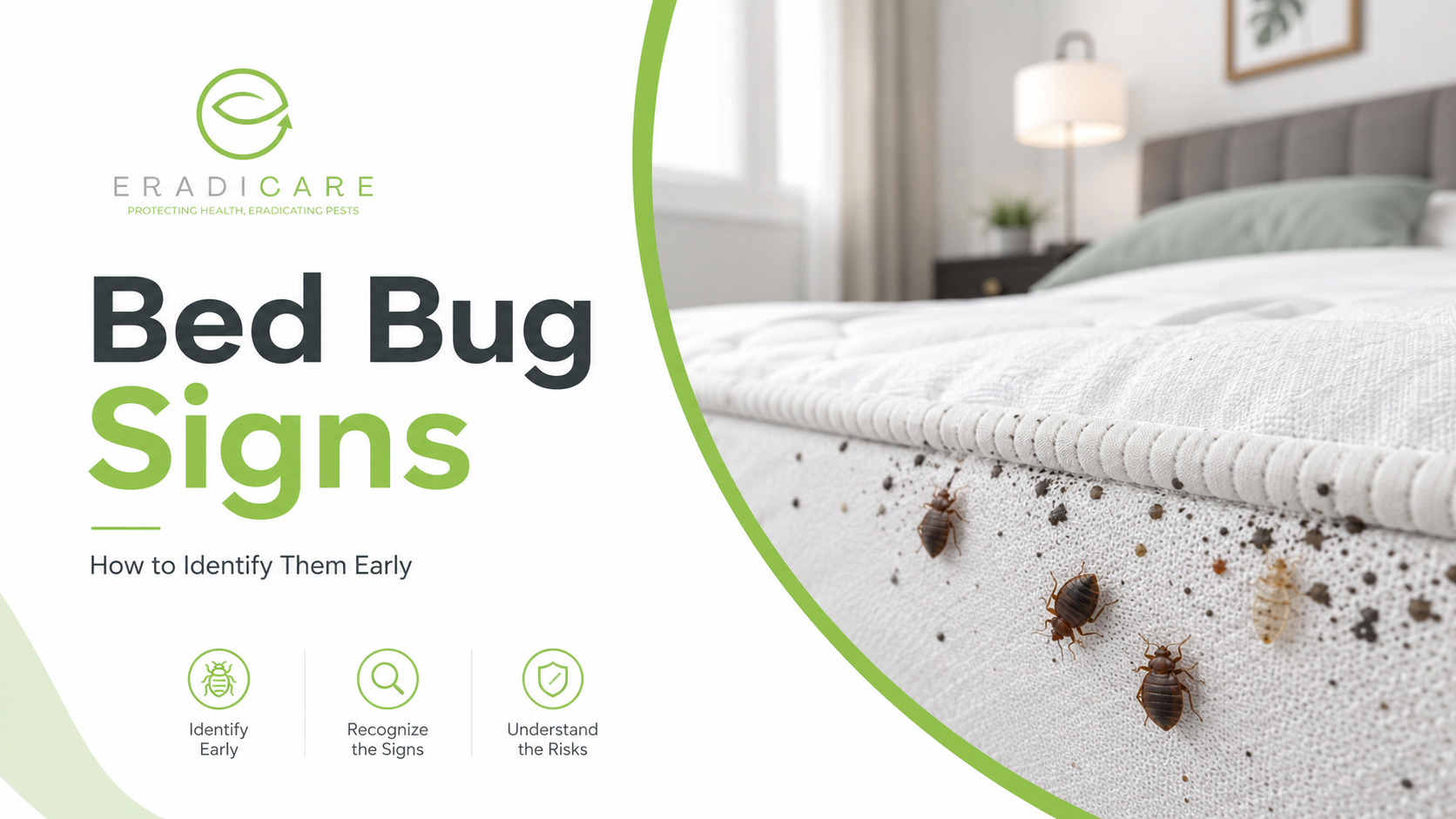
Bed bugs are easier to identify from physical evidence than from bite marks. A live insect, dark spotting around mattress seams, shed skins, or eggs tells you far more than an unexplained rash.
They can appear in houses, apartments, hotels, student residences, care facilities, and other places where people sleep or rest. A clean property is not protected from bed bugs because they usually arrive on luggage, furniture, clothing, or personal belongings.
This guide explains what bed bugs look like, which signs deserve attention, where to inspect, how they spread, and when professional Bed Bug Treatment may be appropriate.
Quick Guide to Identifying Bed Bugs
Start with the bed, couch, or chair where the affected person regularly sleeps or rests.
Adult bed bugs are flat, oval, and reddish-brown. After feeding, they may look darker and more rounded. Young bed bugs, called nymphs, have a similar shape but are smaller and often much paler.
Finding a live bed bug in a mattress seam, box spring, bed frame, headboard, couch, or nearby crack is the strongest direct evidence.
Dark spotting, pale shed skins, and tiny eggs can also point to an active harbourage. A harbourage is a narrow, protected place where bed bugs hide and reproduce.
Blood spots on bedding may support other evidence, but they do not confirm an infestation by themselves. Bite marks are even less reliable because they can resemble reactions caused by fleas, mosquitoes, irritation, or other conditions.
When you find a suspicious insect, place it in a sealed container or take a sharp close-up photograph. Avoid crushing it if you may need professional identification.
What Do Bed Bugs Look Like?
The common bed bug, Cimex lectularius, is a small, wingless insect with a flattened body.
That flat shape allows it to fit into mattress seams, screw holes, furniture joints, and narrow cracks close to sleeping areas. A room can be inspected regularly while insects remain hidden in places that are difficult to see.
Adult Bed Bugs
An unfed adult bed bug is broad, flat, and oval. Its colour is usually brown or reddish-brown.
People often compare its general shape and size to an apple seed. That comparison is useful, but appearance changes after feeding. A recently fed insect may look longer, darker, and more swollen.
Adults have six legs and two antennae. They crawl rather than jump and do not have functional wings.
A brown insect on a mattress is worth checking, but colour alone cannot confirm its identity. Small beetles and cockroach nymphs are among the insects commonly mistaken for bed bugs.
Bed Bug Nymphs
Nymphs are immature bed bugs. They have the same broad body shape as adults but are smaller and often pale or nearly translucent.
Very young nymphs can be difficult to notice against light-coloured sheets, fabric, or furniture. After feeding, the darker blood meal may be visible through their lighter outer covering.
Several nymphs of different sizes can suggest that bed bugs have been developing nearby rather than arriving as one recent hitchhiker.
Bed Bug Eggs and Shed Skins
Bed bug eggs are tiny, pale, and easy to confuse with lint or other household debris.
They are usually found in protected seams, fabric folds, furniture joints, and cracks. Their location is often as important as their appearance.
As nymphs develop, they shed their outer skins. These cast skins are pale and keep the general shape of the insect.
Shed skins around mattress piping, bed-frame joints, or a headboard show that development has taken place in or close to that area.
The Most Reliable Signs of Bed Bugs
Not every stain, insect, or skin mark has the same value.
Direct physical evidence should guide your decision. One correctly identified bed bug or several connected signs around a sleeping area carry more weight than an unexplained bite.
Live Bed Bugs
A correctly identified live bed bug is the clearest sign of current activity.
Inspect mattress seams, box-spring fabric, bed-frame joints, screw holes, headboards, and nearby upholstered furniture. Bed bugs usually remain hidden during the day, so a quick look across the top of the mattress may reveal nothing.
If possible, preserve the insect for Pest Inspection Ottawa rather than relying on a blurry or distant photograph.
Dark Spots Near Mattress Seams
Small dark brown or black marks may be bed bug fecal spotting.
These marks often appear near hiding areas such as mattress piping, box-spring edges, headboards, furniture joints, and cracks close to the bed. On fabric, they may soak into the material instead of sitting loosely on top.
One isolated mark is not enough to confirm bed bugs. Repeated spotting in a concentrated area becomes more meaningful when you also find shed skins, eggs, or live insects.
Shed Skins and Eggs
Shed skins show that young bed bugs have developed nearby.
Eggs may indicate reproduction, but they are difficult to identify without close inspection. Pale material fixed inside a protected seam or furniture joint is more suspicious than loose debris lying on a sheet.
Photograph the evidence before cleaning it away. Its position may help a technician identify the main harbourage and assess how far the activity has spread.
Blood Spots on Bedding
Small blood marks may appear when a recently fed bed bug is crushed or when a bite area transfers blood to the bedding.
Many other situations can cause similar stains, so blood spots should be treated as supporting evidence rather than proof.
Check the mattress seams, bed frame, headboard, and nearby furniture for stronger signs.
Can Bites Confirm Bed Bugs?
No. Bite marks alone cannot confirm a bed bug infestation.
Reactions differ widely. Some people develop itchy marks quickly, while others react days later or show no visible marks at all.
Bites may appear in clusters, lines, or isolated areas, but none of these patterns is unique to bed bugs. Fleas, mosquitoes, skin irritation, allergies, and other causes may look similar.
Even two people sharing the same bed can react differently. One may develop noticeable marks while the other shows no reaction.
Focus on physical evidence near the sleeping area. A live insect, repeated dark spotting, shed skins, or eggs provides more useful information than the shape of a rash.
Speak with a healthcare professional about severe, persistent, or concerning skin reactions. Pest-control guidance cannot diagnose a bite or medical condition.
Where to Inspect for Bed Bugs
Begin with the bed or furniture where the person sleeps or rests most often.
Work outward slowly and in a set order. This makes the inspection easier to manage and reduces unnecessary movement of belongings.
Mattress and Box Spring
Remove the bedding carefully and examine the mattress seams, piping, labels, handles, corners, and fabric folds.
Give extra attention to the side nearest the wall or headboard.
Inspect the edges and underside of the box spring, along with its fabric covering and internal frame where these areas can be viewed safely.
Do not cut open the mattress or box spring during an initial inspection. Disturbing hidden insects can make the activity harder to track and may complicate later treatment.
Light-coloured bedding can make spotting easier to see, but clean sheets do not prevent bed bugs.
Bed Frame and Headboard
Bed frames contain many protected hiding places.
Inspect joints, screw holes, brackets, slats, cracks, and points where the frame touches the floor or wall.
Check both sides of the headboard. A wall-mounted or upholstered headboard may need professional attention if the back cannot be reached safely.
Bed bugs often stay close to a regular host, so the frame and headboard may contain more evidence than the open centre of the mattress.
Nightstands, Baseboards and Walls
Continue to the furniture and wall area beside the bed.
Inspect nightstand joints, drawer tracks, undersides, and back panels. Look along baseboard gaps, loose wallpaper, picture frames, and cracks where the wall meets the floor.
Bed bugs may also hide around electrical outlets. Do not remove outlet covers or place tools inside electrical components unless the work can be handled safely by an appropriate professional.
Evidence farther from the bed may suggest that the activity is no longer limited to one small harbourage.
Couches and Upholstered Furniture
Bed bugs can also hide in couches, recliners, upholstered chairs, and other furniture where people spend long periods sitting or sleeping.
Check seams, folds, zippers, cushions, frame joints, and the underside of the furniture.
A living-room problem can be missed when the inspection focuses only on bedrooms. This is particularly relevant when someone sleeps on a couch or uses the same chair for extended periods.
How to Tell Bed Bugs From Other Pests
Several household insects are regularly mistaken for bed bugs.
A preserved specimen, clear photograph, and exact finding location can prevent unnecessary treatment.
Bed Bugs Versus Fleas
Fleas are narrow when viewed from the side and have strong hind legs that allow them to jump.
Bed bugs do not jump. They crawl and have a wider, flatter body when they have not recently fed.
Fleas are often associated with pets and animal-resting areas, although they can also bite people.
Bites around the ankles or a scratching pet do not confirm fleas. Physical identification still matters.
Bed Bugs Versus Carpet Beetles
Carpet beetle larvae are usually hairy or bristled. Bed bug nymphs are smooth and flat.
Carpet beetles feed on certain natural fibres and animal-based materials rather than blood. Their shed hairs may irritate some people, which can create confusion when skin symptoms appear near a bed.
Fabric damage, hairy larvae, or adult beetles near windows may point toward carpet beetles instead.
Other Common Lookalikes
Cockroach nymphs, ticks, booklice, small beetles, and bat bugs may also be confused with bed bugs.
Cockroach nymphs have a different body shape and are more commonly associated with food, warmth, or moisture. Adult ticks have eight legs, while bed bugs have six. Booklice are much smaller and usually occur in damp areas.
Bat bugs can look extremely similar to bed bugs and may require close professional examination. Their presence may be connected with bat activity elsewhere in the building.
When the insect cannot be identified confidently, avoid treating the property based on appearance alone.
How Bed Bugs Enter Ottawa Properties
Bed bugs are not usually coming inside from lawns, gardens, or outdoor vegetation.
They are carried from place to place on luggage, furniture, clothing, bags, boxes, and personal belongings. This is why a spotless home can still develop an infestation.
Travel and Luggage
Hotels, short-term rentals, student residences, and other accommodations can create opportunities for bed bugs to enter luggage.
After a trip, check suitcase seams, pockets, handles, and wheels before placing the bag on a bed.
Keep luggage away from sleeping areas until it has been inspected. Separate suspicious clothing and follow appropriate laundering or dryer instructions for the fabric.
A costly or visibly clean hotel is not automatically free of bed bugs. The insects move with people and belongings rather than appearing because a property is poorly maintained.
Used Furniture and Mattresses
Second-hand mattresses, couches, chairs, bed frames, and bedroom furniture may carry bed bugs.
Inspect seams, folds, joints, screw holes, undersides, and hollow sections before bringing an item indoors.
Furniture that has been left outside or in a hallway is not automatically safe.
Ottawa winter temperatures should not be treated as a dependable way to eliminate bed bugs from furniture. The inside of the item may not reach or hold a suitable temperature long enough to affect every insect.
Moving and Personal Belongings
Moving can spread bed bugs when boxes, furniture, clothing, and bags are transferred without inspection or containment.
Avoid carrying loose belongings from a suspected room into other parts of the property.
If you need to move, tell the pest control company about the suspected activity and request instructions before packing.
Books, electronics, bedding, clothing, and furniture may require different handling depending on the inspection findings and treatment plan.
Can Bed Bugs Spread Between Apartments?
Yes. Bed bugs can move between connected units, although luggage, furniture, and belongings remain common ways they are introduced.
In apartments, condominiums, townhouses, and student residences, insects may travel through structural gaps, shared walls, utility openings, hallways, or items carried from one unit to another.
A confirmed case in one unit does not mean the whole building is affected. Nearby units may still need consideration when evidence appears near a shared wall or several occupants report similar signs.
Tenants should report suspected activity promptly. Furniture and belongings should not be moved into hallways, garbage rooms, or neighbouring units.
Property managers may need to coordinate inspection, preparation, communication, and treatment across more than one area.
Treating one bed while ignoring related evidence elsewhere in the building can allow activity to continue.
Can Bed Bugs Survive Ottawa Winters?
Yes. Bed bugs can stay active throughout winter inside heated buildings.
Outdoor cold will not remove insects hiding in mattresses, furniture, wall spaces, or personal belongings inside a warm property.
Travel, moving, used furniture, and shared housing can introduce them during any month of the year.
Winter reduces the activity of many outdoor insects, but bed bug inspection and prevention should continue year-round.
What Risks Do Bed Bugs Create?
Bed bugs are not known to spread disease, but that does not make an infestation harmless.
Bites, itching, disrupted sleep, anxiety, treatment preparation, and the cost of managing rooms and belongings can all have a real effect on occupants.
Bite and Skin-Reaction Risks
Some people develop redness, itching, or swelling after bed bug bites. Others show little or no visible reaction.
Scratching irritated skin may lead to further skin problems. Severe, persistent, or concerning reactions should be assessed by a healthcare professional.
The number or arrangement of marks cannot tell you how large the infestation is. Human reactions vary too much for that conclusion.
Sleep and Mental Well-Being
Even suspected bed bug activity can affect sleep.
People may feel anxious about going to bed, repeatedly search the room, or avoid inviting others into the home.
Those reactions are understandable, but rushed decisions can spread belongings or make the infestation harder to assess.
Concentrate on preserving evidence and following a clear inspection plan. Speak with an appropriate healthcare professional when sleep disruption or anxiety becomes difficult to manage.
Property and Belonging Costs
Bed bugs do not usually cause structural damage in the way termites or carpenter ants can.
Most property-related costs come from inspection, treatment, preparation, laundry, management of belongings, and replacement of items that cannot remain.
Furniture does not automatically need to be discarded.
The condition of the item, the location of the harbourage, treatment access, and the risk of carrying it through the property should all be considered first.
Commercial and Reputational Risks
Hotels, short-term rentals, care facilities, shelters, student residences, and other shared accommodations need a controlled and documented response.
A report should be investigated without assuming that every room is affected.
Moving guests, furniture, bedding, or luggage without a plan may spread the activity.
Commercial Pest Management may suit properties that need coordinated inspections, room records, staff communication, and follow-up monitoring.
What Not to Do if You Suspect Bed Bugs
The first steps taken after finding evidence can make the problem easier or harder to manage.
Pause before changing rooms, carrying furniture through the property, or applying products.
Do Not Move to Another Room Immediately
Sleeping in another room can draw bed bugs toward a new resting area or make the original harbourage harder to assess.
Avoid carrying bedding, pillows, clothing, or furniture from the suspected room without instructions.
Continue using the current room unless a pest control professional or another appropriate authority advises differently for your situation.
The aim is to avoid creating additional hiding areas while the evidence is being assessed.
Do Not Throw Away Furniture Without a Plan
Throwing out a mattress or couch may be unnecessary. Carrying an infested item through the property can also spread bed bugs.
Furniture left in a hallway, shared garbage area, or at the curb may be collected by someone else.
When disposal is necessary, the item should be contained, wrapped, and clearly marked according to appropriate local guidance.
Ask whether the furniture can be inspected, treated, encased, or safely removed before making a decision.
Do Not Apply Random Pesticides
Avoid combining sprays, powders, and home remedies without understanding the product labels or the wider treatment plan.
An unsuitable application may move bed bugs into additional hiding places or create unnecessary exposure without reaching the main harbourage.
Use only products registered for the intended use in Canada and follow the label carefully.
Improvised room heating, uncontrolled heaters, and outdoor freezing should not be treated as safe or reliable DIY solutions.
DIY Inspection Versus Professional Identification
A careful homeowner or tenant may find obvious evidence around an accessible mattress or bed frame.
Early or low-level activity is harder to confirm. Bed bugs can hide deep inside box springs, upholstered furniture, headboards, wall gaps, and other areas that are difficult to inspect properly.
Professional identification becomes more useful when bites are the only sign, the specimen is damaged, lookalikes are possible, or more than one room may be involved.
It is also worth considering when the property is an apartment building, hotel, care facility, or another connected site.
A professional inspection should establish whether the insect is a bed bug, where the strongest evidence appears, and which areas need treatment or monitoring.
What to Expect From a Professional Bed Bug Inspection
A useful inspection begins with the evidence already found.
The technician may ask when the signs first appeared, where people sleep or rest, whether there was recent travel, and whether used furniture entered the property.
Previous pesticide use, moved furniture, and reports from neighbouring units may also affect the assessment.
The inspection may include mattresses, box springs, bed frames, headboards, nightstands, couches, chairs, baseboards, walls, and nearby belongings.
In a multi-unit building, connected rooms or neighbouring units may need consideration based on the evidence and layout.
The purpose is not simply to find one insect. The inspection should help establish the likely extent of activity and guide a property-specific plan.
How Bed Bug Treatment May Be Planned
Treatment depends on where evidence is found, how many rooms are involved, the construction of the furniture, the property type, and the level of preparation.
A professional plan may use physical methods, targeted pesticide applications, monitoring, and follow-up.
Steam may be suitable for certain accessible surfaces. Professional heat may be considered for some properties or treatment plans. Registered residual products or dusts may also have a role in selected locations.
No single approach fits every infestation.
Evidence limited to one accessible bed may require a different plan from activity involving several bedrooms, couches, adjoining apartments, or a commercial accommodation site.
Ask which rooms need attention, how belongings should be handled, whether furniture can remain, and what monitoring or follow-up is expected.
How to Prepare for Bed Bug Treatment
Preparation should follow the instructions provided for the selected treatment.
Do not begin moving, bagging, or discarding everything before receiving guidance. Too much movement can spread insects and make the original harbourage harder to identify.
Preparation may involve laundering suitable bedding and clothing, creating access around furniture, organizing belongings, and placing selected items into sealed bags.
Items that cannot be washed may require a different process.
Do not return cleaned or processed belongings to an active area until instructed.
The How to Prepare for Pest Control Treatment guide can help with general organization, but the instructions for the specific bed bug service should take priority.
Bed Bug Treatment Around Children and Pets
Tell the pest control company about children, pets, aquariums, birds, reptiles, and sensitive occupants before treatment begins.
Preparation, access restrictions, and re-entry instructions depend on the treatment method and products involved.
Bed bugs may feed on pets, but they do not remain on an animal in the same way that fleas commonly do. Pet bedding and resting areas may still need inspection when they are close to affected furniture.
Children should not handle monitoring devices, treatment equipment, or sealed belongings unless directed.
Is Pest Control Safe for Pets and Children? offers broader household guidance, but the instructions for the specific treatment plan should guide the final decision.
How Much Does Bed Bug Treatment Cost in Ottawa?
The cost depends on the number of affected rooms, amount of evidence, property type, furniture complexity, preparation requirements, and treatment plan.
A localized problem in one accessible bedroom does not have the same scope as activity involving several apartments, multiple upholstered rooms, or commercial accommodation.
Inspection, monitoring, follow-up, adjoining-unit assessment, and scheduling may also affect the quote.
Ask whether the estimate includes preparation guidance, treatment of couches or other furniture, monitoring, follow-up visits, and any work in connected units.
Comparing only the first quoted price can be misleading. The service scope and follow-up plan matter just as much.
For broader pricing guidance, see Pest Control Cost Ottawa.
Bed Bugs in Ottawa Rental Properties
Tenants should report suspected bed bug activity promptly and preserve any physical evidence they find.
Provide the date, location, photographs, specimen details, and relevant information about recent travel or used furniture.
Avoid moving furniture into hallways, common areas, or garbage rooms. Unapproved products may also interfere with the building’s pest-management plan.
Landlords and property managers should review current obligations and coordinate inspection, preparation, treatment, communication, and follow-up where necessary.
Nearby units may need consideration when bed bugs are confirmed in a connected building.
Tenants can support the process by providing access, following preparation instructions, and reporting new signs.
Responsibility in a specific dispute may depend on the condition of the property, the tenancy circumstances, and current rules. Those questions should be directed to an appropriate housing authority or legal professional.
Bed Bugs in Ottawa Businesses and Facilities
Hotels, short-term rentals, shelters, residences, care facilities, and workplaces need a calm, recorded response.
Staff should document the room, date, evidence, and belongings involved. Preserve a specimen or clear photograph where possible.
Furniture, bedding, luggage, and personal items should not be moved through the property without a containment plan.
The reported area should be inspected, followed by nearby rooms, shared furniture, storage, or staff areas when the evidence supports a wider check.
A bed bug found in a workplace does not automatically mean the insect is breeding throughout the office. It may have arrived on a bag, coat, or personal belonging.
Commercial Pest Management may fit sites that require room tracking, coordinated inspections, treatment records, staff communication, and follow-up.
How to Reduce the Risk of Bed Bugs
No prevention method can guarantee that bed bugs will never enter a property.
The practical goal is to reduce introduction risks and identify physical evidence before the activity spreads.
After Travel
Inspect suitcase seams, pockets, wheels, and handles before placing luggage on a bed.
Keep travel bags away from sleeping areas until they have been checked.
Separate suspicious clothing and follow suitable laundering or dryer instructions for the material.
When signs appear after a trip, inspect the area where the luggage was stored.
Before Bringing in Used Items
Inspect second-hand mattresses, couches, chairs, bed frames, nightstands, and upholstered furniture before bringing them inside.
Check seams, joints, screw holes, undersides, fabric folds, and hollow sections.
Avoid collecting discarded furniture when you do not know why it was thrown away.
Books, electronics, boxes, and personal belongings can also offer hiding spaces, particularly when they come from a property with confirmed activity.
Regular Bed and Furniture Checks
Inspect mattress seams, box-spring edges, bed-frame joints, and headboards from time to time.
Include couches and chairs where people rest for long periods.
Bed bug interceptors can support monitoring around suitable bed legs. Mattress encasements may reduce accessible mattress harbourage when they are correctly selected and fitted.
These tools support inspection but do not replace it.
Frequently Asked Questions
Can Bed Bug Bites Confirm That I Have an Infestation?
No. Bite reactions vary and may resemble marks caused by other insects, irritation, or skin conditions. Look for live bed bugs, dark spotting, shed skins, eggs, or other physical evidence.
What Is the Strongest Sign of Bed Bugs?
A correctly identified live bed bug is the strongest evidence. Several connected signs around a bed or couch can also provide strong support.
Can You Have Bed Bugs Without Seeing a Live Insect?
Yes. Bed bugs hide in narrow spaces and may be difficult to find. Repeated spotting, shed skins, eggs, or other evidence near a sleeping area may justify a professional inspection.
Can Bed Bugs Live in Couches and Upholstered Chairs?
Yes. They can hide in seams, folds, cushions, frames, and undersides of furniture where people regularly sit or sleep.
Should I Sleep in Another Room if I Suspect Bed Bugs?
Moving rooms without a plan is usually not recommended because it may spread activity or make the original harbourage harder to assess. Seek property-specific guidance first.
Do I Need to Throw Away My Mattress?
Not automatically. The decision depends on the mattress condition, access to the harbourage, the amount of evidence, and the treatment plan. Arrange an assessment before discarding it.
Can Bed Bugs Move Between Ottawa Apartments or Condo Units?
Yes. Bed bugs may move through structural gaps or be carried between units on belongings. Confirmed activity in a connected property may require coordinated inspection and management.
Can Bed Bugs Survive an Ottawa Winter Indoors?
Yes. Heated buildings allow bed bugs to remain active throughout winter. Outdoor cold should not be relied on as an indoor treatment method.
Can Second-Hand Furniture Bring Bed Bugs Into a Home?
Yes. Bed bugs can hide in seams, joints, undersides, and hollow sections of used furniture. Inspect each item carefully before bringing it inside.
Are Bed Bugs Dangerous to Children or Pets?
Bed bugs are not known to spread disease, but bites may cause itching or irritation. Treatment planning should account for children, pets, and the instructions for the selected method.
How Many Professional Treatments May Be Needed?
The number of visits depends on the extent of activity, property layout, preparation, treatment plan, and follow-up findings. A single visit count does not apply to every property.
How Much Does Bed Bug Treatment Cost in Ottawa?
Cost depends on the number of rooms, amount of activity, property type, furniture, preparation, treatment method, monitoring, and follow-up. Request a written estimate that explains the full scope.
Need Help Identifying Bed Bugs?
Bite marks alone are not enough to confirm bed bugs. A live insect, repeated dark spotting, shed skins, eggs, or connected evidence around sleeping and resting areas provides a stronger reason to arrange an assessment.
For help with bed bugs in Ottawa and surrounding areas, call Eradicare Pest Control at 613-366-4444. Explain what you found, where it appeared, and whether travel, used furniture, neighbouring-unit activity, or previous treatment may be involved.