
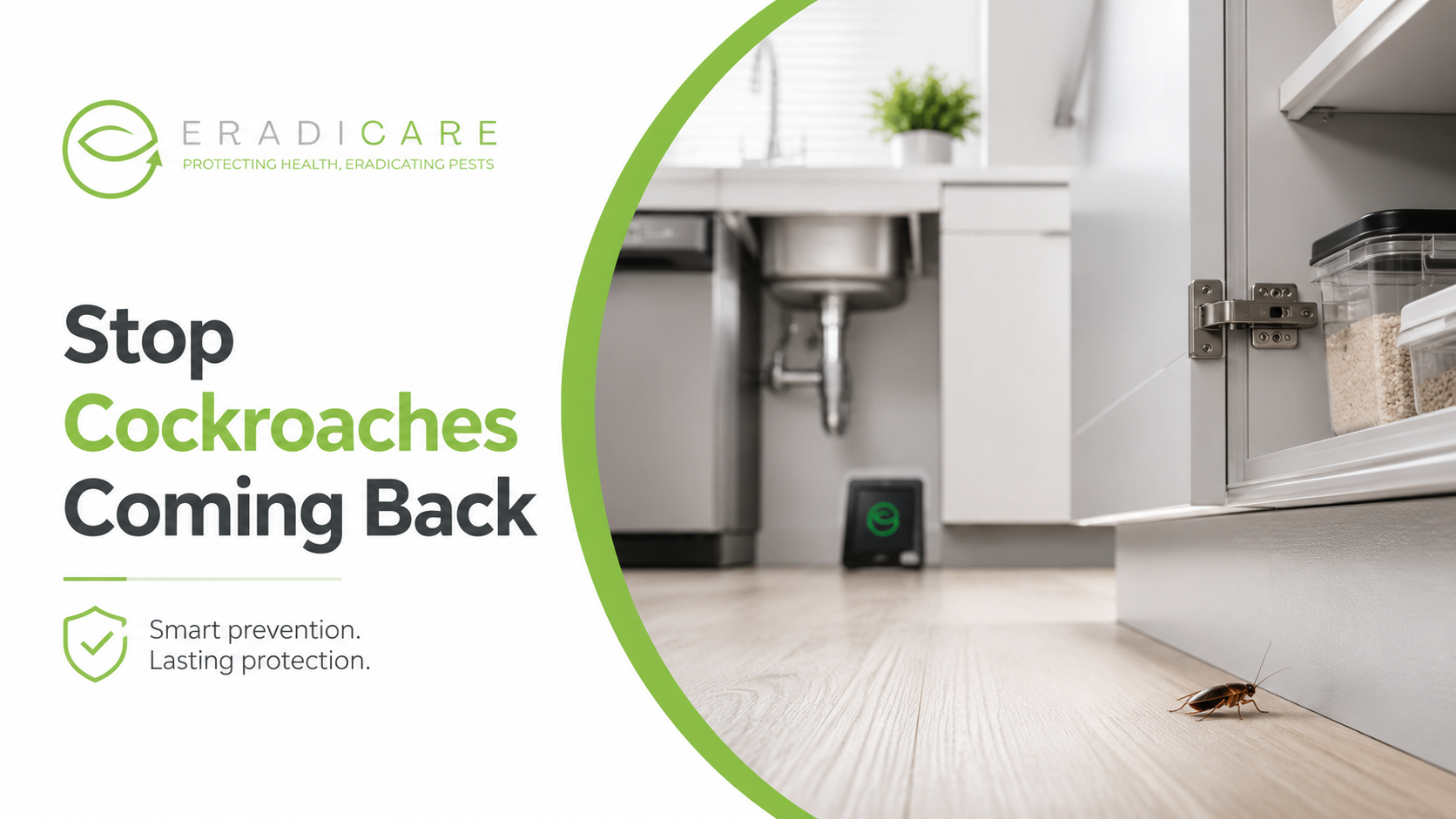
How to prevent cockroaches Ottawa is a common concern for homeowners and business owners dealing with recurring infestations. To prevent cockroaches from returning, you need to remove the food, water, shelter, and entry points that allow them to survive. Professional treatment can eliminate an active infestation, but long-term cockroach prevention also depends on proper sanitation, moisture control, sealing entry points, and ongoing monitoring. These steps are especially important in Ottawa apartments, condominiums, townhouses, restaurants, and other connected properties where cockroaches can spread through shared walls and plumbing systems.
The Short Answer: Remove Food, Water and Shelter
Cockroaches are less likely to return when they cannot find reliable food, moisture, or hiding places.
Food control means more than wiping the countertop. Grease beneath the stove, crumbs under the refrigerator, residue inside recycling containers, and pet food left overnight can all support hidden activity.
Water is just as important. A slow plumbing leak, condensation around pipes, a damp sponge, or water beneath the dishwasher may provide enough moisture for cockroaches to remain active.
Shelter includes cardboard, clutter, appliance gaps, cracks around cabinets, and openings around pipes. Cockroaches prefer narrow spaces where their bodies can remain close to surrounding surfaces.
Prevention works best when these conditions are corrected while monitoring and any professional treatment continue.
Why Cockroaches Come Back After Treatment
Returning activity does not always mean the treatment completely failed. Cockroaches may remain hidden, develop from egg cases, enter from a connected unit, or arrive with boxes, furniture, appliances, or deliveries.
Hidden Activity Survived
Cockroaches spend much of their time inside narrow spaces that are difficult to see.
They may hide behind refrigerators, beneath dishwashers, inside cabinet joints, near plumbing, around motor compartments, or in wall voids. If only the visible insects were addressed, hidden activity may continue.
You may notice the problem in the same locations where it appeared before. Fresh droppings, continued trap captures, or night-time sightings near appliances can suggest that part of the original activity remains.
Avoid moving infested appliances into another room. Doing so can spread insects or egg cases into previously unaffected areas.
Egg Cases or Nymphs Remain
Young cockroaches are called nymphs. They are smaller than adults and may be mistaken for a different insect.
Seeing nymphs after treatment can mean that egg cases were already present in a hidden location. It can also indicate that the infestation is still developing.
One small cockroach does not tell you the full extent of the problem. Record where it appeared and check monitoring devices in the surrounding area.
Repeated nymph sightings, new egg cases, or activity spreading into another room provide a stronger reason to request follow-up.
Food, Water or Shelter Is Still Available
A kitchen can look clean and still provide enough resources for cockroaches.
A thin grease film beneath an appliance, crumbs inside a cabinet hinge, condensation around a pipe, or cardboard stored beneath the sink may support activity without being obvious.
This is why prevention should focus on hidden conditions rather than visible cleanliness alone.
Inspect the spaces that are difficult to reach. Pay close attention to warm appliances, plumbing areas, lower cabinets, garbage storage, recycling, and pet-feeding zones.
Cockroaches Were Reintroduced
Cockroaches can enter a property with shipping cartons, grocery packaging, used furniture, second-hand appliances, beverage containers, and other transported goods.
A new sighting after a delivery, move, renovation, or furniture purchase may be a fresh introduction rather than a continuation of the original infestation.
Remove unnecessary cartons promptly and inspect used items before moving them through the property.
Small appliances deserve special care because cockroaches may hide near motors, vents, wiring compartments, and warm internal spaces.
Activity Is Coming From a Connected Unit
In an apartment, condominium, or townhouse, treating one unit may not address activity elsewhere in the building.
Cockroaches can move through plumbing penetrations, pipe chases, wall voids, utility gaps, and other connected spaces. Shared garbage rooms and storage areas can also support building-wide activity.
If sightings continue near shared walls, sinks, bathrooms, or utility areas, notify the landlord or property manager in writing.
A wider assessment may be needed when adjoining units report similar problems or cockroaches keep returning despite good preparation.
Start With Monitoring, Not Guesswork
Monitoring helps show where cockroaches remain active and whether the situation is improving.
Sticky monitoring traps are most useful when they are placed along walls, cabinet edges, and other routes cockroaches are likely to follow. They are less useful in the middle of an open room.
Where to Monitor
Place monitors near previously active areas, such as beneath the kitchen sink, beside the refrigerator, near the dishwasher, behind the stove, close to garbage storage, and beside plumbing routes.
Bathrooms, laundry areas, basements, utility rooms, and commercial storage areas may also need monitoring when evidence has appeared there.
Number or label each monitor by room and location. This makes it easier to compare activity instead of treating every capture as an isolated event.
Pest Inspection Ottawa may be useful when you are unsure how far the activity has spread or where the main harbourage is located.
What Monitoring Results Mean
Look for trends rather than expecting one trap to answer everything.
Progress may include fewer captures, less activity in previously affected areas, no new droppings, and no spread into new rooms.
Continued captures in one location may point to a nearby harbourage, food source, moisture problem, or access route.
Captures in a new room deserve attention because they may indicate movement beyond the original area.
Monitoring helps guide decisions, but it is not a complete treatment by itself.
Remove Food Sources Cockroaches Can Reach
Food control is one of the most important parts of preventing recurrence.
Cockroaches can survive on small amounts of grease, crumbs, food residue, pet food, and waste. Regular cleaning should therefore include hidden and low-access areas.
Clean Beneath and Behind Appliances
The refrigerator, stove, and dishwasher often provide warmth, shelter, food residue, and moisture in one location.
Clean accessible grease, crumbs, spills, and debris beneath and beside these appliances. Check removable trays and nearby cabinet edges.
Do not pull out a heavy or connected appliance if doing so may damage plumbing, wiring, flooring, or treatment placements. Ask the service provider whether appliance movement is required.
The area around a refrigerator motor can stay warm for long periods. Dishwashers may create moisture, while stoves collect grease and food fragments.
These locations should remain part of the long-term inspection routine.
Store Food in Sealed Containers
Transfer opened dry goods into closed containers where practical.
Inspect damaged packages and clean pantry spills promptly. Avoid leaving bread, snacks, pet treats, or baking ingredients in loosely closed bags.
Cockroaches may also enter cardboard food packaging. Removing unnecessary outer packaging can reduce hiding places, provided product information and expiry details are retained where needed.
In a business, food-storage practices should fit the site’s food-safety requirements.
Manage Dishes, Garbage and Recycling
Do not leave dirty dishes and food residue overnight when they can be cleaned safely.
Rinse recycling containers and keep garbage bins closed. Food residue inside cans, bottles, takeaway containers, and packaging can remain attractive even when the main kitchen appears clean.
Clean the floor and cabinet area around waste storage. Replace damaged bins that cannot be closed or cleaned properly.
Cardboard should not accumulate beside the kitchen, pantry, storage room, or garbage area.
Control Pet Food and Feeding Areas
Pet food can support cockroach activity just as human food can.
Clean crumbs around feeding areas and store food in closed containers. Where suitable for the animal’s routine, remove uneaten food rather than leaving it accessible overnight.
Pet water also provides moisture. Do not remove water that an animal medically or practically needs. Instead, keep the bowl and surrounding floor clean, repair spills, and discuss the feeding area with the technician.
Pet-Safe Pest Control should account for the animal, product placement, treatment instructions, and household layout rather than relying on a general safety promise.
Eliminate Water and Moisture Sources
Cockroaches need access to moisture, so leaks and condensation can undermine an otherwise clean property.
Check beneath sinks, around toilets, near dishwashers, behind refrigerators with water lines, and around laundry equipment.
Repair dripping taps and leaking pipes. Dry standing water and investigate repeated dampness rather than simply wiping it away each day.
Condensation may form around cold pipes, windows, drains, or poorly ventilated areas. In a basement or utility room, humidity and stored cardboard can create favourable conditions together.
Damp sponges, cleaning cloths, mop buckets, and trays beneath appliances should also be managed.
If the source involves a plumbing or building defect, pest treatment alone will not correct it.
Reduce Hiding Places and Cardboard
Cockroaches prefer tight, protected spaces close to food and water.
Remove unnecessary clutter from lower cabinets, utility rooms, storage areas, and the spaces around appliances.
Cardboard is a particular concern because it provides folds, seams, and narrow spaces. It can also carry cockroaches or egg cases into the property.
Replace long-term cardboard storage with washable or inspectable containers where practical.
Do not move a suspicious box from one room to another. Isolate it, inspect the contents carefully, and dispose of unnecessary packaging according to local waste requirements.
Reducing clutter also improves inspection and treatment access. A technician can assess cabinet edges, plumbing gaps, walls, and appliance areas more effectively when those locations are visible.
Inspect Deliveries, Used Furniture and Appliances
Incoming items are a common route for reintroduction.
Before bringing shipping cartons deep into the property, check the seams, folds, handles, and damaged areas. Unpack deliveries away from kitchens and sleeping areas when practical.
Used appliances require careful inspection. Pay attention to vents, motors, wiring compartments, door seals, hinges, and warm interior spaces.
Microwaves, coffee makers, mini-fridges, and other small appliances can contain hidden harbourage. Avoid plugging in or distributing a suspicious item until it has been assessed.
Second-hand furniture should also be checked along joints, fabric folds, drawer tracks, undersides, and hollow sections.
Businesses should include incoming goods in their prevention plan. Receiving areas, delivery pallets, cartons, beverage cases, and supplier packaging can all affect pest risk.
Seal Movement Routes After Activity Is Assessed
Sealing cracks and openings can reduce movement, but timing matters.
First identify where cockroaches are active and whether professional treatment needs access to the area. Sealing a gap without understanding the route may hide evidence or shift activity elsewhere.
Once appropriate, address openings around pipes, cables, cabinets, baseboards, wall joints, and utility penetrations.
Use suitable materials for the surface and maintain required ventilation, drainage, fire separation, and building access.
In multi-unit properties, sealing one apartment without reviewing connected areas may not solve the wider issue.
Residential Pest Control can help connect sanitation, monitoring, treatment, and exclusion when the source extends beyond a simple household gap.
Room-by-Room Cockroach Prevention
Cockroach prevention is easier when each room is assessed for food, water, shelter, and access.
Kitchen
Start beneath the sink and around the refrigerator, stove, and dishwasher.
Look for leaks, food residue, grease, cardboard, loose cabinet joints, and openings where plumbing enters the wall.
Inspect pantry packaging and clean shelf corners. Pay attention to hinges, drawer tracks, toe-kick spaces, and the edges where cabinets meet walls.
Keep garbage and recycling manageable, and avoid allowing storage to block inspection areas.
A kitchen that appears clean at eye level can still contain food and moisture beneath appliances.
Bathroom and Laundry Area
Bathrooms and laundry areas may provide moisture, plumbing routes, warmth, and quiet hiding places.
Check beneath the vanity, around toilets, behind laundry appliances, and near drains or pipe openings.
Dry repeated condensation and report leaks. Avoid storing large amounts of cardboard or paper products directly beside plumbing.
If cockroaches appear in both the kitchen and bathroom, shared plumbing or wall routes may need closer inspection.
Basement and Utility Spaces
Basements and utility rooms often contain storage, plumbing, drains, laundry equipment, and humidity.
Keep stored items off damp floors where practical and replace unnecessary cardboard.
Check around water heaters, pipe penetrations, floor drains, electrical service areas, and laundry equipment without interfering with building systems.
In Ottawa homes, heated interiors can support cockroach activity throughout winter. Cold outdoor weather should not be treated as a reliable control method.
What to Do After Professional Cockroach Treatment
Follow the instructions provided for the specific service. Different treatment plans may require different cleaning, access, and monitoring steps.
Follow the Cleaning Instructions
Continue normal food-safety cleaning, but do not scrub, wash, or remove targeted treatment placements unless instructed.
Bait placements and treated cracks may need to remain undisturbed. Cleaning directly over them can reduce their usefulness.
At the same time, food residue, garbage, and accessible grease should not be left in place.
Ask which surfaces can be cleaned immediately and which areas should be left alone. The What to Do After Pest Control Treatment guide provides broader aftercare information, but the technician’s cockroach-specific instructions should take priority.
Avoid Adding Unapproved Products
Do not spray over bait or add several products without understanding how they interact.
Aerosol sprays may kill visible insects while interfering with monitoring, bait placement, or the wider treatment plan.
Use only registered products according to their labels. If professional treatment is in place, contact the provider before adding another pesticide.
Random product use can also make it harder to understand whether activity is declining naturally or being pushed into another area.
Report Continuing or Spreading Activity
Keep a dated record of sightings, trap captures, nymphs, egg cases, and fresh droppings.
Report activity that remains concentrated, increases, or spreads into new rooms.
Photographs can help, especially when they show the insect beside an object for scale and identify the exact location.
Do not wait until the problem becomes widespread if several units, food areas, or sensitive occupants are involved.
DIY Prevention Versus Professional Follow-Up
Household prevention may be enough when there is no new evidence and the property is being monitored after successful treatment.
Professional follow-up makes more sense when live cockroaches continue appearing, nymphs or egg cases are found, traps remain active, or evidence spreads.
When Household Prevention May Be Enough
Continue sanitation, moisture control, incoming-item checks, and monitoring when there are no fresh signs of activity.
One isolated sighting should be documented and investigated, but it does not always confirm a full recurrence.
Check whether the insect came from a delivery, used item, or nearby area. Review the traps around the sighting location.
If no additional evidence appears, maintain the prevention routine rather than applying random pesticides.
When Another Inspection Makes Sense
Arrange another inspection when cockroaches appear in several rooms, nymphs continue emerging, or monitoring results remain active.
Follow-up is also appropriate when the property contains unresolved leaks, shared walls, extensive appliance harbourage, or adjoining-unit activity.
Food businesses, healthcare properties, daycares, and other sensitive sites should respond promptly because recurring activity can affect operations and records.
A professional assessment should connect the current evidence with the earlier treatment, preparation, property conditions, and possible reintroduction routes.
Cockroach Prevention in Apartments and Condos
Cockroach prevention in a connected building requires cooperation beyond one kitchen.
Tenants should report sightings promptly and provide the location, date, photos, and any trap information available.
Landlords and property managers should consider adjoining units, shared plumbing, pipe chases, waste areas, laundry rooms, storage, and common spaces.
Treating only the unit with the complaint may be insufficient when the source lies elsewhere in the building.
Residents should follow preparation instructions, provide access, avoid unapproved pesticide use, and report maintenance problems such as leaks.
Property managers should coordinate inspection, treatment, reinspection, communication, and building repairs where required.
In condominiums, responsibility may involve the resident, condominium corporation, property manager, or another party depending on the affected area. The applicable documents and obligations should be reviewed rather than assumed.
Cockroach Prevention Around Children and Pets
Tell the pest control company about children, pets, aquariums, birds, reptiles, and small animals before treatment.
Bait, monitoring devices, and treated areas should remain inaccessible as directed.
Store pet food securely and clean feeding areas. Do not change an animal’s access to food or water in a way that conflicts with veterinary or care needs.
Children may touch floor-level equipment or move monitors. Ask where devices should remain and whether any rooms require temporary access restrictions.
Product safety depends on the specific product, placement, label, and treatment plan. Avoid claims that any pest-control method is automatically safe in every situation.
How Much Does Recurring Cockroach Control Cost?
The cost depends on how widely the activity is distributed, what type of property is affected, and what follow-up is required.
A limited kitchen issue does not involve the same scope as cockroaches in several apartment units or a commercial food site.
Price factors may include the number of rooms, level of monitoring, appliance access, preparation, neighbouring-unit inspection, follow-up visits, sanitation conditions, and commercial reporting.
Structural repairs, plumbing work, deep cleaning, and appliance replacement may fall outside the pest-control service.
Ask for a written estimate that explains the inspection, treatment areas, follow-up, monitoring, and work that is not included.
For broader pricing guidance, see Pest Control Cost Ottawa.
Preventing Cockroaches in Ottawa Rental Properties
Tenants should report suspected cockroach activity promptly and keep a written record.
The report should identify where the cockroaches appeared, how often they were seen, whether nymphs or egg cases were found, and whether leaks or maintenance problems are present.
Landlords and property managers should review the applicable pest-management obligations, arrange inspection where necessary, and coordinate preparation and access.
Recurring activity may require reinspection, treatment of connected areas, maintenance repairs, and communication with neighbouring units.
Tenants should not be expected to diagnose the building source. They can support the process through sanitation, reporting, access, and compliance with the treatment instructions.
Legal responsibility can depend on the property condition, tenancy circumstances, and applicable rules. Specific disputes may require advice from the appropriate housing authority or legal professional.
Preventing Cockroaches in Ottawa Businesses
Commercial cockroach prevention should follow the movement of food and goods through the property.
The process begins at receiving. Inspect cartons, beverage cases, packaging, pallets, and used equipment before distributing them through the building.
Storage areas should remain organized and inspectable. Food should be protected, damaged packaging addressed, and unnecessary cardboard removed.
Preparation areas need regular cleaning beneath equipment, around grease-prone edges, and near plumbing.
Waste and recycling areas should have cleanable surfaces, closed containers, and a reliable removal schedule.
Monitoring devices should be mapped so results can be compared by location and date.
Commercial Pest Management may be suitable when the property needs regular inspections, documented findings, staff communication, and coordinated follow-up.
Restaurant Pest Control Ottawa should connect pest prevention with receiving, food storage, equipment cleaning, waste control, and protection of food-contact areas.
Does Ottawa’s Weather Affect Cockroach Prevention?
Cockroaches living inside heated buildings can remain active throughout the year.
Ottawa’s winter temperatures may reduce outdoor insect activity, but they do not remove cockroaches from warm kitchens, apartments, utility rooms, restaurants, or wall voids.
Winter can also lead residents to keep windows closed and store more goods indoors. Cardboard, deliveries, shared garbage areas, and heated service routes may still support activity.
Moving and delivery patterns can introduce cockroaches in any season.
Prevention should therefore continue year-round rather than stopping when cold weather arrives.
A Practical Long-Term Prevention Routine
Daily prevention should focus on food and moisture. Clean spills, manage dishes, close food containers, remove accessible waste, and check pet-feeding areas.
Each week, inspect beneath sinks, beside appliances, around recycling, and near monitoring devices. Look for fresh droppings, egg cases, nymphs, or changes in trap captures.
Periodically review plumbing, seals, screens, storage, cardboard, and incoming-item procedures.
In rental and commercial properties, maintain written records of sightings, repairs, inspections, and treatment visits.
Do not stop monitoring immediately after visible activity declines. A short period without sightings does not provide the same information as a continuing downward trend with no new evidence.
Frequently Asked Questions
Does One Cockroach Mean the Infestation Has Returned?
Not necessarily. One cockroach may be a survivor or a new introduction. Record the location, inspect nearby monitors, and look for additional evidence such as droppings, nymphs, or egg cases.
Why Am I Seeing Baby Cockroaches After Treatment?
Small cockroach nymphs may have developed from egg cases that were already hidden. Continued nymph sightings should be documented and reported because they can indicate ongoing activity.
How Do I Know Whether Cockroach Treatment Is Working?
Look for fewer trap captures, less night-time activity, no fresh droppings, and no spread into new rooms. Progress should be judged by trends rather than one isolated sighting.
Can I Clean Behind Appliances After Professional Treatment?
Yes, but follow the service instructions first. Hidden food and grease should be removed, while targeted bait or treated areas may need to remain undisturbed.
Should I Spray Cockroaches if Bait Has Already Been Placed?
Do not spray around bait unless the product label or technician directs you to do so. Sprays can interfere with bait use, monitoring, and the treatment plan.
Can Cockroaches Return Through Plumbing or Shared Walls?
Yes. In connected buildings, cockroaches may move through pipe openings, wall voids, utility routes, and shared spaces. Recurring activity may require inspection beyond one unit.
Can Cardboard Boxes or Deliveries Bring Cockroaches Inside?
Yes. Cockroaches and egg cases can hide in cartons, packaging, furniture, and appliances. Inspect incoming items and remove unnecessary cardboard promptly.
Should I Leave Pet Food or Water Out Overnight?
Remove uneaten food when suitable for the pet’s routine and keep the feeding area clean. Do not restrict water that the animal needs, but clean spills and discuss the area with the technician.
Can Ottawa’s Winter Weather Kill Cockroaches Inside a Building?
No. Cockroaches can remain active throughout winter inside heated properties. Prevention and monitoring should continue year-round.
Who Handles Recurring Cockroaches in an Ottawa Rental Property?
Tenants should report activity promptly, while landlords or property managers should review building conditions and applicable pest-management obligations. Connected units and shared routes may also need assessment.
How Often May Professional Follow-Up Be Needed?
Follow-up depends on the infestation, property layout, treatment approach, preparation, and monitoring results. Ask the provider what activity to expect and when another assessment should occur.
How Much Does Recurring Cockroach Treatment Cost in Ottawa?
Cost depends on the number of affected areas, property type, monitoring, preparation, connected units, and follow-up. Request a written estimate that clearly explains the service scope.
Still Seeing Cockroaches?
Continue monitoring while removing food, moisture, cardboard, clutter, and incoming-item risks. When nymphs or egg cases keep appearing, traps remain active, activity reaches new rooms, or connected units may be involved, another professional assessment is reasonable.
For help with cockroach prevention in Ottawa and surrounding areas, call Eradicare Pest Control at 613-366-4444. Explain where you are seeing activity, what treatment has already occurred, and whether you have found nymphs, egg cases, droppings, or active monitoring traps.
You can also ask whether Eradicare’s current free estimate offer applies to your property.