
Preparing for pest control treatment usually means securing food, clearing access to problem areas, protecting personal belongings, and arranging a safe place for children and pets.
However, every treatment requires a different level of preparation. Bed bug services often focus on bedrooms, fabrics, and upholstered furniture. Cockroach treatments usually require better access to kitchens, appliances, food storage, and moisture sources. Meanwhile, rodent control may involve basements, garages, utility openings, and exterior entry points.
Use this guide as a practical starting point. Then, follow the instructions provided for your specific appointment.
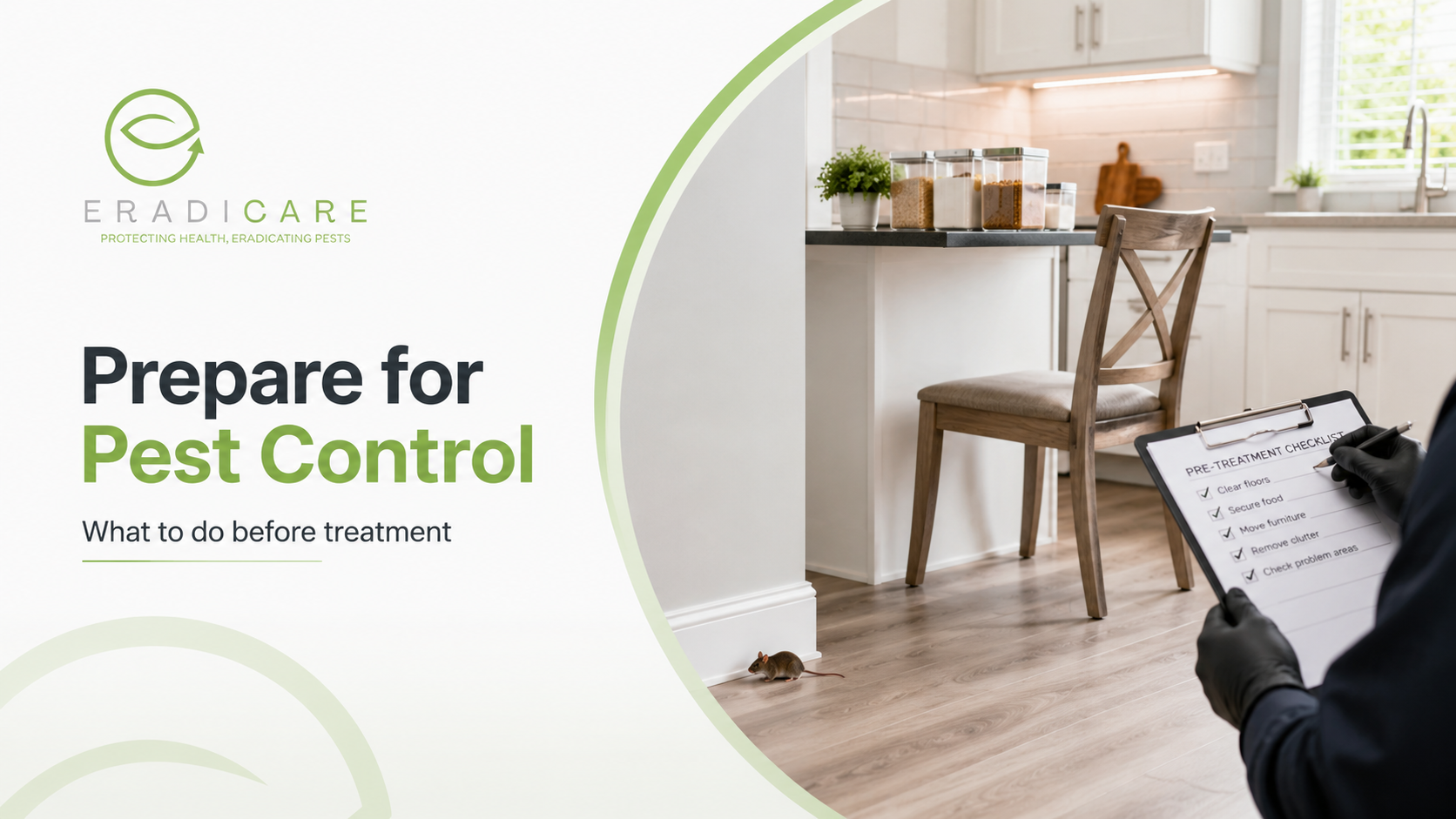
Quick Pest Control Preparation Checklist
Before the technician arrives, complete the following steps:
• Review the preparation instructions provided by the pest control company.
• Confirm which rooms, furniture, cabinets, or exterior areas need access.
• Seal exposed food or move it away from the treatment area.
• Store dishes, medication, toiletries, toys, and sensitive personal items.
• Remove pet food, water bowls, bedding, cages, and toys when instructed.
• Create clear access to walls, baseboards, beds, appliances, cabinets, and utility spaces.
• Reduce unnecessary clutter without carrying infested belongings into another room.
• Photograph droppings, insects, damage, nests, or suspected entry points before cleaning.
• Tell the company about children, pets, aquariums, pregnancy, health sensitivities, and mobility concerns.
• Stop using DIY pest products unless the technician has advised otherwise.
• Ask when people and pets can return and when normal cleaning can resume.
Most importantly, follow the appointment-specific instructions rather than relying only on a general checklist.
Confirm the Pest and Treatment Plan First
First, confirm which pest the technician will inspect or treat. This information helps you avoid unnecessary cleaning, laundry, furniture movement, or cabinet emptying.
Different pests use different parts of a property. Bed bugs usually remain near sleeping and resting areas. Cockroaches often hide near warmth, moisture, food, and appliances. In contrast, mice and rats travel along walls and may enter through foundations, vents, garages, roof areas, or utility openings.
The treatment method also affects preparation. For example, baits and traps require different access and aftercare than liquid applications, dusts, steam, or heat.
Follow the Instructions for Your Appointment
Use the written directions supplied for your treatment. A generic online checklist cannot account for every pest, property, or treatment method.
Several factors may shape the final instructions:
• Pest species and activity level
• Number of affected rooms
• Property layout and access
• Treatment method
• Presence of children or animals
• Occupant health or mobility concerns
• Equipment and products planned for the appointment
Therefore, ask before emptying every cupboard, closet, or drawer. The technician may need some areas cleared while leaving others undisturbed for inspection.
Record Pest Evidence Before Cleaning
Before you clean, take clear photos and note where you found the activity.
Useful evidence may include droppings, gnaw marks, damaged packages, ant trails, shed skins, egg cases, scratching sounds, nesting materials, or small openings around the property.
For suspected bed bugs, record signs near mattresses, bed frames, headboards, sofas, and other resting areas. Similarly, photograph rodent evidence before removing it.
You do not need to keep contaminated material exposed. Instead, photos and a simple timeline can help the technician understand where the problem started and how it may be spreading.
What to Do Before the Pest Control Appointment
Most properties need basic cleaning, food control, clear access, and accurate information. In many cases, a full deep clean creates extra work without improving the treatment.
Complete Basic Cleaning
Start by removing crumbs, grease, food residue, open garbage, and standing water from the affected areas.
Focus on practical problem spots such as:
• Kitchen counters and cooking surfaces
• Cupboards and food storage shelves
• Spaces around refrigerators and stoves
• Pet feeding areas
• Garbage and recycling containers
• Bathroom sinks and plumbing areas
• Laundry rooms and damp storage spaces
• Commercial food preparation areas
Next, vacuum accessible floors and edges when the instructions recommend it. Cleaning before the appointment also reduces the need to disturb treated surfaces afterward.
Avoid homemade pesticide mixtures or several different store-bought sprays. These products can disturb pest movement, interfere with bait placements, and make the infestation harder to assess.
Clear Access to Affected Areas
Provide enough space for the technician to inspect the places where pests hide, travel, feed, or enter.
Depending on the problem, the technician may need access to:
• Baseboards and floor edges
• Spaces beneath sinks
• Areas behind appliances
• Beds, headboards, and bedside furniture
• Sofas and upholstered chairs
• Closets and storage areas
• Basement walls and utility rooms
• Plumbing, cable, and ventilation openings
• Attics and crawl spaces
• Garages, sheds, and exterior foundations
• Eaves, decks, balconies, and rooflines
You may need to move furniture slightly away from a wall. However, do not dismantle large items or carry infested belongings through the property unless the technician requests it.
For example, moving bed bug-infested furniture may spread activity into another room. Likewise, sealing a rodent opening too early may trap an animal inside or force it into another area.
Protect Food and Food-Contact Items
Remove or seal exposed food in any room that may receive treatment.
Items that may need attention include:
• Open ingredients
• Bread, fruit, and baked goods
• Pet food
• Dishes and utensils
• Cookware and cutting boards
• Baby bottles and feeding equipment
• Small kitchen appliances
• Restaurant preparation tools
• Food stored in damaged packaging
Do not empty every cabinet automatically. Some services need access to selected cupboards, while others only require you to remove exposed food.
Secure Medication and Personal Items
Store medication, supplements, toothbrushes, toiletries, cosmetics, children’s toys, and other sensitive belongings away from treatment areas.
Use sealed storage when appropriate. Alternatively, move the items to a room that the technician has confirmed will remain untreated.
Avoid placing belongings on a bed, sofa, floor, or piece of furniture that also needs inspection.
Explain Where the Pest Activity Is Happening
Give the technician a short and accurate history of the problem.
Mention where you first noticed the activity, which rooms now show signs, and when pests usually appear. In addition, explain whether the activity seems to be increasing or spreading.
The technician should also know about:
• Previous DIY products
• Existing traps or bait stations
• Plumbing leaks
• Damp or damaged areas
• Recent renovations
• Used furniture brought into the property
• Recent travel
• Similar activity in neighbouring units
These details help connect the pest to possible food sources, moisture, hiding areas, or entry points.
Preparing Children, Pets, and Vulnerable Occupants
Tell the pest control company about every person and animal who may be affected by the service.
Depending on the treatment, people and pets may need to leave and remain away until the technician allows re-entry. Therefore, confirm the plan before the appointment rather than assuming everyone can stay in another room.
Children and Other Household Members
Remove children’s toys, blankets, play mats, feeding equipment, and personal belongings from treatment areas when instructed.
Before the appointment, confirm:
• Who needs to leave
• Which rooms will remain restricted
• How long the restriction will last
• Whether the property needs ventilation
• Which surfaces or pest control equipment occupants must avoid
For some services, staying in another room may work. However, other treatments may require everyone to leave the unit or building.
Dogs, Cats, Birds, Reptiles, and Small Animals
Tell the technician about every animal in the property, including pets that remain inside cages, tanks, or terrariums.
Preparation may involve:
• Moving dogs and cats away from the treatment area
• Relocating birds and cages
• Protecting reptile enclosures and heating equipment
• Arranging temporary space for rabbits and small mammals
• Removing pet bedding
• Storing food and water bowls
• Moving litter boxes
• Securing toys and chew items
Do not place a pet in another room unless the technician confirms that the room will remain unaffected.
For flea concerns, property treatment does not replace veterinary care. Instead, ask a veterinarian how to manage the animal while the pest control company addresses the indoor environment.
Aquariums and Fish
Tell the company about every aquarium before treatment.
Covering the tank may not provide enough protection on its own. Depending on the service, the technician may also provide directions for air pumps, filtration equipment, food, ventilation, and the tank’s location.
Follow the treatment-specific instructions rather than using general pet advice.
Pregnancy, Medical Concerns, and Mobility Issues
Let the company know if someone is pregnant, elderly, medically vulnerable, sensitive to odours, or unable to prepare or leave the property without help.
The technician can explain the service requirements and possible access restrictions. However, a healthcare professional should answer personal medical questions.
If disability, age, heavy furniture, or another issue makes preparation difficult, raise the concern early. The company may adjust some tasks, although certain steps may remain necessary.
How to Prepare for Different Pest Treatments
Each pest requires a different preparation process. Therefore, avoid using one general spraying checklist for every problem.
Bed Bug Treatment Preparation
Bed bug preparation focuses on beds, upholstered furniture, clothing, fabrics, and the places where people regularly sleep or rest.
Before treatment:
• Follow the supplied laundry and bagging instructions.
• Keep belongings inside the affected room unless directed otherwise.
• Clear access around beds, sofas, baseboards, and bedroom furniture.
• Remove loose items from beneath beds when requested.
• Leave mattresses, frames, and headboards accessible.
• Identify every sleeping and resting location.
• Report recent travel, guests, deliveries, or used furniture.
• Ask before discarding mattresses or furniture.
Not every service requires the same amount of laundry or bagging. In fact, excessive preparation may hide items that need inspection and create unnecessary work.
For confirmed or suspected activity, follow the instructions connected to your Bed Bug Extermination Ottawa service.
Cockroach Treatment Preparation
Cockroach preparation usually focuses on food, grease, moisture, appliances, cupboards, and hidden harbourage areas.
Start by sealing exposed food and removing waste. Then, clean crumbs and cooking grease around cabinets, counters, and appliances.
You should also:
• Clear the space beneath sinks.
• Report plumbing leaks.
• Provide access behind appliances where possible.
• Remove pet food when it is not being used.
• Avoid spraying areas where the technician may place bait.
Do not empty every cabinet unless the instructions request it. The technician may only need access to cupboards where droppings, insects, egg cases, or harbourage appear.
Cockroach Extermination Ottawa may suit properties with activity inside appliances, wall gaps, kitchens, bathrooms, or connected units. Cleaning removes food sources, but it cannot reach every hidden area.
Mouse and Rat Control Preparation
Rodent preparation focuses on food access, travel routes, nesting locations, and structural entry points.
Before the appointment:
• Store food in secure containers.
• Remove crumbs and spills.
• Put pet food away when pets are not eating.
• Clear basements, garages, utility rooms, and storage areas.
• Photograph droppings, damage, and gnaw marks.
• Note where you hear scratching sounds.
• Report openings around vents, pipes, doors, cables, and foundations.
• Leave existing traps or bait stations in place.
• Ask before sealing an active opening.
Ottawa’s colder fall and winter conditions often bring rodent activity closer to buildings. As a result, technicians may need better access to basements, garages, crawl spaces, utility rooms, and exterior foundations.
A Rodent Control Ottawa service can assess current activity, likely travel routes, and possible entry points.
Ant and Carpenter Ant Treatment Preparation
Record visible ant trails before wiping them away. In particular, note where ants enter, which direction they travel, and whether the activity appears near moisture or damaged wood.
Remove exposed food and clean spills. However, avoid using strong cleaners or insect sprays over areas where the technician may place bait.
For carpenter ant concerns, provide access to:
• Damp or damaged wood
• Plumbing leaks
• Window and door frames
• Roofline areas
• Decks and porches
• Walls and ceilings with activity
• Tree branches touching the structure
Carpenter ants may indicate a moisture or structural issue. Therefore, the property may also need repairs after treatment.
Flea Treatment Preparation
Flea preparation may involve carpets, floor edges, upholstered furniture, pet bedding, and every room used by animals.
Before treatment:
• Vacuum floors and edges if instructed.
• Clear loose belongings from carpeted areas.
• Prepare pet bedding according to the supplied directions.
• Remove pets, bowls, toys, cages, and bedding.
• Identify the furniture and rooms pets use most often.
• Manage the vacuum contents as directed.
• Contact a veterinarian about care for affected animals.
After treatment, continue vacuuming according to the aftercare plan. Otherwise, cleaning at the wrong time may disturb treated areas.
Wasp and Hornet Treatment Preparation
Wasp and hornet preparation usually means creating safe access to the nest while keeping people away from the area.
Before the appointment:
• Keep children and pets away.
• Leave the active nest entrance open.
• Close nearby windows when instructed.
• Move vehicles, furniture, toys, or equipment that block access.
• Report insects entering walls, attics, rooflines, or interior rooms.
• Inform nearby occupants when the nest sits close to a shared area.
Do not strike, burn, flood, or seal an active nest. Wasp and Hornet Removal Ottawa may provide a safer option when the nest sits near an entrance, balcony, play area, roofline, or commercial space.
How Preparation Changes by Treatment Method
The pest matters, but the treatment method also shapes the preparation process.
Liquid and Residual Applications
A targeted liquid application may require access to cracks, baseboards, floor edges, furniture, or other pest harbourage areas.
Keep people and pets away according to the technician’s instructions. In addition, wait for the stated re-entry conditions rather than relying on smell or visible residue.
Afterward, avoid mopping, scrubbing, or wiping treated areas until the company confirms that normal cleaning can resume.
Gel Baits, Bait Stations, Traps, and Monitors
Leave professionally placed pest control equipment in its original position.
Baits, traps, and monitors may help the technician target activity, identify travel routes, and measure progress. Moving or cleaning over them can reduce their usefulness.
At the same time, keep all placements away from children and pets. Report any damaged or displaced equipment to the company.
Dust, Steam, and Heat Treatments
Dust, steam, and heat services require treatment-specific instructions.
Preparation may involve furniture, electronics, medication, pressurized containers, plants, fabrics, and heat-sensitive belongings. For that reason, ask what must leave the room, what should remain inside, and how the technician wants each area arranged.
What Happens During the Pest Control Visit
The technician will usually review your observations before inspecting or treating the affected areas.
Be ready to explain what you have seen, where it happens, and when the activity began. Also mention whether the problem now appears in other rooms.
The technician should know about previous DIY products, neighbouring infestations, locked spaces, children, pets, aquariums, and access problems.
Depending on the pest, the inspection may include furniture, storage areas, appliances, plumbing openings, foundations, utility rooms, and exterior features.
The service may involve traps, bait, monitoring, targeted treatment, sanitation advice, or exclusion recommendations.
Before the technician leaves, ask:
• Which areas received treatment?
• When can occupants and pets return?
• What should remain untouched?
• Which activity may continue temporarily?
• What signs should you report?
• Will the service require follow-up?
• Which prevention steps should start now?
How Long Should You Leave After Pest Control?
No single re-entry time applies to every treatment.
The correct timing depends on the treatment method, product instructions, affected rooms, ventilation needs, and property occupants.
Before the appointment, confirm:
• Whether everyone must leave
• Whether all pets must leave
• Whether restrictions apply to the entire property
• The earliest permitted return time
• Whether treated surfaces must dry first
• Whether you need to ventilate the property
• Whether any areas will remain restricted
Follow the instructions for your actual service. Never return early based only on a general time estimate found online.
What to Do After Pest Control Treatment
After the service, follow the re-entry plan, protect treated areas, and monitor for fresh activity.
Follow the Re-Entry Instructions
Wait until the company allows people and pets to return.
If the technician recommends ventilation, follow those directions before using the treated rooms. Also, avoid touching wet surfaces, bait placements, traps, dusts, or monitors.
Once everyone returns, make sure children and pets cannot reach pest control equipment or restricted areas.
Avoid Cleaning Treated Areas Too Soon
Do not clean every surface immediately.
For example, mopping floor edges, scrubbing cracks, spraying cleaner over bait, or moving monitors may interfere with the treatment.
Instead, ask which areas you can clean normally and which surfaces should remain untouched. Follow the specific instructions for kitchens and other food-contact areas.
Continue Monitoring Pest Activity
Keep a simple record of any new activity.
Include:
• Date and location of sightings
• Changes in the number of pests
• Fresh droppings or damage
• Activity around traps or monitors
• Suspected bed bug signs
• Newly noticed entry points
• Ongoing leaks or moisture
Some pests may remain active for a period after treatment. Therefore, report what you see rather than applying another product over the treated area.
Complete follow-up visits when recommended because certain infestations need monitoring or more than one treatment stage.
What If You Cannot Complete the Preparation?
Contact the pest control company before the appointment and explain what you could not complete.
Common preparation problems include:
• Heavy clutter
• Furniture that cannot move safely
• Locked or inaccessible rooms
• Mobility limitations
• Medical concerns
• Pets that cannot leave easily
• Cabinets or rooms that cannot be emptied
• Instructions that remain unclear
Depending on the situation, the technician may adjust the service area, revise the instructions, work within accessible spaces, or recommend rescheduling.
Incomplete preparation does not automatically cancel the appointment. However, blocked areas and unprotected belongings may limit what the technician can inspect or treat.
Pest Control Preparation for Ottawa Tenants and Landlords
Tenants should receive clear preparation instructions before treatment begins inside their unit.
If you rent, report pest activity promptly and request the treatment plan from your landlord or property manager. In addition, ask who will prepare common areas and whether nearby units also require inspection.
Preparation Steps for Tenants
Tenants should:
• Report activity as soon as they notice it.
• Request clear preparation instructions.
• Complete the required steps before the appointment.
• Disclose pets, aquariums, medical concerns, and mobility limitations.
• Keep potentially infested belongings out of hallways and neighbouring units.
• Confirm who will manage shared areas.
Preparation Steps for Landlords and Property Managers
Landlords and property managers should:
• Coordinate access and communication.
• Explain which units and common areas require attention.
• Provide residents with clear preparation details.
• Address leaks, waste problems, damaged doors, and structural openings.
• Consider nearby units where pests may move through shared walls or service lines.
• Arrange follow-up when needed.
In multi-unit buildings, pests may travel through plumbing lines, wall gaps, storage rooms, garbage areas, and adjoining units. Consequently, the treatment scope may need to cover more than the first room or unit reporting activity.
Preparing an Ottawa Business for Pest Treatment
Businesses should protect food and sensitive equipment while giving the technician access to storage, waste, utility, staff, and service areas.
Before treatment:
• Record where and when staff noticed pests.
• Identify affected appliances, equipment, and storage spaces.
• Protect ingredients, utensils, and food-contact items.
• Remove waste and unnecessary cardboard.
• Clear access beneath equipment and shelving.
• Report plumbing, drainage, door, and structural problems.
• Inform relevant employees.
• Identify locked rooms and sensitive equipment.
• Confirm cleaning and re-entry requirements.
• Coordinate the visit around operating hours when needed.
Restaurants, offices, retail stores, warehouses, schools, daycares, and managed properties face different risks. Commercial Pest Management may suit locations that need ongoing inspection, monitoring, documentation, prevention, or coordination across several areas.
Seasonal Preparation for Ottawa Properties
Ottawa’s seasons influence pest activity and the areas a technician may need to inspect.
Winter
During winter, clear access to basements, garages, utility rooms, crawl spaces, attics, and storage areas.
Report scratching sounds, droppings, damaged packaging, and openings around foundations, vents, pipes, cables, and exterior doors.
Spring
After winter, point out basement seepage, plumbing leaks, damp wood, damaged weather seals, and newly visible cracks.
Spring moisture and changing temperatures can reveal conditions that support insect activity.
Summer
In summer, provide access to decks, patios, rooflines, sheds, eaves, waste areas, and vegetation touching the building.
Meanwhile, keep people and pets away from active nests and exterior treatment zones.
Fall
During fall, clear exterior foundations, garages, vents, utility openings, and doors for inspection.
This season offers a practical opportunity to identify rodent entry points before colder weather increases pressure around buildings.
How to Help Prevent Pests After Treatment
Pest treatment works better when you also address food, water, shelter, and entry conditions.
After treatment:
• Store food in sealed containers.
• Clean spills and crumbs promptly.
• Manage garbage and recycling regularly.
• Put pet food away between meals.
• Repair leaks and damp areas.
• Reduce unnecessary cardboard and clutter.
• Fix damaged screens, door sweeps, and weather seals.
• Seal confirmed structural openings at the correct stage.
• Keep exterior waste areas clean.
• Trim vegetation touching the building.
• Continue monitoring previous activity areas.
For mice and rats, Rodent Proofing Ottawa may help reduce future entry after the technician identifies active routes. However, assess suspected openings before sealing them.
DIY Preparation Versus Professional Pest Control
Cleaning, food storage, clutter reduction, and basic repairs can reduce conditions that support pests. Still, these steps may not resolve an established infestation.
Professional Residential Pest Control may make sense when:
• You cannot identify the pest.
• Activity continues after basic prevention.
• Several rooms show signs.
• You suspect bed bugs or cockroaches.
• Rodents remain active inside the building.
• A wasp or hornet nest sits in a difficult location.
• Children or pets affect treatment planning.
• The problem involves connected rental units.
• A business requires ongoing monitoring.
• Previous DIY products have not worked.
Instead of repeatedly applying different products, arrange an inspection. A professional can identify the pest, assess the extent of activity, and recommend the appropriate service category.
Frequently Asked Questions
Do I Need to Empty Every Kitchen Cabinet?
No. Empty cabinets only when the treatment instructions require it. Some services need access inside selected cupboards, while others only require you to remove exposed food.
Do I Need to Leave During Pest Control Treatment?
You may need to leave, depending on the treatment method and affected areas. Confirm who must leave and when the company allows re-entry.
Can My Pet Stay in Another Room?
Only when the technician confirms that the room will remain unaffected. A closed door does not provide suitable protection during every treatment.
How Should I Prepare an Aquarium?
Tell the company about the aquarium before the visit. Then, follow the directions for the tank, cover, pumps, filtration equipment, food, and room.
Should I Remove Clothing From Closets?
Remove clothing only when the treatment plan requires closet access or special fabric handling. Avoid carrying potentially infested clothes into unaffected rooms.
Can I Cook After Pest Control Treatment?
You can use the kitchen after meeting the re-entry requirements and completing any required cleaning of food-contact surfaces.
Should I Vacuum Immediately After Treatment?
Not unless the aftercare instructions recommend it. Cleaning floor edges or treated surfaces too soon may interfere with the treatment.
What Happens If I Did Not Finish Preparing?
Contact the company before the appointment. The technician may revise the instructions, adjust the treatment area, work within accessible spaces, or recommend rescheduling.
Do Ottawa Tenants Need to Prepare Their Apartment?
Tenants should follow the treatment plan provided for their unit. Contact the landlord or property manager when instructions are missing, unclear, or difficult to complete.
Is It Normal to See Pests After Treatment?
Some activity may continue for a period, depending on the pest and treatment plan. Record where it occurs and report it rather than disturbing the treatment.
Final Checklist Before the Technician Arrives
Before the appointment, confirm that:
• You know which pest the technician will treat.
• You have reviewed the preparation instructions.
• Food and sensitive belongings remain protected.
• The technician can reach the required areas.
• Children and pets have a suitable place to stay.
• The company knows about aquariums and vulnerable occupants.
• You have saved photos or notes about pest evidence.
• You have disclosed previous DIY treatments.
• Everyone understands the re-entry requirements.
• You know which areas should remain untouched afterward.
Arrange Pest Control Treatment in Ottawa
The right preparation depends on the pest, property, and treatment plan. If you are unsure what is causing the activity or which steps apply, start by explaining where you have noticed the problem and who lives or works in the property.
For pest control assistance in Ottawa and surrounding areas, contact Eradicare Pest Control at 613-366-4444. Eradicare can explain which service category fits the situation and how to prepare for the appointment.