
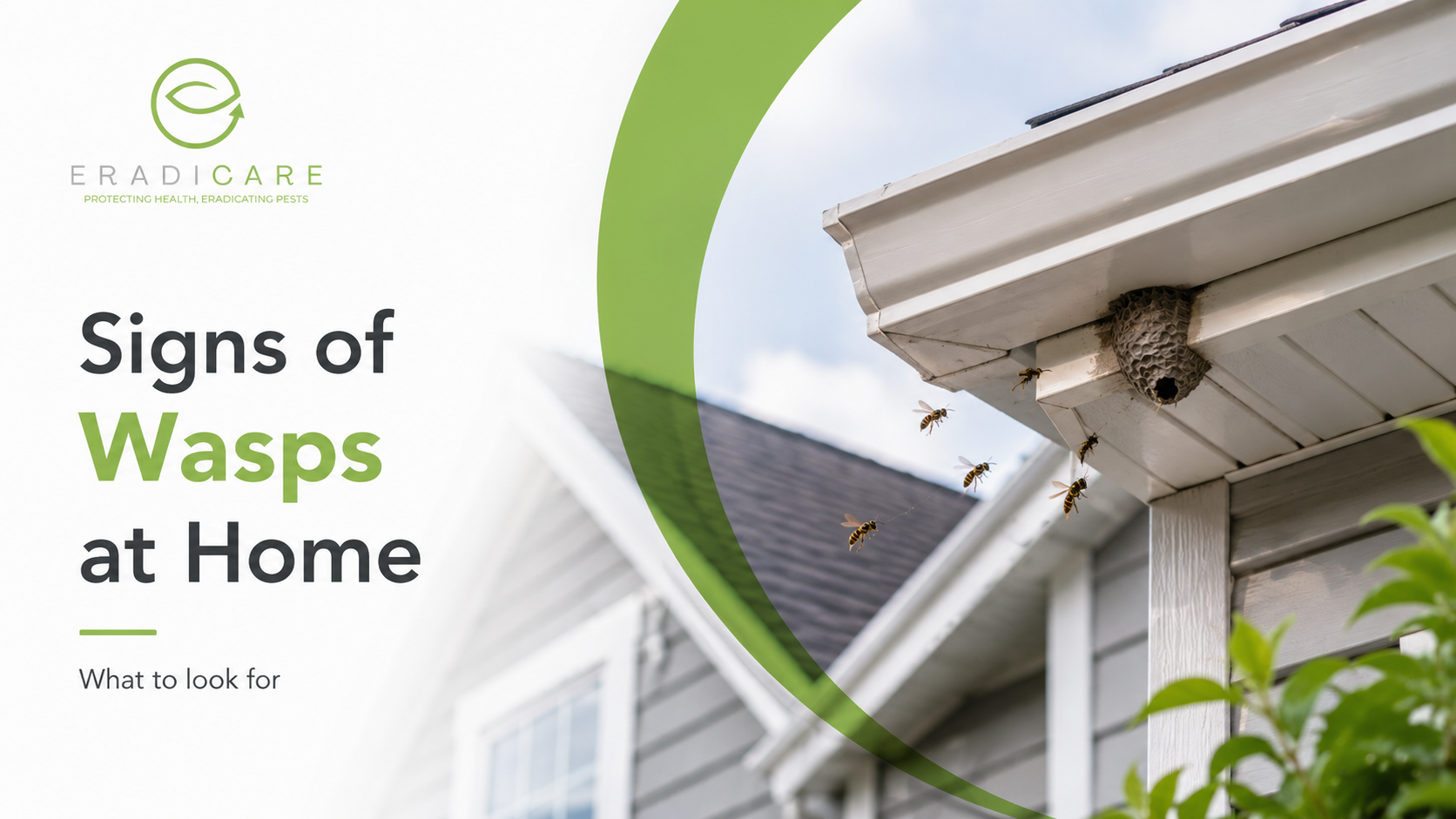
Signs of wasps in Ottawa home can include repeated wasp traffic to the same opening, a visible paper nest, buzzing sounds inside a wall, or several wasps appearing indoors. While a single wasp visiting flowers or outdoor food does not necessarily indicate a nearby colony, workers repeatedly entering a soffit, siding gap, roofline, ground opening, or wall cavity often suggest an active nest. This guide explains the most common signs of wasps in Ottawa home, where nests may be hidden, how to assess the potential risk, and when professional wasp and hornet removal in Ottawa may be appropriate.
Quick Signs of a Wasp Nest
Repeated flight traffic is one of the clearest signs of a nearby nest. Instead of moving randomly between flowers, food, and garbage, workers travel back and forth to the same location throughout the day.
You may see wasps entering a gap beneath a soffit, disappearing behind siding, flying into an attic vent, or using a small hole in the lawn. A visible open-comb nest or enclosed grey paper nest provides even stronger evidence.
Hidden nests can produce different clues. Buzzing may come from one section of a wall or ceiling. Meanwhile, wasps may begin appearing near indoor windows, light fixtures, or upper-floor rooms.
Activity often becomes easier to notice as summer progresses. Wasps may also react when someone approaches a particular wall, doorway, deck, shed, or garden area.
Watch from a safe distance rather than standing in the flight path. A phone camera with zoom can help you record the entrance without moving closer.
Does One Wasp Mean There Is a Nest?
No. One wasp does not necessarily mean a nest is attached to your home.
Individual wasps may visit flowers, fallen fruit, pet food, garbage, sugary drinks, outdoor meals, or standing water. They can travel some distance from their colony while searching for food and nesting material.
The pattern matters more than a single sighting.
Occasional activity around flowers or an open drink usually points to foraging. By contrast, workers that repeatedly enter and leave the same small opening often indicate an established nest route.
Observe the area from the side for several minutes. Notice how many wasps appear, whether they use one entrance, and whether the traffic continues at different times of day.
A clear and repeated flight route provides stronger evidence than several insects moving between outdoor food sources.
Common Wasps Found Around Ottawa Homes
Different wasps favour different nesting locations. Identifying the general group can help you determine whether the insects are foraging, nesting, or unlikely to defend a shared colony.
Yellowjackets
Yellowjackets are social wasps that may nest underground or inside protected structural cavities.
Around a home, they can use wall voids, soffits, siding gaps, attics, porches, retaining walls, garages, sheds, and spaces beneath steps. Ground colonies may also occupy old burrows or concealed openings along lawns and garden edges.
Workers often follow a steady route to one entrance. Later in summer, they may gather around outdoor food, garbage, recycling, sweet drinks, and fallen fruit.
Ground nests can remain unnoticed until someone walks, mows, digs, or plays close to the entrance. Repeated traffic into the lawn therefore deserves caution, especially beside a walkway or children’s play area.
Paper Wasps
Paper wasps usually build visible open-comb nests beneath sheltered surfaces.
You may find a nest under an eave, porch ceiling, deck railing, shed roof, window ledge, outdoor light, balcony, or door frame. The structure often resembles a small paper umbrella with exposed cells.
Early in the season, the nest may remain small and support only limited activity. Worker numbers increase as the colony develops, making the flight route easier to notice.
Paper wasps may tolerate normal movement at a distance. Still, they can defend the colony when someone approaches closely, strikes the surface, or attempts to knock down the nest.
Bald-Faced Hornets and Other Aerial Nests
Bald-faced hornets build enclosed paper nests that can become large and highly visible.
These grey, layered nests may hang from trees, shrubs, roof edges, sheds, utility structures, or exterior walls. Workers usually enter through one main opening.
Location matters more than size alone. A nest high in a tree and away from regular activity creates a different concern from one above a front entrance, balcony, parking space, or play area.
Do not stand directly beneath an aerial nest to inspect it. Use binoculars or a zoomed camera instead.
Solitary Wasps and Mud Daubers
Not every wasp belongs to a defensive social colony.
Solitary wasps maintain individual nests rather than sharing one large colony. Mud daubers, for example, create narrow mud structures on sheltered walls, garage ceilings, sheds, and other protected surfaces.
Some solitary species use holes in soil. Several may nest in the same general area, but each female usually maintains her own nest.
These insects often show less defensive behaviour around their nesting sites than yellowjackets, paper wasps, or hornets. Correct identification can prevent unnecessary removal of beneficial solitary wasps.
How to Tell Wasps From Bees
Wasps generally have smoother bodies, narrow waists, and clearly defined yellow, black, brown, or reddish markings. Bees usually appear hairier and more robust.
Appearance can still be misleading, so behaviour and nest location also matter.
Honey bees may carry visible pollen on their legs, while bumble bees usually look rounder and hairier. Yellowjackets tend to move quickly around food and garbage. Paper wasps often fly with long legs hanging beneath their bodies.
Both bees and wasps can use wall cavities, ground openings, roof spaces, or structural gaps. For that reason, avoid treating an unidentified insect based only on colour.
Take clear photos of the insect, entrance, and nest when possible. Pest Inspection Ottawa can help determine whether you are dealing with wasps, bees, or another flying insect.
Repeated Flight Traffic to One Location
Repeated traffic to one small opening is one of the strongest signs of an active nest.
Workers leave the colony to collect food and nesting material. They then return through the same entrance. As worker numbers grow, the route becomes easier to spot.
Watch soffit joints, siding gaps, attic vents, window frames, utility openings, wall cracks, roof intersections, ground holes, and spaces beneath decks or steps.
Avoid placing your face or hand near the entrance. Observe from the side and keep enough distance that you are not blocking the insects’ route.
Food-related foraging usually looks less organized. Wasps may move between flowers, drinks, garbage, and fruit without returning to one exact structural point.
Signs of a Hidden Wasp Nest Inside the Structure
A hidden nest may not create any visible paper structure outside. Instead, workers enter through a small gap and travel deeper into a wall void, attic, ceiling cavity, or roof space.
Wasps Entering Soffits, Siding or Vents
A steady route into the roofline or exterior wall may indicate a concealed nest.
Common entrances include loose soffits, damaged fascia, siding gaps, attic vents, roof intersections, chimney gaps, exterior pipe openings, and spaces around window frames.
The visible entrance may not sit directly beside the colony. Workers can travel deeper into the structure after entering.
Spraying or sealing only the exterior gap may therefore fail to address the nest. Confirm the insect and likely colony location before taking action.
Buzzing From a Wall or Ceiling
Buzzing that repeatedly comes from one wall, ceiling, attic, or roof area can suggest hidden insect activity.
The sound may become more noticeable during the warmer part of the day, when the room is quiet, or as the colony grows closer to an interior surface.
Buzzing alone cannot confirm a wasp nest. Plumbing, electrical equipment, ventilation systems, and other insects can produce similar noises.
However, buzzing combined with steady exterior traffic or wasps appearing indoors provides a stronger reason to arrange an inspection.
Wasps Appearing Indoors Near Windows
Wasps that enter the living area often move toward windows because they follow natural light while trying to escape.
One insect may have entered through an open door. Several wasps appearing in the same room, especially near an upper window or ceiling, can suggest a hidden route through the structure.
Record which room is affected, how often the wasps appear, and whether exterior activity occurs on the opposite side of the wall. Also note any recent roof, siding, ceiling, or renovation work.
Do not open the wall or ceiling to search for the nest. Disturbing a concealed colony may cause more insects to enter the occupied area.
Why You Should Not Seal an Active Entrance
Do not seal a gap while wasps still use it.
Closing the exterior route can push workers toward another exit. In a wall or ceiling, that new route may lead farther into the building or directly into a room.
The safer order is to identify the insect, locate the entrance, assess the nest position, address the colony, monitor the activity, and repair the gap at the appropriate stage.
Residential Pest Control may be suitable when the entrance leads into a soffit, attic, wall, or another concealed part of the home.
Signs of a Ground Wasp Nest
A ground nest often appears as steady wasp traffic into a small opening.
The entrance may sit in a lawn, garden bed, retaining wall, patio edge, abandoned burrow, or space beneath shrubs, landscape fabric, exterior steps, or a deck.
Workers may fly low across the area before entering. Unlike some solitary digging wasps, a yellowjacket colony may produce regular traffic without creating a large mound of loose soil.
Keep children and pets away from the location. Avoid mowing, digging, flooding, or covering the entrance.
A ground nest near a walkway, door, patio, garden path, or play area presents a greater practical concern than one in a remote corner of the property.
Where to Inspect Around Your Property
Follow a consistent route around the building so you do not miss quiet, concealed, or elevated nesting areas.
Start at the main entrance. Then check the roofline, exterior walls, deck, shed, garage, garden edges, and lawn while keeping a safe distance from active traffic.
Eaves, Soffits and Rooflines
Look for visible open-comb nests, enclosed grey nests, workers entering soffit gaps, damaged fascia, activity around attic vents, and wasps disappearing behind gutters.
Pay particular attention to roof intersections and places where different building materials meet.
Do not climb a ladder beside active wasps. A defensive reaction at height can make it difficult to descend safely.
Binoculars and a zoomed camera can provide a useful view without creating unnecessary fall or sting risk.
Decks, Porches, Sheds and Garages
Sheltered structures provide dry and quiet nesting locations.
Inspect porch ceilings, deck railings, the underside of stairs, garage-door frames, shed rafters, outdoor lights, patio furniture, stored equipment, and window ledges.
Move slowly when approaching stored items or outdoor furniture. When wasps repeatedly enter one location, stop and observe rather than lifting or striking the object.
Lawns, Gardens and Retaining Walls
Ground nests can develop in areas that residents regularly walk, mow, or maintain.
Watch lawn edges, shrub beds, garden paths, stone borders, retaining-wall gaps, patio edges, old burrows, and soil beneath decks.
Do not probe the hole to check its depth. A safe visual observation of the flight pattern usually provides more useful information.
Doors, Windows and Utility Openings
Wasps can enter the building around window frames, exterior doors, dryer vents, exhaust vents, cable openings, electrical lines, plumbing penetrations, damaged screens, and loose trim.
Indoor sightings near one of these areas may indicate a direct entry point. Alternatively, the insects may be travelling from a nearby hidden nest.
Seasonal Wasp Activity in Ottawa
Wasp activity changes as colonies develop from spring through fall.
Spring Nest Building
Fertilized queens emerge from protected overwintering locations and begin building new nests.
Early nests often appear beneath eaves, porch ceilings, shed roofs, garage frames, and other sheltered surfaces. At this stage, the structure may remain small and easy to miss.
Spring is also a practical time to repair torn screens, damaged soffits, siding gaps, loose vents, and other exterior openings before colonies grow.
Summer Colony Growth
Worker numbers increase throughout summer.
As a result, flight routes become easier to notice around rooflines, walls, decks, sheds, trees, and ground openings.
Outdoor meals, flowers, garbage, pet food, and standing water can also attract individual foragers. Visible activity during warm weather does not automatically mean the nest sits nearby.
Late-Summer and Fall Activity
Late summer often brings the most noticeable wasp activity.
Colonies contain more workers, while some species begin spending more time around sweet drinks, outdoor meals, garbage, recycling, and fallen fruit.
Mature nests near entrances, patios, play areas, and commercial dining spaces may become difficult to avoid.
Cooler fall temperatures eventually reduce worker activity. However, one cold day does not prove that a nest is inactive. Continue observing the entrance and follow any service instructions before approaching or sealing it.
What Happens to the Nest in Winter?
Most social wasp colonies decline when freezing conditions arrive.
Workers and the old queen usually die, while fertilized queens seek sheltered locations and establish new colonies the following year.
Old social-wasp nests generally remain inactive and are not typically reused. Even so, another queen may select the same protected area or a nearby structural gap next season.
Confirm that no current traffic remains before handling an old nest.
How Dangerous Is the Wasp Activity?
Risk depends on the insect, nest location, worker traffic, and how people use the surrounding area.
Lower-Risk Activity You Can Monitor
A few wasps visiting flowers or outdoor food may only require observation and attractant control.
Monitoring may also be reasonable when a solitary wasp uses a remote garden area or a small exposed nest sits far from doors, paths, pets, and occupied spaces.
Conditions can change as the colony grows. Continue checking the route and nest location without disturbing either.
Signs Professional Removal Makes Sense
Professional Wasp and Hornet Removal Ottawa may make sense when workers repeatedly enter a wall, soffit, roof, or ground opening.
The same applies when wasps enter occupied rooms, the nest sits beside a doorway or walkway, ladder access is required, or a concealed colony is suspected.
Children, pets, tenants, employees, customers, and anyone with a known sting allergy can increase the practical urgency.
Professional help also becomes more useful when the nest has already been disturbed, several entrances appear active, or insect identification remains uncertain.
A suitable service should address the insect type, entrance, nest position, access, and exposure risk rather than focusing only on visible workers.
When a Sting Becomes a Medical Emergency
Call 911 if a sting causes breathing difficulty or signs of a serious allergic reaction.
Pest-control advice cannot replace medical care. Seek appropriate medical guidance for other concerning reactions, particularly after multiple stings.
Contact a veterinarian if a pet develops a concerning reaction.
Wasps Around Children and Pets
Ground nests, low nests, and colonies near play spaces need careful access control.
Children may approach a visible nest out of curiosity. Dogs may investigate a ground opening or snap at insects near the lawn.
Until the area has been assessed, keep children away from the flight path and use a lead when pets must pass nearby. Move outdoor toys, feeding bowls, and play equipment only when you can do so without approaching the entrance.
Avoid mowing, trimming, or digging beside a ground nest. Close nearby windows if wasps are entering indoors, and make sure no one throws objects at the colony.
Tell the pest control company about children, pets, aquariums, birds, reptiles, and small animals before treatment.
Pet-Safe Pest Control should account for the nest position, animal, treatment method, property layout, and service instructions. It should not rely on a universal safety promise.
DIY Wasp Removal Versus Professional Service
Observation and attractant control are sensible first steps. Removing an active colony carries more risk when the nest is hidden, elevated, underground, or close to people.
Safe Steps You Can Take First
Observe the flight route from a distance and photograph the insects and entrance with a zoomed camera.
Record the time of strongest activity, any indoor sightings, and whether the location would require a ladder or roof access.
Keep people and pets away. Close nearby windows when practical, secure garbage and recycling, cover outdoor drinks, remove food after meals, and pick up fallen fruit.
These details can help a technician prepare for the inspection without requiring you to approach the nest.
DIY Actions to Avoid
Do not strike, knock down, burn, or flood an active nest.
Avoid blocking a live entrance, opening a wall or ceiling, spraying through a light fitting, or combining pest-control products without understanding their labels.
Ladder work near active wasps creates both sting and fall risks. Standing directly beneath an aerial nest also leaves little room to move if the colony reacts.
A small visible nest may appear simple to remove. Even so, insect identification, nest defence, access height, and nearby occupants all affect the risk.
When Professional Removal Is the Safer Choice
Professional support becomes the more practical option when the colony occupies a wall, attic, roof, or ground opening near a walkway.
It also makes sense when wasps enter living spaces, the nest sits beyond safe reach, several entrances appear active, or the colony reacts as people approach.
A known sting allergy, children, pets, rental occupants, customers, or staff may further affect the decision.
Before the appointment, the How to Prepare for Pest Control Treatment guide can help you organize access, occupants, pets, and the information you have collected.
What to Expect From a Professional Wasp Inspection
A professional inspection should clarify which insect is present, where the workers enter, and how the nest affects the property.
The technician may ask when the activity started, where the insects enter and exit, whether the nest is visible, and whether wasps have appeared indoors.
Details about stings, children, pets, allergic occupants, previous DIY products, and the property type can also influence the plan.
Inspection areas may include eaves, soffits, siding, fascia, vents, roof intersections, decks, garages, sheds, garden openings, interior windows, and ceilings.
Commercial properties may also require checks around patios, waste storage, food-service areas, and customer entrances.
After the inspection, the technician should explain the likely insect group, suspected nest location, access requirements, and suitable service category.
How Wasp Treatment May Be Planned
Treatment depends on the insect, nest location, active entrance, access, and surrounding activity.
A professional plan may confirm the flight route, restrict access to the area, apply a targeted treatment according to the product label, and monitor activity afterward.
A visible nest may be addressed when access and service conditions allow. Concealed nests can require a different approach because the exterior entrance may sit some distance from the colony.
A paper wasp nest beneath a reachable shed roof does not require the same plan as yellowjackets inside a wall or a hornet nest high above a busy entrance.
Restaurants, schools, offices, and apartment buildings may also require careful scheduling and access coordination.
Ask which insect the technician suspects, where the nest may sit, which area must remain restricted, and when structural repairs can begin. You should also confirm what activity may continue after service and whether monitoring or follow-up is expected.
How Much Does Wasp Removal Cost in Ottawa?
Wasp-removal cost depends on the insect type, nest position, access, and service scope.
A visible ground-level nest may require less work than a concealed wall colony, an attic nest, or an aerial nest above an entrance.
Height, roof or ladder access, the number of entrances, indoor activity, commercial scheduling, monitoring, and physical nest access can all affect the quote.
Structural repairs may fall outside the pest-control service. Ask whether soffit, siding, screening, or entry-point work is included or requires another contractor.
Request a written estimate that explains the inspection, treatment area, access requirements, follow-up, and excluded work.
For broader pricing guidance, see Pest Control Cost Ottawa.
Wasps in Ottawa Rental Properties
Tenants should report suspected nest activity promptly. Landlords and property managers should review the location and coordinate access where necessary.
What Tenants Should Do
Record the flight path and take photos from a safe distance. Report indoor sightings, stings, and activity close to doors, balconies, windows, or shared walkways.
Keep nearby windows closed where practical and avoid DIY treatment in shared areas.
Do not seal a building opening or remove an exterior nest without approval. Instead, provide access for inspection and follow the preparation instructions.
What Landlords and Property Managers Should Do
Property managers should check the active entrance, shared rooflines, wall cavities, balconies, walkways, garbage areas, and nearby units.
Occupant allergy concerns, safe inspection access, and post-treatment repair responsibilities also require consideration.
In a townhouse, apartment, or condominium, visible activity may involve a shared structural area rather than one unit.
When the suspected nest sits in a tree on municipal property, check the City of Ottawa’s current forestry-reporting process before arranging independent work on the tree.
Wasp Activity at Ottawa Businesses
Businesses should respond when wasps affect employees, customers, entrances, loading areas, outdoor seating, food service, or waste storage.
Restaurants and cafés should pay close attention to patios, beverage areas, exterior bins, recycling, fallen fruit, roof overhangs, lights, receiving doors, landscaping, awnings, and signs.
Staff should record the exact flight route instead of spraying individual insects. Uncoordinated treatment can make the nest harder to trace without addressing the colony.
Commercial Pest Management may suit properties that require planned access restrictions, staff communication, inspection records, and follow-up.
Restaurant Pest Control Ottawa should connect wasp management with food protection, waste control, patio safety, cleaning, and customer access.
What to Do After the Nest Has Been Treated
Follow the technician’s instructions and keep people away from the area for the stated period.
Some flight traffic may continue as workers return to the previous entrance. This does not automatically mean the treatment failed. However, report activity that increases, spreads, or continues beyond the expectations provided.
Leave the entrance undisturbed until instructed. Continue keeping children and pets away, and do not remove the physical nest without approval.
Record ongoing flight traffic and report any wasps appearing indoors. Follow all re-entry or ventilation instructions connected to the service.
Once the colony is no longer active, repair damaged screens, soffits, vents, siding, or exterior trim at the appropriate stage.
The What to Do After Pest Control Treatment guide provides broader post-service advice about restricted areas, monitoring, and follow-up.
How to Reduce Future Wasp Nesting
No maintenance step can prevent every wasp from approaching a property. Still, you can reduce nesting opportunities and food-related activity.
Repair Exterior Gaps
After confirming that no active colony remains, repair damaged soffits, loose siding, fascia gaps, torn screens, and openings around vents, windows, doors, pipes, and cables.
Cracks leading into wall cavities also deserve attention.
Make sure repairs do not block ventilation, drainage, or the normal function of building equipment.
Reduce Outdoor Food Sources
Close garbage lids and clean residue from recycling containers.
Cover outdoor drinks, remove food when meals end, clean patio spills, and pick up fallen fruit. Store pet food indoors and keep exterior waste areas organized.
These steps can reduce food-seeking activity even when the colony sits beyond your property.
Inspect Sheltered Areas in Spring
Early-season inspections may reveal small nests before the colony develops a large worker population.
Check eaves, porch ceilings, deck railings, sheds, garage frames, outdoor lights, balcony corners, and window ledges.
Observe from a safe distance. When the nest sits near a busy area or the insect cannot be identified confidently, seek professional guidance before disturbing it.
Frequently Asked Questions
Does One Wasp Inside My Home Mean There Is a Nest?
No. One wasp may have entered through an open door or window. Several appearing repeatedly in the same room, especially near an upper window or ceiling, may indicate a concealed access route.
Why Do Wasps Keep Flying Into the Same Hole?
Repeated traffic into one opening often indicates a nest route. Workers may use a soffit, siding gap, roof opening, wall cavity, vent, or ground hole to reach the colony.
What Are the Signs of a Wasp Nest Inside a Wall?
Repeated exterior traffic, buzzing in one wall area, and wasps appearing indoors near windows or lights can suggest a concealed nest. Do not open or seal the wall before the activity is assessed.
Why Are Wasps Appearing Near My Windows Indoors?
Wasps inside a building may move toward windows because they follow light. One could have entered from outside, while repeated activity in one room may indicate a structural route.
Should I Seal the Hole Where Wasps Enter?
No, not while workers still use it. Sealing an active entrance may redirect wasps through another opening and potentially into an occupied part of the building.
How Can I Tell a Wasp From a Honey Bee?
Wasps generally look smoother and have narrower waists. Honey bees usually appear hairier and may carry pollen. Since appearance varies, use behaviour, photos, and nest location for identification.
Do Wasps Reuse the Same Nest Next Year?
Most social wasp colonies do not reuse an old nest. However, a new queen may choose the same sheltered area or a nearby structural gap the following season.
Is a Wasp Nest Under an Eave Dangerous?
The risk depends mainly on its location and how often people pass beneath it. A nest beside a doorway, balcony, walkway, or play space creates more concern than one above an unused area.
What Should I Do About a Ground Nest Near a Walkway?
Keep people and pets away and arrange an assessment. Avoid mowing, digging, flooding, or blocking the opening because those actions may disturb the colony.
Is Wasp Removal Safe Around Children and Pets?
Safety depends on the nest, treatment method, access restrictions, and instructions. Tell the technician about children and animals, then follow all preparation and aftercare guidance.
Who Handles a Wasp Nest in an Ottawa Rental Property?
Responsibility depends on the property condition, lease, nest location, and applicable rules. Tenants should report activity promptly, while landlords or managers should assess shared structures and arrange suitable service.
How Much Does Wasp Nest Removal Cost in Ottawa?
Cost depends on the insect type, nest location, height, access, indoor activity, treatment scope, and follow-up. Request a written estimate that clearly explains what the service includes.
Need Help With Wasps Around Your Home?
A single wasp near flowers or outdoor food may only require monitoring and attractant control. Repeated traffic into a wall or ground opening, indoor wasps, concealed buzzing, difficult access, or a nest near people deserves closer assessment.
For help with wasps in Ottawa and surrounding areas, call Eradicare Pest Control at 613-366-4444. Explain where the insects travel, whether the nest is visible, and how close the activity is to doors, walkways, children, pets, or occupied rooms.
You can also ask whether Eradicare’s current free estimate offer applies to your property.