
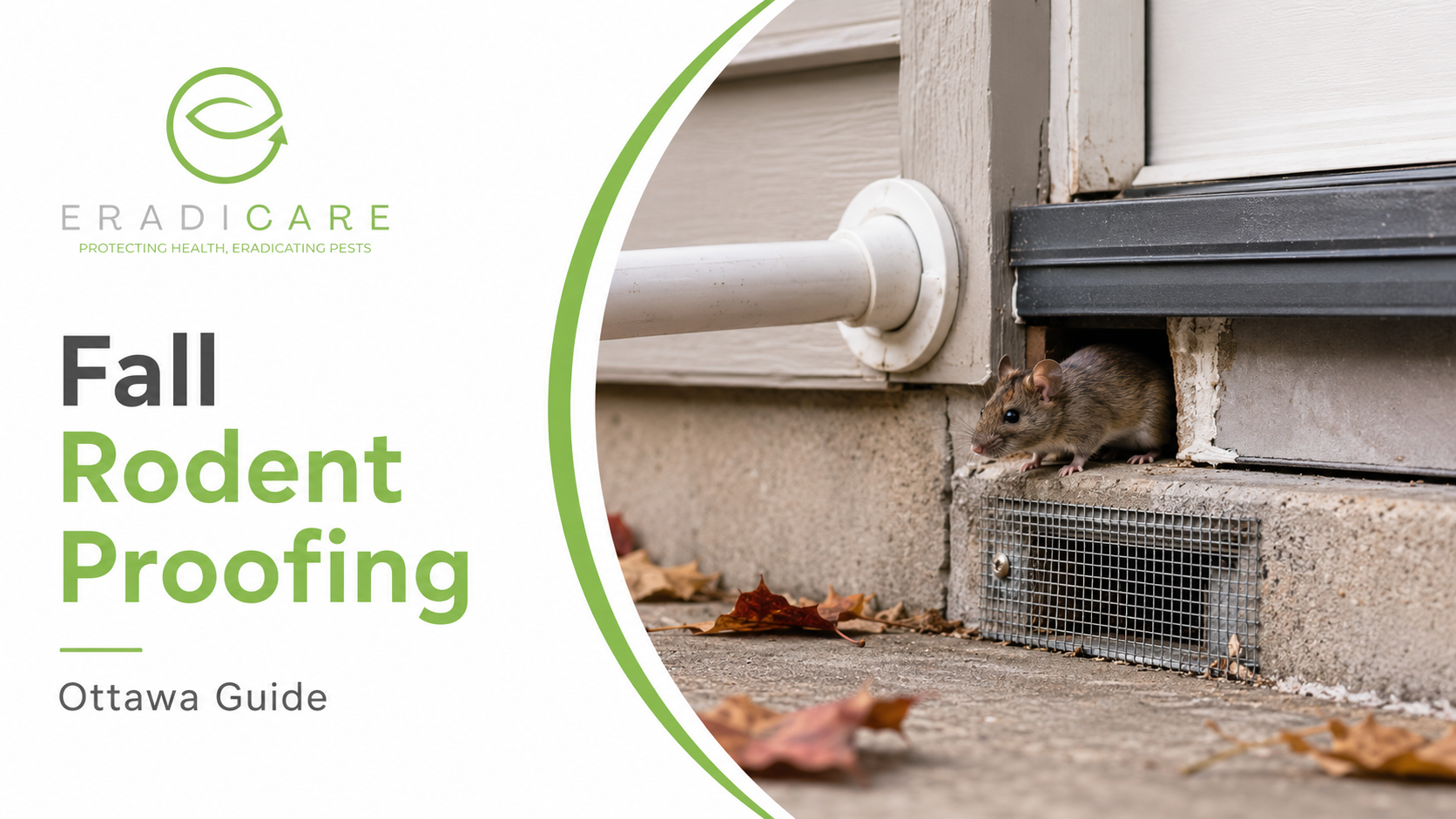
Fall rodent proofing helps you find entry points, remove attractants, and deal with mouse or rat activity before colder weather pushes rodents closer to Ottawa buildings.
Effective proofing involves more than filling visible holes. First, you need to check whether rodents are already inside and identify the routes they may be using. Otherwise, sealing too soon could trap them indoors or move the problem elsewhere.
This guide explains how to inspect your property, choose suitable repairs, reduce food and shelter, and decide when professional Rodent Control Ottawa makes more sense than a DIY fix.
Quick Fall Rodent-Proofing Checklist
Before winter arrives, look for signs of current activity, including fresh droppings, gnaw marks, damaged food packages, nesting material, and scratching sounds.
Next, walk around the exterior and inspect foundations, doors, vents, utility lines, siding, decks, rooflines, and garage openings.
Inside the building, review common problem areas such as basements, kitchens, pantries, garages, attics, crawl spaces, and storage rooms.
You should also identify possible active routes by looking for staining, droppings, nesting material, or repeated activity near a gap.
However, avoid sealing an opening too soon. Deal with rodents already inside before closing a route they may still be using.
When repairing suitable gaps, choose durable materials that match both the opening and the surrounding building surface.
Doors and windows also deserve attention. Replace worn weather stripping and install suitable door sweeps where needed.
In addition, secure pantry goods, pet food, grass seed, and birdseed inside closed containers.
Keep garbage, recycling, green bins, and compost properly contained to reduce accessible food sources.
Outside, move firewood, debris, fallen fruit, and dense clutter away from the building to reduce potential shelter.
Any traps, bait stations, or monitoring equipment should remain out of reach of children and pets.
Finally, continue monitoring throughout winter by rechecking repaired areas and recording any fresh evidence.
Fall gives you time to complete this work before snow limits exterior access. However, fresh indoor signs call for more than routine seasonal maintenance.
Why Fall Is the Right Time to Rodent-Proof an Ottawa Property
As temperatures fall, mice and rats begin looking for warmth, shelter, food, and water. Homes, garages, restaurants, storage buildings, and commercial properties can provide all four.
Ottawa buildings often contain several possible access routes. For example, older foundations may develop cracks, while utility upgrades can leave gaps around pipes and cables.
Meanwhile, attached garages create a sheltered transition from outside to the living area. Roof vents, soffits, siding, doors, and basement windows can also deteriorate over time.
A fall inspection gives you time to find vulnerable areas before snow covers them. It also allows you to repair worn door seals and damaged vents, remove outdoor food and shelter, review signs from previous winters, arrange active rodent control when needed, and set up monitoring before sustained cold weather begins.
Past infestations can help you prioritize the inspection. For example, mice found in a basement last winter may point to nearby foundation gaps, utility penetrations, or basement windows.
Similarly, recurring garage activity may connect to a damaged door seal, stored birdseed, pet food, or an opening into the main building.
Seasonal Pest Control Ottawa should begin before rodents establish a regular indoor route. Even without a recent sighting, a fall check can uncover repairs that deserve attention.
Rodent Control and Rodent Proofing Are Not the Same
Rodent control deals with mice or rats that are already active. Rodent proofing, on the other hand, addresses the openings and building conditions that allow them to enter.
Some properties need only preventive maintenance. Others require both active control and structural exclusion.
For that reason, the order matters.
What Rodent Control Addresses
Rodent control focuses on current activity inside or around the property.
Depending on the situation, the process may involve confirming whether mice or rats are present, locating feeding, nesting, and travel areas, using traps or secured control equipment, monitoring changes in activity, removing accessible food and shelter, and planning follow-up visits.
Traps may help control rodents already indoors. However, they do not repair a damaged vent, foundation crack, garage-door gap, or opening around a utility line.
What Rodent Proofing Addresses
Rodent proofing focuses on structural access and recurring entry.
The work may involve repairing suitable foundation gaps, closing openings around pipes and cables, protecting vents without blocking airflow, improving door and window seals, repairing damaged siding or soffits, correcting garage-door gaps, and reducing access beneath decks, steps, or additions.
Proofing can reduce the risk of re-entry, but it does not automatically remove rodents already living inside the building.
A practical sequence looks like this:
Inspection → active rodent control where needed → structural exclusion → sanitation → monitoring
Check for Active Rodents Before Sealing Openings
Check for fresh mouse or rat evidence before closing a suspected access point.
If rodents still use the route, sealing it may trap them inside or force them into another room, wall void, or part of the building. Therefore, fresh evidence should trigger an inspection rather than an immediate repair.
Signs of Current Mouse Activity
Possible mouse signs include small droppings in cupboards, drawers, storage areas, or along walls. You may also find gnaw marks on food packaging, shredded paper, fabric, cardboard, or insulation.
Scratching inside walls or ceilings can provide another clue. In addition, food may disappear from shelves or show overnight damage.
Activity behind appliances, tracks along baseboards, and pets repeatedly watching the same location may also indicate mouse movement.
Mice often travel close to walls and hidden edges. However, a sighting in the kitchen does not necessarily mean the entry point is nearby.
Instead, the route may begin in a basement, garage, utility opening, crawl space, or wall void.
The Rodents in Ottawa guide can help readers compare common signs and understand where rodent activity may develop.
Signs of Current Rat Activity
Rat evidence may appear both indoors and outdoors.
Common signs include larger droppings, strong gnawing damage, and grease or rub marks along repeated travel routes.
You may also notice burrows near foundations, waste areas, or outdoor structures. Activity around garbage, green bins, or compost can provide another warning.
Damaged containers, movement beneath sheds, decks, or steps, and sounds inside walls, ceilings, or crawl spaces may also suggest rat activity.
Outdoor rat pressure often connects to food, water, dense shelter, damaged waste storage, or construction activity.
The Signs You Have Rats in Your Ottawa Home guide can provide more detailed identification support.
When Not to Seal an Opening Yet
Pause before closing a gap when fresh droppings appear beside it or scratching continues inside the building.
You should also delay sealing when a camera, monitor, or trap confirms current movement, staining suggests repeated use, or nesting material sits near the opening.
The same advice applies when someone has seen a rodent indoors, several possible routes remain open, or you cannot inspect the space behind the gap.
In these situations, Pest Inspection Ottawa or Rodent Control Ottawa may be the better starting point.
Once you understand the current activity, exclusion work can target the routes that matter.
How to Inspect the Exterior of Your Property
Follow the same route around the building each time. A consistent process makes it easier to spot gaps, damage, and fresh evidence.
Start at the front entrance. Then, move around the foundation, garage, utility lines, vents, decks, waste area, sheds, and roofline.
A flashlight and phone camera can also help you inspect dark corners and record areas that need a closer look.
Foundations and Ground-Level Gaps
Inspect the full foundation, including sections hidden behind plants, steps, storage, or utility equipment.
Look for cracks in masonry, gaps where siding meets the foundation, and openings around basement windows.
Damaged window wells, spaces beneath steps or porches, gaps around additions, and openings where different building materials meet also deserve attention.
Corners and older repairs require extra care. Over time, moisture, building movement, and seasonal temperature changes can reopen gaps that once appeared secure.
Doors, Windows, and Garage Openings
Exterior doors should close firmly without a visible gap.
Inspect door sweeps, weather stripping, frames, thresholds, basement entrances, patio doors, and garage side doors.
Pay particular attention to the lower corners of garage doors and any gaps where garage walls connect to the home.
Attached garages can provide warmth, cardboard, stored fabric, food, and a protected route into the living space.
Therefore, keep the main garage door closed when it is not in use. Store birdseed, pet food, and grass seed in solid containers rather than thin bags.
Utility Lines, Pipes, and Vents
Follow each pipe, cable, and service line to the point where it enters the building.
Check around water and gas lines, electrical cables, air-conditioning lines, internet and telephone cables, outdoor taps, dryer vents, exhaust vents, and sump discharge pipes.
An opening may look small outside while leaving a larger hidden space behind the wall. Therefore, take a clear photo if you cannot see the full gap.
Most importantly, any repair around a vent or utility line must allow the component to keep working safely.
Rooflines, Soffits, and Attic Vents
Rodent inspections should not stop at ground level.
Check for damaged soffits, loose fascia, unprotected attic vents, gaps near roof edges, and branches touching the structure.
Openings around chimneys and damage near upper additions may also provide possible routes.
However, avoid climbing onto a roof without proper equipment and experience. Instead, use binoculars, a zoomed phone camera, or an attic inspection to reveal problems without creating an unnecessary fall risk.
Decks, Steps, Sheds, and Additions
Attached structures can hide access routes and provide outdoor shelter.
Inspect beneath and around decks, porches, exterior stairs, ramps, sheds, enclosed patios, and building additions.
Look for burrows, stored food, nesting material, damaged skirting, and gaps where the structure meets the building.
How to Inspect Inside the Building
Indoor evidence can help you trace rodent movement toward a likely entry point.
For this reason, check the whole property rather than focusing only on the room where someone saw a mouse or rat.
Basement and Utility Areas
Basements often show the clearest connection between an outdoor opening and indoor activity.
Inspect foundation walls, rim joists, utility penetrations, furnace rooms, mechanical rooms, sump areas, basement windows, ceiling voids, and laundry connections.
Storage placed along walls should also receive attention because it can hide droppings, gnawing, or disturbed insulation.
Fresh evidence may point toward a nearby route. Still, avoid sealing the opening until you know whether rodents remain inside.
Kitchen, Pantry, and Food Storage
Rodents often visit kitchens because these areas offer food and water, even when the entry route begins elsewhere.
Check beneath sinks, behind the refrigerator and stove, inside lower cupboards, and along pantry shelves.
Pet feeding areas, garbage storage, dishwashers, pipe openings, and damaged food packaging also deserve attention.
First, move vulnerable food into closed containers. Afterward, clean crumbs and spills so any fresh activity becomes easier to identify.
Garage, Attic, and Storage Rooms
Quiet storage areas can hide rodent activity for longer periods.
Look for droppings near walls, shredded cardboard, damaged fabric, nesting material, food or seed spills, gnawed boxes, and disturbed insulation.
Gaps leading into wall or ceiling spaces may also indicate a travel route.
Where practical, reduce storage along walls. Clear sightlines make monitoring easier and remove concealed shelter.
What Materials Work for Rodent Proofing?
The right material depends on the opening, building surface, weather exposure, and repair size.
Durable repairs often use metal, masonry products, weather-resistant sealants, or purpose-made building components.
By contrast, a soft filler may close the visible surface without creating a lasting barrier.
Small Gaps Around Pipes and Cables
Some small service gaps may require metal mesh or steel wool secured with a suitable finishing material.
The metal adds resistance, while the finish keeps the repair stable and protects it from movement or weather.
Before repairing the gap, confirm that rodents are not actively using it.
You should also check whether the pipe or cable needs movement or future servicing. In addition, avoid blocking airflow or drainage.
Choose a finish that suits the surrounding material and recheck the repair after seasonal temperature changes.
Do not pack material around hot equipment, electrical components, or moving parts without qualified advice.
Larger Openings and Damaged Building Materials
Larger openings usually need a structural repair rather than filler alone.
Possible repair materials include metal mesh, metal flashing, masonry products, replacement siding, purpose-made vent covers, and carpentry repairs.
New doors, sweeps, or thresholds may also form part of the work.
The repair should match the building surface and allow doors, vents, drainage, and service lines to function correctly.
Why Foam Alone May Not Be Enough
Expanding foam can fill an irregular space, but rodents may damage exposed foam.
It can form part of a repair when paired with a more durable barrier and suitable finish. On its own, however, foam may create false confidence around an active or frequently used entry point.
Review older foam repairs for chewing damage, separation from the wall, weather deterioration, hidden gaps behind the surface, and new openings around the edges.
Ultimately, a lasting repair should address the complete gap rather than covering only the visible face.
Remove Food, Water, and Outdoor Shelter
Rodent proofing works better when the property offers fewer reasons for mice or rats to remain nearby.
For that reason, focus on food, waste, moisture, clutter, and shelter.
Food, Pet Food, and Birdseed
Store accessible food in durable, closed containers.
Pay particular attention to pantry ingredients, dry pet food, birdseed, grass seed, livestock or poultry feed, emergency food supplies, and food stored in garages.
Spilled seed beneath feeders also requires regular cleaning.
Bird-feeding areas can attract more than birds. Therefore, clean fallen seed regularly and prevent it from collecting near the foundation.
Inside, put pet food away between meals and wipe down feeding areas.
Garbage, Green Bins, and Compost
Poorly contained waste can support both mouse and rat activity.
Close bin lids fully, clean food residue, repair damaged containers, and remove spilled waste.
You should also follow local green-bin guidance, keep collection areas organized, avoid leaving loose garbage bags outdoors, and check the nearby ground for burrows.
Compost also needs regular attention. Keep food waste contained and reduce dense shelter around the unit.
Firewood, Clutter, and Vegetation
Rodents use clutter and dense vegetation as cover.
Move firewood away from the building and raise stored wood off the ground where practical.
Remove unused materials, clear dense weeds, trim vegetation near foundations, and organize shed storage.
Fallen fruit should also be removed, while open space around waste containers can make new activity easier to notice.
You do not need to remove every plant near the building. Instead, maintain enough clearance to inspect the foundation and identify fresh signs.
How to Clean Rodent Droppings Safely
Do not sweep or vacuum dry rodent droppings.
Dry cleaning can disturb dust from contaminated material. Instead, follow official wet-cleaning guidance.
A basic cleanup process may begin with ventilating the area when appropriate and keeping children and pets away.
Wear disposable gloves before wetting the droppings and nearby material with a suitable disinfecting solution.
Allow the surface to remain wet for the required contact time. Afterward, wipe up the material with disposable towels.
Seal the waste inside a bag, clean the surrounding surface, remove the gloves carefully, and wash your hands thoroughly.
Never handle nesting material with bare hands.
Large accumulations, insulation contamination, widespread activity, and confined spaces may need professional cleanup.
Additionally, speak with a healthcare professional if you have concerns following possible rodent exposure.
Fall Rodent Proofing With Children and Pets
Structural repairs, sanitation, and better storage can reduce rodent access without placing control products throughout the home.
However, an active infestation may still require traps, secured bait stations, or other control methods.
Placement should account for every child, pet, and animal that uses the building.
Before using control equipment, read and follow the product label.
Keep all devices inaccessible and avoid open bait placement.
Consider where pets eat, sleep, and play. You should also account for birds, reptiles, and small animals.
Tell the technician about every animal in the property and report any damaged or moved equipment.
Some professional plans may use tamper-resistant stations where rodenticide use is appropriate.
In each case, the technician should select the method and placement based on the pest, property, occupants, and product directions.
Pet-Safe Pest Control should reflect the actual household rather than applying the same setup to every property.
DIY Rodent Proofing Versus Professional Service
Homeowners can complete many basic prevention tasks.
However, fresh indoor activity, unclear routes, rat evidence, high-level openings, and complicated repairs often justify professional help.
Proofing Tasks a Homeowner May Handle
Reasonable DIY tasks may include replacing basic weather stripping and installing an appropriate door sweep.
Homeowners may also organize storage, secure food and birdseed, clean spills, improve waste storage, trim vegetation, move firewood, repair simple screens, and monitor for new signs.
Only repair areas you can access safely and understand clearly.
Otherwise, a rushed repair may cover evidence without solving the entry problem.
When Professional Inspection Makes Sense
Consider professional help when you hear rodents inside walls or ceilings or when fresh droppings keep appearing.
Evidence in several rooms, possible rat activity, or an unclear entry route also justify a closer assessment.
Professional help may also be necessary when roofline or attic access is required, several building materials need repair, or rodents return every winter.
Earlier DIY sealing failures, connected units, and equipment-placement concerns involving children or pets can make professional inspection more appropriate.
Residential Pest Control can help determine whether the immediate need involves active control, Rodent Proofing Ottawa, monitoring, or a combination.
What to Expect From Professional Rodent Proofing
A professional proofing service should begin with evidence and likely access routes rather than random sealing.
The assessment may review where and when activity occurred and compare mouse and rat evidence.
A technician may also inspect exterior vulnerabilities, check indoor travel areas, and assess whether rodents remain active.
The process can then prioritize likely entry points, recommend appropriate repairs, and plan control before exclusion when needed.
Sanitation, storage, monitoring, and follow-up expectations should also form part of the discussion.
Ask exactly what the proposed work includes.
Some providers complete selected exclusion repairs, while extensive roofing, carpentry, masonry, or building restoration may require another qualified contractor.
Before approving the work, confirm which openings the company will address and which materials it plans to use.
You should also ask whether the quote includes active rodent control, whether high-access work forms part of the service, what follow-up is available, and which repairs remain the owner’s responsibility.
A clearly defined scope prevents confusion after the work begins.
How Much Does Rodent Proofing Cost in Ottawa?
Rodent-proofing costs depend on the property and the repair scope.
Several factors can influence the quote, including building size, the number of openings, the location of each gap, and access difficulty.
Roofline or attic involvement, required materials, masonry or carpentry work, and current mouse or rat activity can also affect the cost.
Traps, monitoring, follow-up needs, and commercial reporting requirements may further change the service scope.
Repairing one door or utility gap does not involve the same work as addressing several foundation, garage, attic, and roofline openings.
Therefore, ask for a written explanation of the proposed work.
The quote should clearly state whether it covers active Rodent Control Ottawa, exclusion only, or both.
For broader price information, see Pest Control Cost Ottawa.
Fall Proofing for Ottawa Tenants and Landlords
Tenants should report signs promptly.
Meanwhile, landlords and property managers should investigate building conditions and coordinate the appropriate response.
The following information offers general guidance rather than legal advice.
What Tenants Should Do
Tenants can help by reporting droppings, scratching, sightings, and damage.
Taking photos and identifying the affected rooms can provide useful evidence.
They should also keep food properly stored, follow the treatment plan, and provide access for inspection and follow-up.
Damaged doors, screens, vents, and pipe gaps should be reported promptly.
At the same time, tenants should avoid making unapproved structural repairs.
Do not carry infested belongings into hallways, shared storage, or neighbouring units.
What Landlords and Property Managers Should Do
Landlords and managers should review foundations, doors, vents, and service openings.
They may also need to investigate activity in adjoining units, garbage and storage areas, common basements, and mechanical rooms.
Shared plumbing, wall voids, resident reports, communication, and access for inspection and follow-up also deserve attention.
Most importantly, repairs should address the building rather than only one room.
Rodents can move through shared structures in townhouses and apartment buildings.
As a result, the service scope may need to extend beyond the first unit that reports a problem.
Fall Rodent Proofing for Ottawa Businesses
Commercial properties should inspect loading areas, food storage, waste zones, doors, utility penetrations, and outdoor shelter before winter.
Restaurants, warehouses, retail sites, schools, daycares, offices, and managed buildings face different pressures.
Therefore, the inspection should match the way the property operates.
Priority areas include receiving and loading doors, floor-wall junctions, and pipe or cable penetrations.
Garbage rooms, exterior waste containers, food storage, staff break areas, and mechanical rooms also require attention.
In addition, inspect warehouses, shelving, garage and delivery doors, roof and drainage areas, and landscaping near the structure.
Staff should record sightings rather than relying on memory.
Each report should include the date, time, location, and sign observed.
Commercial Pest Management may suit properties that need scheduled inspections, secure monitoring equipment, documented findings, and coordination across several departments or tenants.
Restaurant Pest Control Ottawa should also connect rodent proofing with receiving procedures, food storage, waste management, cleaning, and staff reporting.
Monitor the Property Through Winter
Rodent proofing still needs follow-up.
Snow, temperature changes, building movement, daily use, and later repairs can expose new gaps or damage earlier work.
Throughout winter, recheck repaired openings and look for fresh droppings.
Monitor food-storage areas, inspect garage corners, and listen for scratching.
Check traps and stations as instructed while watching for gnawed packaging.
Waste areas also need regular review.
Record any activity by date and location, and report signs that appear in new rooms.
No sightings can be a positive sign. However, regular checks help confirm that the property remains stable.
If mice return, compare the new evidence with earlier activity.
The cause may involve a missed gap, damaged repair, connected structure, or newly available food source.
For additional year-round advice, see How to Prevent Mice From Coming Back.
Frequently Asked Questions
When Should I Start Fall Rodent Proofing in Ottawa?
Start before sustained cold weather and snow make exterior inspections difficult.
Early fall gives you time to check for activity, complete repairs, improve storage, and monitor the property before winter.
Should I Seal a Mouse Hole if I Still Hear Scratching?
No. Investigate the indoor activity before sealing the suspected route.
Otherwise, closing it too soon may trap mice inside or redirect them into another part of the building.
Can Mice Chew Through Expanding Foam?
Mice may damage exposed foam.
Foam can support some repairs when paired with a durable barrier, but it should not replace that barrier where rodents can reach the opening.
What Is the Difference Between Mouse Control and Rodent Proofing?
Mouse control addresses rodents already active inside.
By contrast, rodent proofing closes suitable access points and reduces the building conditions that allow future entry.
Can Mice Enter Through a Dryer Vent or Attic Vent?
A damaged or poorly protected vent can provide a possible route.
However, any repair must block rodent access without preventing airflow or safe operation.
Will Peppermint Oil or Ultrasonic Devices Keep Mice Out All Winter?
Do not rely on deterrents as your main protection.
Instead, inspection, exclusion, food control, sanitation, and monitoring create a more complete prevention plan.
How Do I Rodent-Proof an Attached Garage?
First, inspect the main garage door, side doors, utilities, storage, wall connections, and routes into the home.
Next, secure food and seed.
Finally, repair suitable gaps after checking for current activity.
Is Rodent Proofing Safe Around Dogs, Cats, and Children?
Structural repairs and sanitation can reduce access without placing control products throughout the property.
However, when traps or bait stations are needed, their placement should account for children and animals.
Can I Vacuum Mouse Droppings?
No. Avoid sweeping or vacuuming dry droppings.
Instead, follow official wet-cleanup guidance and consider professional cleanup for large or difficult contaminated areas.
Who Is Responsible for Mouse-Proofing an Ottawa Rental Property?
Responsibility depends on the building condition, lease, and applicable rules.
Tenants should report signs promptly, while landlords or managers should assess structural openings and coordinate pest management.
How Often Should I Inspect Proofed Areas During Winter?
Check repaired areas periodically and whenever new signs appear.
In addition, reinspect after building work, weather damage, or changes around doors, vents, foundations, and utility lines.
How Much Does Professional Rodent Proofing Cost in Ottawa?
Cost depends on the property size, number of gaps, access, materials, current activity, and repair scope.
Therefore, request a written quote that separates active control, exclusion, and follow-up.
Arrange Fall Rodent Proofing in Ottawa
Basic maintenance may be enough when you find worn weather stripping, poor food storage, or a clearly inactive gap.
However, fresh droppings, scratching, rat evidence, several openings, or recurring winter activity require a closer assessment before sealing begins.
For fall rodent proofing in Ottawa and surrounding areas, call Eradicare Pest Control at 613-366-4444.
Explain where you have noticed activity, what signs you found, and whether mice or rats may already be inside.