
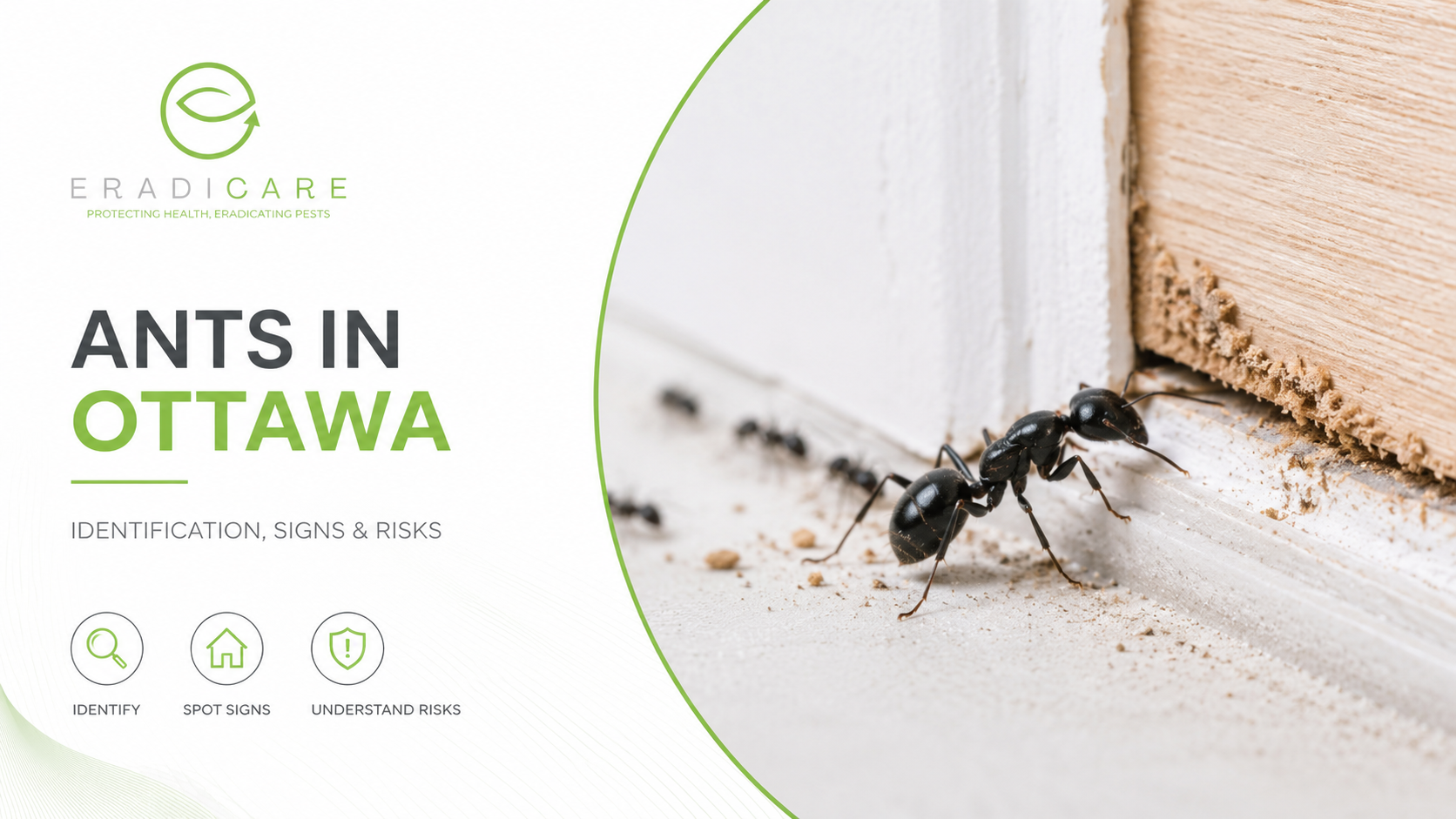
Ants inside an Ottawa property may be outdoor foragers looking for food, a recurring household nuisance, or evidence of a colony within the building.
The right response depends on the species, where the trail leads, and what you find nearby. Moisture, winged ants, damaged wood, or sawdust-like debris can all change the level of concern.
Start by recording the ants’ size, colour, location, trail, and time of activity. Then check for food, water, cracks, leaks, and damaged wood. Since several species look similar, avoid choosing a treatment based on appearance alone.
This guide will help you identify common ants, recognize signs of an infestation, understand the risks, and decide when professional Ant Control Ottawa makes sense.
Quick Guide to Ants Found in Ottawa Properties
When ants appear, check the following details before cleaning the trail or applying a product:
• Size: Compare several workers. Some colonies contain ants of noticeably different sizes.
Colour: Record whether the ants look black, brown, reddish, yellow, or mixed in colour.
Trail location: Follow the route toward food, water, a baseboard, window, wall gap, or exterior opening.
• Room: Kitchens and bathrooms often attract foraging ants. Carpenter ants may also appear near basements, attics, damp wood, or window frames.
• Season: Spring and summer bring more visible outdoor foraging. Repeated indoor activity during winter deserves closer attention.
Wings: Photograph winged insects before removing them because ants and termites require different responses.
Wood debris: Coarse, sawdust-like material beneath woodwork may point to carpenter ant excavation.
Moisture: Look for plumbing leaks, roof leaks, condensation, damaged caulking, or damp wood.
Number of affected areas: One short trail may come from outside. Activity across several rooms can suggest a more established problem.
• Previous DIY treatment: Note any sprays, powders, or bait you have used. This information can affect identification and treatment planning.
Clear photos make identification easier. Place a coin or ruler beside the ant for scale, and photograph both the insect and the area where the trail disappears.
What Type of Ant Is in Your Ottawa Home?
Several ant species can enter Ottawa properties. However, colour and size rarely confirm the species on their own.
Behaviour, worker-size variation, nesting location, season, food preference, and nearby building conditions often provide stronger clues.
Carpenter Ants
Carpenter ants deserve attention because they excavate wood to create nesting galleries. They do not eat wood like termites, but a long-standing colony can affect weakened or moisture-damaged material.
Workers may look black, brown, reddish, or a combination of colours. Their size can also vary within one colony. Therefore, seeing both large and small ants does not necessarily mean two species are present.
Possible carpenter ant signs include:
Large ants travelling indoors
Workers of noticeably different sizes
Sawdust-like debris beneath woodwork
Winged ants emerging indoors
Faint rustling inside a wall or ceiling
Activity near damp window frames, porches, roofs, or plumbing
Trails between trees, decks, sheds, and the building
Moisture often provides the most useful property clue. Check for leaking pipes, damaged caulking, roof problems, wet insulation, decaying trim, and wood that stays damp.
A few ants near recently moved firewood do not confirm an indoor nest. On the other hand, repeated winter activity, winged ants emerging from the structure, or fresh debris beneath wood should prompt a closer inspection.
Pavement Ants
Pavement ants often nest in soil beneath concrete, stones, patios, foundations, and walkways. From there, workers may enter through cracks near slabs, basement walls, doors, or utility openings.
They usually appear smaller than carpenter ants. Indoors, their trails often lead to crumbs, grease, pet food, or water.
Common activity areas include:
Foundation edges
Cracks in concrete
Patios and walkways
Basement floors
Door thresholds
• Kitchens beside exterior walls
Gaps around heating pipes
Even when the colony sits outside, the indoor trail can continue as long as ants have food and a reliable route into the building.
Odorous House Ants
Odorous house ants are small ants that may form persistent trails around kitchens, bathrooms, and other moisture-rich areas.
Crushed workers can produce a noticeable smell. Still, odour alone does not provide a reliable identification.
These ants may nest outdoors or use sheltered indoor spaces, including wall voids, insulation, spaces beneath floors, and areas around plumbing.
A colony may use several connected nesting sites. As a result, spraying only the visible trail may reduce activity briefly without reaching the source.
Pharaoh Ants and Thief Ants
Pharaoh ants and thief ants are tiny yellow, light brown, or reddish ants. They can look almost identical without close examination.
Correct identification matters because unsuitable treatment can disturb certain indoor colonies. Some small ant species may divide into additional nesting groups when queens and workers relocate.
Instead of guessing from colour, record:
Which rooms contain activity
Whether ants appear throughout the year
What food attracts them
How many separate trails you see
What happened after previous spraying
Whether nearby units have similar activity
Pest Inspection Ottawa may be appropriate when tiny ants spread through several rooms or return after repeated DIY treatment.
Little Black Ants and Outdoor Foragers
Small black or brown ants often nest outside and enter temporarily for food or water.
A few workers near a door, patio, window, or foundation do not always indicate an indoor colony. Start by cleaning food residue, controlling moisture, securing food, and watching the area.
Daily returning trails, activity in several rooms, or ants appearing well away from exterior walls deserve closer investigation.
How to Identify Ants More Accurately
Useful ant identification combines physical features with behaviour, trail location, and property conditions.
Why Size and Colour Are Not Enough
Several ant species overlap in colour. Workers from the same colony may also differ in size, while lighting and movement can distort what you see.
A professional may examine:
Overall body size
Narrow waist segments
Thorax shape
Antennae
Hair patterns
Variation between workers
Nest location
Trail behaviour
Food preference
Homeowners do not need to examine every anatomical detail. However, labels such as “small black ant” or “large black ant” should remain descriptions rather than confirmed species names.
Follow the Trail and Record the Location
An active trail often reveals more than one isolated ant.
Watch where workers:
Enter the room
Follow walls and floor edges
Gather near food or water
Disappear beneath trim
Move through pipe or cable gaps
Cross window frames
Enter woodwork
Take photos before wiping the trail away. Mark the entry location and note when activity appears strongest.
After documenting the route, remove accessible food and clean spills. Avoid placing several different products along the same trail because one treatment can interfere with another.
Winged Ants Versus Termites
Winged ants and termites can look similar from a distance. Their body shapes, however, have clear differences.
Winged ants generally have:
Elbowed antennae
A narrow waist
A visibly segmented ant-shaped body
Termites generally have:
Straighter antennae
A broader waist
A more evenly shaped body
Winged insects outdoors may come from a nearby colony. Several insects emerging from the same indoor wall, window frame, floor gap, or ceiling need closer identification.
Take clear photos or place a specimen in a sealed container when you can do so safely. Pest Inspection Ottawa can help determine whether the activity involves ants or another wood-related pest.
Signs of an Ant Infestation
An infestation usually involves recurring activity connected to a colony, nesting area, food source, moisture source, or building route.
Repeated Trails and Activity in Several Rooms
A trail that returns after cleaning suggests workers still have access to food, water, or an established route.
Signs of a broader problem include:
Several active trails
Ants in multiple rooms
Activity far from exterior doors
Workers emerging from floors or walls
Trails returning soon after sprayin
Large numbers near plumbing
Repeated activity around appliances
The colony may sit outside, inside the structure, or in another connected part of the building. Following the trail can help narrow the source.
Winged Ants Emerging Indoors
Winged ants are reproductive members of a mature colony.
One insect beside an open window may have flown indoors. By contrast, several winged ants emerging from one interior location create a stronger reason to inspect the area.
Record:
Where the insects appeared
How many you saw
Whether they came from wood, a wall, or a floor gap
The date and weather conditions
Whether wingless workers were present
Do not assume every winged insect is a carpenter ant or termite. Confirm the pest before choosing a treatment.
Sawdust-Like Material and Wood Damage
Carpenter ants remove material while creating galleries. The resulting debris can resemble coarse sawdust and may contain fragments of insects.
Check the area above the debris for:
Cracks in trim
Window or door frames
Roof or ceiling moisture
Porch connections
Gaps in walls
Damaged structural wood
Plumbing openings
Renovation debris and other building problems can look similar. Still, repeated debris alongside large ants or winged insects supports a closer carpenter ant assessment.
Ants During Winter
Repeated ant activity during an Ottawa winter may suggest a colony inside a heated or protected part of the building.
Individual carpenter ants can also arrive with firewood. Frequency and location therefore matter.
One ant beside a newly delivered log pile does not carry the same meaning as a trail emerging from an interior wall in January.
Where Ants Nest and Enter Buildings
Ant colonies may live outdoors, inside the structure, or across a primary nest and smaller connected sites.
Kitchens, Bathrooms and Utility Areas
Kitchens provide food and water. Bathrooms, laundry rooms, and utility areas offer moisture, warmth, and concealed service gaps.
Inspect:
Beneath sinks
Around dishwashers
Behind refrigerators and stoves
Near pet bowls
round garbage storage
Beside leaking pipes
Around floor drains
Where plumbing enters walls
Cleaning removes attractants, but it will not eliminate a colony inside a wall or beneath a concrete slab.
Wall Voids, Window Frames and Attics
Concealed voids offer shelter and stable temperatures.
Carpenter ants may use:
Damp window frames
Areas affected by roof leaks
Attic insulation
Wall cavities
Porch connections
Voids around chimneys
Damaged door frames
Spaces near bathroom plumbing
Look beyond the trail itself. Moisture stains, soft wood, peeling paint, and recurring leaks may reveal the conditions supporting activity.
Foundations, Concrete and Exterior Cracks
Outdoor ants often enter through:
Foundation cracks
Gaps beneath siding
Spaces around basement windows
Openings around pipes and cables
Patio-door thresholds
Concrete slab joints
Door-frame gaps
Sealing a known opening can reduce entry. However, a colony may use several routes, so closing one gap without following the trail can simply move the activity elsewhere.
Trees, Firewood, Decks and Attached Structures
Outdoor conditions can support carpenter ants and other species close to the property.
Inspect:
Branches touching the roof or siding
Decaying stumps
Firewood stored against the building
Damp decks and porches
Attached sheds
Rotting fence posts
Poorly drained areas
Wood touching soil
Move firewood away from the building and bring indoors only what you plan to use. Most importantly, repair moisture problems instead of relying on insect treatment alone.
Seasonal Ant Activity in Ottawa
Temperature, moisture, food availability, and colony development influence when ants become visible.
Spring Swarms and Moisture
Spring brings renewed colony activity. Mature colonies may release winged reproductive ants during this period.
Snowmelt can also expose foundation cracks, leaking windows, damp basements, and damaged exterior wood. These conditions may create both entry routes and nesting opportunities.
Summer Foraging and Indoor Trails
Outdoor foraging usually becomes more visible during summer.
Workers may enter through doors, foundations, patios, windows, and utility gaps. Kitchens, pet-feeding areas, patios, and commercial food spaces often develop noticeable trails when food and water remain available.
Even during warm weather, an indoor trail can originate from an outdoor colony. Follow the route before assuming the nest sits inside.
Fall and Winter Indoor Activity
Fall offers a useful opportunity to repair confirmed entry routes and correct moisture problems before colder weather.
Persistent winter activity needs closer attention. Outdoor colonies become less visible during cold periods, so ants repeatedly emerging inside a heated room may point to a protected or indoor nesting area.
Seasonal Pest Control Ottawa should reflect the pest, behaviour, and building condition rather than the calendar alone.
What Risks Do Ants Create?
The level of concern depends on the species, nest location, property type, and amount of activity.
Structural Risk From Carpenter Ants
Carpenter ants excavate wood to create nesting galleries.
They often begin in damp, decaying, or previously damaged wood. Over time, however, a colony may extend into nearby material.
Warning signs can include:
Large workers indoors
Winged ants emerging from the building
Recurring sawdust-like debris
Activity near damp wood
Rustling inside walls
A history of roof or plumbing leaks
Treatment alone cannot repair water damage, roof defects, or weakened wood. Those problems may require a qualified contractor.
Food and Commercial Property Concerns
Ants can enter food, packaging, utensils, equipment, preparation spaces, and storage areas.
In restaurants and other food businesses, even a small trail requires attention because workers can move between floors, waste zones, hidden nesting sites, and food areas.
Commercial properties should:
Protect exposed food
Clean spills and grease
Inspect waste areas
Record trail locations
Check plumbing and moisture
Review receiving areas
Arrange identification when activity continues
Commercial Pest Management may suit businesses that need scheduled monitoring, documentation, and coordination across multiple areas.
Bites, Stings and Health Concerns
Most household ants create a nuisance or property concern rather than a major medical risk.
Some species can bite or sting, and reactions vary between individuals. Do not diagnose a skin mark from appearance alone.
Seek medical advice for concerning symptoms. If pesticide exposure may have occurred, follow the product label and contact an appropriate poison-information or healthcare service.
Why Do Ants Keep Coming Back?
Recurring ants usually mean the colony, food source, moisture source, or entry route still exists.
The Nest May Be Away From the Trail
Visible workers may travel a considerable distance from the colony.
A countertop spray might kill some workers without reaching queens, developing ants, or the rest of the colony. Once the application fades, another group can resume the route.
Instead of focusing only on visible workers, watch where the trail disappears and what attracts the ants.
Food and Water Sources Remain Available
Small amounts of food can maintain a trail, particularly when ants also have moisture and shelter.
Common sources include:
Grease beneath appliances
Sugar residue
Open food
Pet bowls
Recycling
Garbage
Leaking taps
Damp sponges
Condensation
Damaged food packaging
Cleaning should go beyond the visible countertop. Check beneath appliances, inside lower cupboards, around waste containers, and beside plumbing.
Sprays May Interfere With Bait
Ant bait depends on workers finding the material and carrying it through the colony.
Spraying the same trail can repel or kill workers before that process takes place. Unsuitable sprays may also disturb certain indoor colonies and change their movement.
Do not combine several products without knowing how they interact. Follow the label or the instructions supplied with professional treatment.
DIY Ant Control Versus Professional Treatment
DIY steps can help with occasional outdoor foragers and simple entry routes. Professional treatment becomes more useful when the species, nesting location, or level of risk remains unclear.
Steps You Can Take First
Begin with practical, non-chemical steps:
Photograph the ants and trails
Store food in closed containers
Remove grease and sugar residue
Put pet food away between meals
Repair plumbing leaks
Empty garbage regularly
Seal confirmed entry gaps
Trim branches touching the building
Move firewood away from exterior walls
Monitor the same areas for new activity
Registered ant bait may suit some situations when used exactly as directed. However, no single bait works for every species, nesting site, or food preference.
When Professional Ant Control Makes Sense
Consider Ant Control Ottawa when:
Large ants repeatedly appear indoors
Winged ants emerge from the building
Sawdust-like debris appears near wood
Several rooms contain active trails
Ants remain active during winter
Tiny yellow or brown ants spread after treatment
The nest may be inside a wall, attic, or slab
Moisture-damaged wood is involved
DIY treatment has not reduced activity
Ants affect a restaurant, daycare, healthcare site, or food-storage area
Residential Pest Control can connect the likely species, infestation level, nesting location, building condition, and service approach.
What to Expect From a Professional Ant Inspection
A professional ant inspection should begin with identification and trail mapping.
The technician may ask:
When the activity began
Which rooms contain ants
Whether the activity changes with the weather
What attracts the ants
Whether winged insects appeared
Which DIY products you used
Whether leaks or damaged wood are present
Inspection areas may include:
Kitchens and bathrooms
Exterior foundations
Window and door frames
Utility penetrations
Basements and attics
Decks and porches
Trees and exterior wood
Food and waste areas
The goal is to determine whether ants forage from outside, nest within the property, or use several connected sites.
Save photographs and avoid removing every trail before the visit. The How to Prepare for Pest Control Treatment guide can help you organize food, pets, access, and pest evidence.
How Professional Ant Treatment May Be Planned
A treatment plan should match the species, nest location, severity, and way the property is used.
Depending on the problem, a professional approach may involve:
Species identification
Trail monitoring
Bait placement
Targeted crack or void treatment
Exterior entry treatment
Direct nest treatment when located
Moisture and sanitation recommendations
Follow-up monitoring
Outdoor foragers entering through one route need a different approach from carpenter ants using damp structural wood. Similarly, tiny indoor ants in several rooms require more careful identification than a short pavement ant trail beside an exterior door.
Ask the technician:
Which species do you suspect?
Is the nest likely indoors or outside?
Which areas will receive treatment?
Should visible trails remain undisturbed?
Which cleaning products should I avoid?
When should I report new activity?
Will the treatment require follow-up?
After the service, the What to Do After Pest Control Treatment guide can help with cleaning, re-entry, and monitoring.
Ant Treatment Around Children and Pets
Tell the pest control company about every child, pet, aquarium, bird, reptile, and small animal in the property.
Treatment planning may need to consider:
Children’s play areas
Pet-feeding locations
Floor-level access
Cages and terrariums
Aquariums
Areas used by customers or staff
Animals that cannot easily leave the property
Use registered products and follow the label. Keep bait, monitoring devices, and restricted treatment areas inaccessible as directed.
“Pet-safe” should not be treated as a universal promise. Pet-Safe Pest Control should account for the product, placement, animal, building, and service instructions.
How Much Does Ant Control Cost in Ottawa?
The cost of ant control depends on the species, nesting location, activity level, and treatment scope.
Price factors may include:
Number of affected rooms
Indoor or outdoor nesting
Carpenter ant investigation
Access to walls, attics, or slabs
Moisture-damaged wood
Commercial requirements
Monitoring and follow-up
Previous DIY applications
Structural repairs handled by another contractor
A short exterior trail does not require the same work as a carpenter ant colony linked to roof moisture or an infestation affecting several connected units.
Ask for a written quote that explains the inspection, treatment areas, follow-up, and work outside the pest-control scope. For broader pricing guidance, see Pest Control Cost Ottawa.
Ants in Ottawa Rental Properties
Tenants should report recurring activity. Landlords and property managers should assess relevant building conditions and coordinate treatment where needed.
What Tenants Should Do
Tenants can help by:
Reporting trails, winged ants, and wood debris
Taking clear photos
Identifying affected rooms
Storing food securely
Cleaning spills and waste
Reporting leaks
Following preparation and aftercare instructions
Providing access for inspection and follow-up
Avoid using several unapproved products, particularly in shared buildings where ants may move between units.
What Landlords and Property Managers Should Do
Property managers should review:
Activity in adjoining units
Shared plumbing and wall voids
Exterior foundation gaps
Garbage and recycling areas
Moisture and maintenance problems
Common kitchens and laundry rooms
Resident reports
Treatment and monitoring records
Ant activity in a multi-unit property may extend beyond the first apartment that reports it. Shared service lines, wall spaces, and common areas may all need consideration.
Ants in Ottawa Businesses
Businesses should act promptly when ants enter food, customer, storage, healthcare, or childcare areas.
Begin by recording:
Where the ants appeared
The date and time
Nearby food or water
The direction of the trail
Recent deliveries or construction
Plumbing and drainage issues
Waste-storage conditions
Staff should avoid spraying trails unless the treatment plan specifically directs them to do so. Uncoordinated product use can disrupt monitoring and make the nest harder to locate.
Commercial Pest Management may suit properties that need planned inspections, treatment records, staff reporting, and prevention across several areas.
Restaurant Pest Control Ottawa should connect ant management with receiving procedures, food storage, grease removal, waste control, and cleaning beneath equipment.
How to Help Prevent Ants From Returning
Long-term prevention should address food, water, entry routes, moisture, and exterior nesting conditions.
Remove Food and Water Sources
Reduce indoor attractants by:
Storing food in closed containers
Cleaning crumbs and spills promptly
Removing grease beneath appliances
Emptying garbage regularly
Managing recycling
Putting pet food away between meals
Repairing leaking taps and pipes
Drying damp areas
Cleaning food-preparation equipment
Sanitation will not remove every ant colony. Still, it makes indoor trails less rewarding and helps you spot new activity sooner.
Seal Entry Routes
Once you understand the trail, repair suitable openings around:
Foundations
Doors
Windows
Pipes and cables
Patio thresholds
Siding
Exterior trim
Concrete slab cracks
Do not seal a winged-insect emergence point until you have confirmed what is coming from the structure.
Correct Moisture and Wood Problems
Carpenter ant prevention should include building maintenance.
Address:
Roof leaks
Plumbing leaks
Damaged caulking
Rotting window frames
Damp porch wood
Poor drainage
Wet insulation
Wood-to-soil contact
Damaged exterior trim
Treatment may reduce the ants, but damp or decaying building materials can continue supporting nesting activity until the underlying problem is repaired.
Frequently Asked Questions
How Can I Tell What Type of Ant Is in My Ottawa Home?
Use the ants’ size, colour, worker variation, trail location, wings, nesting signs, and nearby moisture as clues. Since several species look similar, recurring or unusual activity may require professional identification.
Are Large Black Ants Always Carpenter Ants?
No. Large black ants may be carpenter ants, but size and colour alone cannot confirm the species. Worker-size variation, wood debris, moisture, and repeated indoor activity provide better clues.
What Does Sawdust-Like Material Near a Window or Baseboard Mean?
It may indicate carpenter ant excavation, especially when large or winged ants appear nearby. However, damaged wood and renovation debris can look similar, so inspect the source before drawing a conclusion.
Are Flying Ants Inside the House a Sign of an Infestation?
Several winged ants emerging from one indoor location can indicate a mature nearby colony. One insect beside an open window may simply have flown inside.
How Can I Tell Winged Ants From Termites?
Winged ants usually have elbowed antennae and a narrow waist. Termites have straighter antennae and a broader waist. Save a clear photo or specimen when identification remains uncertain.
Why Do Ants Keep Coming Back After I Spray Them?
A spray may kill visible workers without reaching the colony. Food, water, moisture, and entry routes may also remain, allowing the trail to return.
Should I Use Ant Bait and Insect Spray at the Same Time?
Do not spray around ant bait unless the label or technician directs you to do so. Sprays may disrupt worker movement and reduce bait transfer.
Why Am I Seeing Ants Indoors During Winter?
Repeated winter activity may indicate a colony in a heated or protected area. Individual carpenter ants can also arrive with firewood, so consider the frequency and location.
Can Carpenter Ants Damage a House?
Yes. Carpenter ants can excavate wood to create nesting galleries. They often use damp or damaged material, so moisture control and building repairs may also be necessary.
Are Ant Treatments Safe Around Children and Pets?
Safety depends on the product, placement, and instructions. Tell the technician about children and animals, keep pest-control equipment inaccessible, and follow the product label.
Who Handles an Ant Infestation in an Ottawa Rental Property?
Responsibility depends on the building condition, lease, and applicable rules. Tenants should report activity promptly, while landlords or property managers should assess maintenance issues and coordinate suitable pest management.
How Much Does Professional Ant Control Cost in Ottawa?
Cost depends on the species, nest location, number of affected areas, access, treatment plan, and follow-up. Request a written estimate that explains the scope clearly.
Need Help Identifying or Controlling Ants?
A few ants near an open door may only require cleaning, monitoring, and basic entry-point maintenance. Repeated trails, winged ants indoors, winter activity, several affected rooms, or carpenter ant signs need closer investigation.
For help with ants in Ottawa and surrounding areas, call Eradicare Pest Control at 613-366-4444. Explain where the ants appeared, what they look like, and whether you found wings, moisture, wood debris, or recurring trails. You can also ask whether Eradicare’s current free estimate offer applies to your property.