

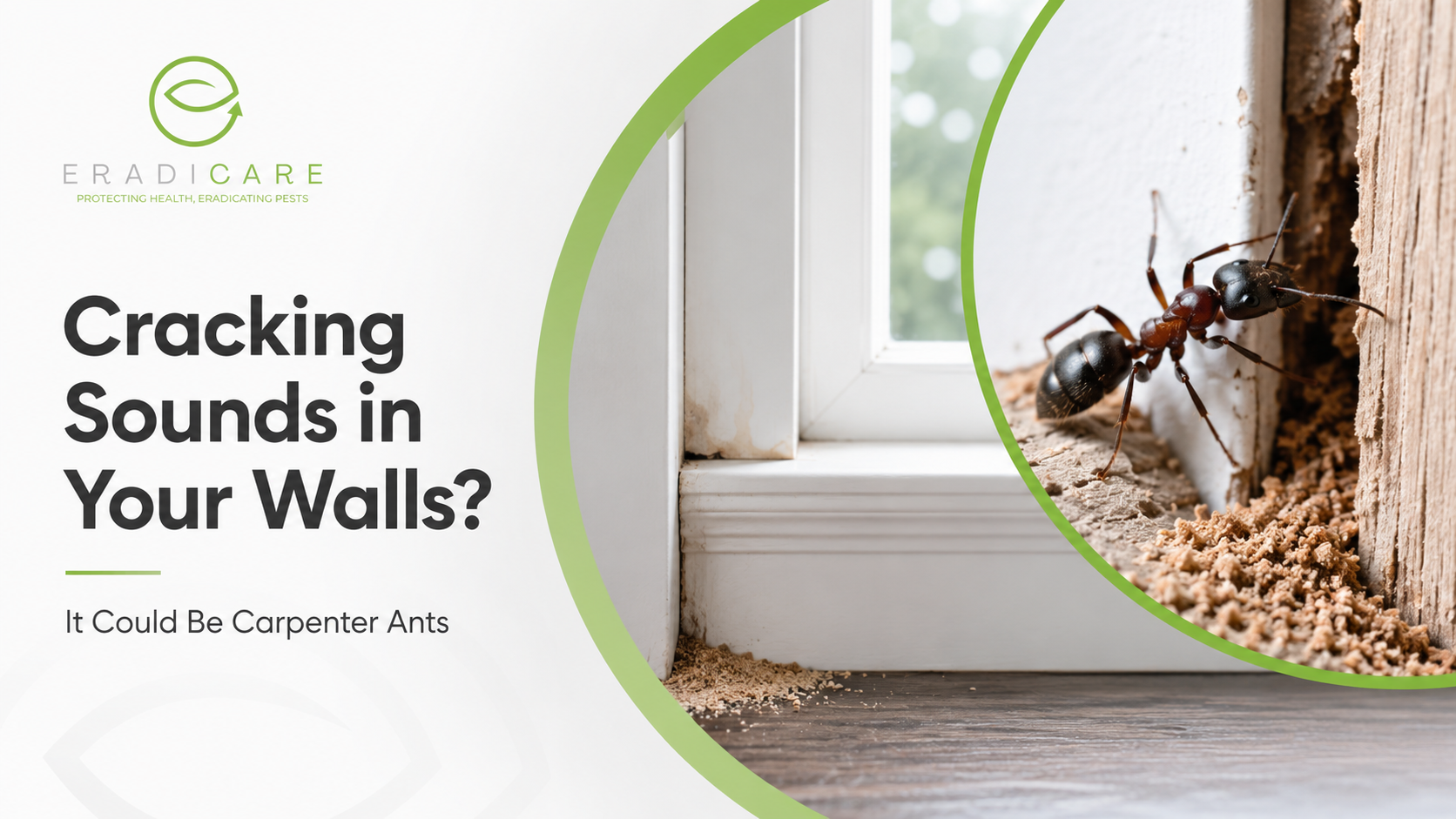
A faint rustling sound inside a wall can come from an active carpenter ant colony, especially when the house is quiet at night. Cracking, clicking, or movement sounds alone, however, do not confirm that ants are present.
Look for supporting evidence before drawing a conclusion. Large ants, sawdust-like debris, winged ants, repeated traffic through one opening, and activity near damp wood provide stronger clues.
This guide explains how to recognize carpenter ants in walls, where they may nest around Ottawa properties, what risks they create, and when a professional assessment may be worthwhile.
Can Carpenter Ants Make Sounds Inside Walls?
Yes. An active carpenter ant colony may produce a faint, dry rustling sound inside a wall, ceiling, hollow door, or another enclosed space.
The sound may come from ants moving through galleries or disturbing dry material around the nest. It is often easier to notice late in the evening, after household activity, appliances, and outdoor traffic have quietened.
Homeowners sometimes describe the noise as cracking, scratching, crinkling, or subtle movement. Those descriptions can help narrow down the location, but they cannot identify the cause.
Carpenter ants are only one possibility. Mice, pipes, heating ducts, loose building materials, and normal expansion or contraction can create similar sounds.
Instead of relying on the noise, record where it occurs, when it begins, how long it lasts, and whether ant activity or wood debris appears nearby.
Why Sound Alone Cannot Confirm Carpenter Ants
Wall noise is a clue, not a diagnosis.
Carpenter ants become more likely when the sound appears alongside physical evidence. For example, a dry rustle near a damp window frame deserves more attention when large ants repeatedly use a nearby gap and coarse debris collects beneath the trim.
An occasional click with no ants, frass, moisture, or recurring activity may have a completely different source.
Sound can also travel through joists, pipes, wall cavities, and ducts. What seems to come from one corner may begin higher in the wall, inside the ceiling, or in an adjoining room.
Do not cut into drywall just to investigate the noise. Pipes, electrical wiring, insulation, and other concealed building materials may sit behind the surface.
A safer first step is to document the sound and inspect the surrounding room and corresponding exterior wall for stronger signs.
What Carpenter Ants Look Like
Carpenter ants belong to the genus Camponotus. They are generally larger than many common household ants, although workers from the same colony can vary in size.
Colour is less useful than many people assume. Depending on the species, workers may appear black, brown, reddish, or a mixture of colours.
Size, Colour and Body Shape
Carpenter ants have six legs, elbowed antennae, and a narrow waist between the middle and rear sections of the body.
One colony may contain both large and small workers. Finding different-sized ants on the same trail does not necessarily mean that two species are present.
A large black ant found indoors could be a carpenter ant, but size and colour cannot confirm the species. The trail, finding location, moisture conditions, and nesting evidence also matter.
Take a clear photograph from above and from the side when possible. A ruler or coin beside the insect can provide useful scale.
The Ants in Ottawa: Identification, Signs and Risks guide can help you compare carpenter ants with other ants found around local homes and businesses.
Winged Carpenter Ants
Winged carpenter ants are reproductive members of a mature colony.
Several winged ants emerging from one wall, ceiling area, window frame, or section of trim can suggest an established colony nearby. One insect beside an open window may simply have flown indoors.
Winged carpenter ants have a narrow waist and elbowed antennae. Their front wings are generally longer than the rear pair.
Termites also produce winged insects, so preserve a specimen or clear photograph when identification is uncertain.
Winged ants often become more noticeable in spring as temperatures rise. Indoor emergence during colder weather may point to activity in a heated or protected part of the building.
Stronger Signs of Carpenter Ants in Walls
Physical evidence carries more weight than sound alone.
The most useful clues include sawdust-like frass, repeated large-ant traffic, indoor winged ants, activity after sunset, and deteriorated wood near a moisture source.
Sawdust-Like Frass
Carpenter ants excavate wood to create galleries. Unlike termites, they do not consume the wood.
As they work, they remove wood fragments and other material from the nesting area. This debris is known as frass.
Frass may resemble coarse sawdust, small wood shavings, or mixed debris. It can collect beneath baseboards, door trim, window frames, ceiling joints, deck connections, and small openings in wood.
Construction dust and deteriorating building material can look similar. Frass becomes more meaningful when large ants, winged ants, or repeated trail activity appear nearby.
Photograph the material before cleaning it. Then check whether it returns and where it collects.
Large Ants Entering One Opening
Repeated traffic through the same wall gap is a useful location clue.
Workers may use openings around trim, siding, plumbing, cables, windows, rooflines, doors, or foundation joints. The trail may connect an indoor satellite colony with an outdoor parent colony or food source.
Observe from the side without blocking the route. Note whether ants are entering, leaving, or travelling in both directions.
One ant crossing a room tells you very little. A steady trail to one opening deserves closer attention.
Avoid sealing the gap before the colony has been assessed. The ants may switch to another route, making the source harder to trace.
Nighttime Ant Activity
Carpenter ants are often easier to observe after sunset.
Workers may leave protected nesting areas in search of food and water. Indoor trails commonly appear around kitchens, bathrooms, exterior doors, window frames, and plumbing walls.
Reduce nearby noise and watch the area from a comfortable distance. A flashlight can help you follow movement without disturbing the trail.
Record the time, room, wall, and direction of travel. During daylight, inspect the opposite side of the wall and the matching exterior area.
A repeated evening pattern provides more useful information than one isolated daytime sighting.
Damaged or Hollowed Wood
Carpenter ant galleries are usually smooth and tend to follow the grain of the wood.
Possible warning signs include recurring frass, small openings, softened trim, hollow-sounding sections, or ants emerging from cracks. Still, a concealed gallery may not be visible behind drywall or siding.
Carpenter ants often use wood already affected by moisture or decay. They can also occupy existing wall voids, insulation, hollow doors, and gaps around structural materials.
Frass near one piece of trim does not prove that load-bearing framing has been damaged.
The practical risk depends on the colony’s location, how long it has been active, and the condition of the surrounding material.
Carpenter Ants Versus Termites
Carpenter ants and termites are both associated with wood, but their behaviour is different.
Carpenter ants excavate wood to create nesting galleries. Termites consume wood as food.
Ants have elbowed antennae and a narrow waist. Termites usually have straighter antennae and a broader waist.
Their winged forms also differ. Winged ants generally have front wings longer than their rear wings. Termite wings tend to be more similar in length.
Carpenter ant frass may collect outside a gallery because the colony removes debris from the nest. Termite evidence may include mud-like shelter tubes, damaged wood, or discarded wings.
Do not identify a winged insect by colour alone. Keep a specimen whenever possible.
Pest Inspection Ottawa may be appropriate when the insect is damaged, several wood-associated pests are possible, or the activity involves a concealed structural area.
Why Carpenter Ants Nest in Walls
Walls offer protection, warmth, travel routes, and access to wood or existing hollow spaces.
Moisture often makes an area more suitable, but ants may also use dry voids, hollow doors, insulation cavities, roof spaces, and gaps behind trim.
Moisture and Decaying Wood
Damp or decaying wood is easier for carpenter ants to excavate.
Common moisture sources include plumbing leaks, damaged flashing, leaking windows, roof defects, poor drainage, condensation, and wet insulation.
Carpenter ant activity can therefore reveal a building condition that also needs attention.
The ants do not create roof or plumbing leaks. Instead, existing moisture may make the affected wood easier to occupy.
Look for stains, swollen materials, peeling paint, damp odours, soft trim, and repeated condensation. A wall can contain moisture even when the interior surface appears dry.
Pest treatment and moisture repair may both be necessary. Neither replaces the other.
Wall Voids and Existing Hollow Spaces
Carpenter ants do not have to excavate every part of their nesting area.
They may use an existing wall void, insulation cavity, hollow door, attic space, or gap around framing. Galleries may then extend into suitable material nearby.
As a result, ants can live behind drywall without causing extensive damage to structural wood.
The nest may also sit some distance from the opening used by workers. Ants can travel through enclosed spaces before becoming visible indoors.
Treating or sealing only the visible gap may miss the actual colony.
Indoor Satellite Colonies
A carpenter ant infestation may involve a parent colony and one or more satellite colonies.
The parent colony is often outdoors in a tree, stump, log, or moisture-damaged wood. A satellite colony may develop inside a nearby building where conditions are warmer or more protected.
Workers can move between these locations along branches, fences, decks, utility lines, foundations, and structural gaps.
An indoor wall colony does not necessarily mean the entire infestation began inside the property. Reducing one indoor trail may also leave the outdoor source active.
A useful inspection should consider both the suspected wall and the surrounding exterior.
Common Carpenter Ant Locations in Ottawa Homes
Carpenter ants may use any area that provides suitable access and shelter.
Homes with ageing trim, previous water intrusion, damp basements, attached wood structures, or complex roof transitions may offer several possible nesting locations.
Windows, Doors and Exterior Trim
Window and door frames deserve attention because failed caulking, weather exposure, and damaged flashing can allow moisture into nearby wood.
Look for ants using trim joints, frass collecting on sills, peeling paint, staining, soft wood, or gaps between siding and the frame.
Older windows may contain concealed damage even when the visible interior trim looks intact.
Do not remove trim simply to search for ants. Record the trail and arrange a closer assessment when other evidence supports hidden activity.
Bathrooms, Kitchens and Plumbing Walls
Plumbing walls can offer moisture and enclosed travel routes.
Activity near a shower, tub, sink, dishwasher, or pipe opening becomes more significant when damaged cabinetry, leaks, or condensation are also present.
Ants may only be foraging in these rooms. Follow the trail before assuming that the nest is beside the food or water source.
Check below sinks, around pipe penetrations, beside failed caulking, and near areas with a history of leakage.
A plumber may be needed when the moisture source goes beyond a simple household repair.
Attics, Rooflines and Soffits
Damaged soffits, roof leaks, moisture around eaves, and poor ventilation can create suitable conditions above occupied rooms.
Ants may travel through an attic and appear near upper windows, ceilings, light fixtures, or roofline gaps.
Do not enter an attic with unsafe access, exposed wiring, unstable surfaces, mould concerns, or other hazards.
From outside, watch for movement around fascia, soffits, roof intersections, vents, and branches that touch the building.
Porches, Decks and Attached Wood
Porches, decks, stairs, railings, and other attached structures face regular exposure to rain, snow, drainage issues, and soil contact.
Damp boards, decaying posts, ledger connections, and wood attached directly to the house may support an exterior nest or provide an entry route.
Frass beneath an outdoor board may come from a local nest rather than the wall inside. Trace the ants before deciding where the colony is located.
Firewood, fence posts, landscape timbers, sheds, stumps, and fallen wood should also be considered during the exterior inspection.
How Carpenter Ants Enter a Building
Carpenter ants can travel a considerable distance from an outdoor colony.
Branches touching a roof or wall may create an elevated route. Vines, decks, fences, utility lines, and attached structures can serve the same purpose.
At ground level, workers may enter through foundation cracks, vents, door frames, siding gaps, window joints, damaged trim, and openings around pipes or cables.
Firewood can also carry ants indoors.
Entry does not automatically mean nesting. A worker may enter while searching for food and return to an outdoor colony.
Repeated traffic, frass, indoor winged ants, or activity during cold weather provides stronger evidence of a protected colony.
Before sealing an opening, determine whether it remains active and whether the colony has been addressed.
How Much Damage Can Carpenter Ants Cause?
Carpenter ants can damage wood by excavating galleries, although the severity varies widely.
A recent satellite colony using an existing wall void does not create the same concern as a long-established colony extending through moisture-damaged framing.
Risk depends on the colony’s size, location, duration, and the condition of the affected material.
In many cases, the ants expose an existing moisture problem. Decayed wood may already need attention even when the galleries are limited.
Recurring frass, indoor swarmers, multiple trails, softened wood, and a history of leaks in the same area deserve closer investigation.
Do not assume that a wall is unsafe because of one sound or ant trail. A pest professional can assess the insect activity, while a qualified building professional may need to evaluate framing, roofing, trim, or other damaged materials.
Pest treatment does not restore weakened wood or correct the moisture source.
What to Do When You Hear Sounds in a Wall
Start by gathering evidence without opening the wall or destroying an active trail.
Careful observation may help separate carpenter ants from rodents, plumbing sounds, building movement, or another source.
Observe and Record the Activity
Write down the affected room, exact wall, approximate height, time, and duration of the noise.
Notice whether the sound changes after dark, during warmer weather, after rain, or while plumbing and heating equipment are running.
Watch the baseboard, ceiling line, trim, windows, outlets, and matching exterior wall for ant movement.
Photograph or record ants, trails, frass, winged insects, and entry openings. Place a ruler or coin beside a specimen when safe to do so.
Good records can make identification and inspection more focused.
Check for Moisture Without Opening the Wall
Look for signs of water intrusion around the suspected area.
Bubbling paint, staining, damaged caulking, swelling, soft trim, damp flooring, musty odours, and recurring condensation can indicate a moisture issue.
Check the rooms beside, above, and below the wall. A roof transition, bathroom, appliance, window, or drainage problem may affect an area some distance from the visible sign.
Do not drill into the wall or insert tools around electrical outlets, plumbing, or heating components.
When a leak is suspected, arrange the appropriate plumbing or building assessment rather than relying on pest treatment alone.
Preserve Frass and Ant Specimens
Photograph frass before cleaning it.
Collect a small sample only when the area is safe and has not been treated with a pesticide.
Place a suspicious ant or winged insect in a sealed container. Record where and when it was found.
Avoid spraying the specimen or soaking the surrounding area with cleaner before identification.
Preserving evidence may prevent unnecessary treatment and help distinguish carpenter ants from termites or other insects.
What Not to Do
Do not cut open drywall based only on a sound.
Walls can contain wiring, pipes, insulation, vapour barriers, and other concealed materials. Opening the wrong area may cause damage without revealing the colony.
Avoid spraying every visible ant as soon as it appears. Killing the foragers can remove the trail needed to trace their route.
Do not combine several ant-control products or spray around bait unless the label or treatment plan allows it.
An active opening should not be sealed before the colony has been assessed. Ants may remain inside or start using another route.
Pesticide treatment will not repair wet wood, failed flashing, plumbing leaks, or weakened framing. Those conditions need separate attention.
DIY Carpenter Ant Control Versus Professional Service
DIY work can help with evidence gathering, food control, minor moisture correction, and exterior maintenance.
You can remove accessible food sources, repair a small leak, move firewood away from the building, trim vegetation touching the structure, and document active trails.
A registered household product may be suitable for a confirmed pest and approved location when used exactly as directed.
Carpenter ants in walls are more difficult because the nest may remain concealed. The visible trail may also lead to a parent colony elsewhere on the property.
Surface spraying can kill workers without reaching the nest. It may also disrupt the trail before the source has been found.
Professional Ant Control Ottawa becomes more appropriate when large ants repeatedly enter a wall, frass returns, indoor winged ants appear, moisture-damaged wood is present, or activity continues after reasonable prevention work.
The DIY vs Professional Pest Control Ottawa guide can help you compare access, risk, cost, and treatment complexity.
What to Expect From a Professional Carpenter Ant Inspection
A professional inspection should begin by confirming the ant species.
The technician may review specimens, photographs, frass, wall sounds, active trails, indoor winged ants, and the times when workers appear.
Inside the property, the inspection may focus on doors, windows, baseboards, plumbing walls, attics, rooflines, cabinets, hollow spaces, and areas with moisture damage.
Outside, the technician may consider tree contact, firewood, stumps, decks, porches, foundation gaps, exterior trim, utility routes, and possible outdoor colonies.
The aim is to determine whether the activity involves occasional foragers, an indoor satellite colony, or a larger outdoor source.
Not every wall needs to be opened. The evidence, access, construction, and treatment plan determine whether additional structural access is justified.
How to Prepare for Pest Control Treatment can help you preserve trails, clear access to affected areas, and organize the information you have collected.
How Carpenter Ant Treatment May Be Planned
Treatment should reflect the species, suspected nest location, active routes, moisture conditions, and property access.
A limited outdoor trail needs a different response from an indoor satellite colony connected to a damp window frame or leaking roof.
Depending on the findings, the plan may address the suspected nesting area, exterior sources, active trails, monitoring, and prevention.
It may also need to consider a parent colony, satellite activity, or several entry points.
No single method fits every carpenter ant problem. The approach depends on whether the colony can be located, how many areas show activity, and whether damaged materials restrict access.
Ask which areas are included, what preparation is required, what activity may continue after service, and whether monitoring or follow-up is recommended.
Moisture and Structural Repairs After Treatment
Carpenter ant treatment and building repair are separate jobs.
Pest control may address colony activity. It will not repair a roof leak, replace decayed framing, restore damaged trim, dry wet insulation, or improve poor drainage.
Once the ant route and nesting area have been assessed, deal with the moisture source at the correct stage.
Damaged wood may require a carpenter, roofer, contractor, or another qualified professional. Plumbing leaks should be handled by someone suitable for that work.
Do not cover damp or deteriorated material without first identifying why it became wet.
Correcting the building condition makes the same area less suitable for carpenter ants and other moisture-related pests.
Carpenter Ant Treatment Around Children and Pets
Tell the pest control provider about children, pets, aquariums, birds, reptiles, and sensitive occupants before treatment.
Preparation and access instructions depend on the treatment method, application area, and product label.
Children and animals should not touch bait, monitors, treated openings, or other pest-control materials unless the instructions allow access.
Pet food may attract foraging ants, so keep feeding areas clean and store food securely. Do not restrict necessary food, water, or medication in a way that conflicts with an animal’s care.
Pet-Safe Pest Control should mean a plan adapted to the animal, household, product, placement, and instructions. It should not be treated as an absolute safety guarantee.
How Much Does Carpenter Ant Control Cost in Ottawa?
The cost depends on the species, suspected nest location, access, number of affected areas, moisture conditions, and service scope.
A visible outdoor trail does not involve the same work as a colony behind a wall, above a ceiling, or close to a roof leak.
Attic access, exterior inspection, monitoring, follow-up, several colony locations, and previous DIY applications may also affect the quote.
Roof repairs, drywall work, plumbing, wood replacement, and other building services may fall outside the pest-control estimate.
Request a written quote that explains the inspection, included areas, treatment scope, preparation, follow-up, and excluded work.
For broader pricing information, see Pest Control Cost Ottawa.
Carpenter Ants in Ottawa Rental Properties
Tenants should report suspected carpenter ant activity promptly.
Include the affected room, sound location, trail direction, photographs, specimens, frass, and any visible leaks or damaged wood.
Avoid opening walls, moving damaged building materials, or applying several products without coordinating with the landlord or property manager.
The property manager may need to arrange inspection, treatment, moisture repair, access, communication, and reinspection.
In a townhouse or apartment, the activity may involve a shared wall, roof, exterior component, plumbing route, or adjoining unit.
Residential Pest Control may be more appropriate than isolated tenant treatment when shared parts of the building are involved.
Responsibility in an individual dispute depends on the property condition, tenancy circumstances, and current rules. An appropriate housing authority or legal professional may need to advise on specific cases.
Carpenter Ants in Ottawa Businesses
Businesses should document activity before staff spray or seal the route.
Record where ants appear, when the trail is active, whether frass or winged ants are present, and whether the area has a history of moisture or maintenance problems.
Commercial properties may include service walls, suspended ceilings, roof equipment, storage areas, landscaping, and restricted spaces that make source tracing more difficult.
Buildings used by customers, residents, patients, staff, or children may also require controlled access and clear communication.
Commercial Pest Management may suit properties that need coordinated inspection, maintenance records, monitoring, and follow-up across several areas.
Any moisture or damaged-wood condition should be addressed alongside the pest problem.
How to Prevent Carpenter Ants From Returning
Moisture control is the foundation of long-term prevention.
Repair leaking roofs, plumbing, windows, flashing, siding, and exterior trim. Improve drainage where water collects near the building, and address damp wood before decay progresses.
Store firewood away from the house and bring indoors only what you plan to use. Remove decaying logs, stumps, and damaged landscape timber where appropriate.
Trim branches and vegetation that touch the roof or siding. Check decks, fences, porches, railings, and attached structures for wet or deteriorated wood.
Once active routes have been assessed, seal suitable openings around doors, windows, foundations, vents, pipes, cables, and exterior trim.
Store food securely, clean spills, manage pet-feeding areas, and keep waste containers closed. Food control may reduce indoor foraging even when the colony remains outside.
Continue monitoring the original area for fresh frass, new trails, moisture, and winged ants.
What to Do After Pest Control Treatment provides broader aftercare guidance. Follow the carpenter ant service instructions when deciding when to clean, seal openings, or begin repairs.
Frequently Asked Questions
What Do Carpenter Ants Sound Like Inside a Wall?
An active colony may produce a faint, dry rustling sound. The noise is often easier to hear at night, but it cannot confirm carpenter ants without physical evidence.
Does a Cracking Sound Prove There Are Carpenter Ants?
No. Cracking, clicking, and movement sounds may come from pests, pipes, ducts, building movement, or loose materials. Look for large ants, frass, trails, moisture, and winged insects.
Can Carpenter Ants Live Behind Drywall Without Damaging Structural Wood?
Yes. They may use wall voids, insulation, and other hollow spaces without extensively excavating structural material. The risk depends on the nest and the condition of nearby wood.
What Does Carpenter Ant Frass Look Like?
Frass often resembles coarse sawdust or small wood shavings mixed with other debris. Photograph it before cleaning because deteriorated material and construction dust can look similar.
Are Large Black Ants Inside My Home Always Carpenter Ants?
No. Size and colour alone cannot confirm the species. Body shape, trail behaviour, frass, moisture, and nesting evidence offer stronger clues.
How Can I Tell Winged Carpenter Ants From Termites?
Winged carpenter ants have elbowed antennae, a narrow waist, and front wings longer than the rear pair. Termites generally have straighter antennae, broader waists, and wings of similar length.
Does Finding Carpenter Ants Mean I Have a Water Leak?
Not necessarily. They often favour moisture-damaged wood, but they can also use dry voids or enter from an outdoor colony. Check nearby windows, roofs, plumbing, and exterior wood.
Should I Open the Wall to Look for the Nest?
No. Do not cut into drywall without knowing what is behind it. Preserve the evidence and arrange an inspection when the suspected source remains concealed.
Can I Seal the Hole Where Carpenter Ants Enter?
Do not seal an active route before the colony has been assessed. The ants may use another opening, and the visible gap may be some distance from the nest.
Will Spraying the Visible Ants Kill the Colony?
It may kill exposed workers without reaching the colony. Returning trails, frass, or indoor winged ants suggest that the nest or supporting condition may remain.
Can Carpenter Ants Remain Active Through an Ottawa Winter?
Yes. A colony in a heated or protected part of a building may remain active through winter. Repeated indoor activity during cold weather deserves closer attention.
How Much Does Carpenter Ant Treatment Cost in Ottawa?
Cost depends on the nest location, affected areas, access, moisture conditions, treatment scope, monitoring, and follow-up. Ask for a written estimate explaining what is included.
Need Help With Carpenter Ants in Your Walls?
A wall sound by itself does not confirm carpenter ants. Dry rustling combined with frass, large ants, indoor winged ants, repeated trails, or moisture-damaged wood provides a stronger reason to arrange an assessment.
For help with suspected carpenter ants in an Ottawa property, call Eradicare Pest Control at 613-366-4444. Explain where the sound or ant activity occurs, when you notice it, and whether you have found frass, winged ants, leaks, or damaged wood.