
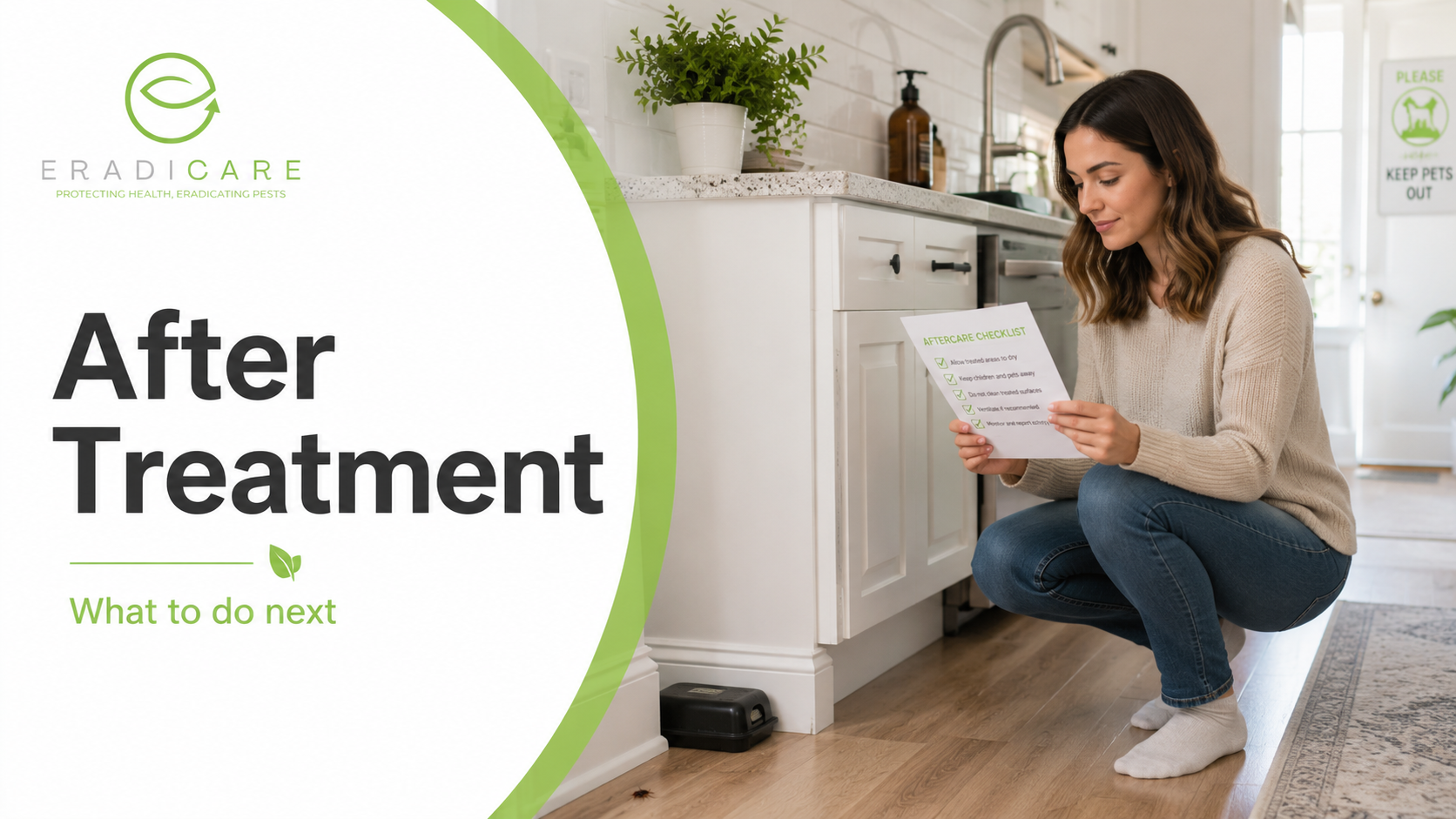
After pest control treatment, follow the technician’s re-entry instructions, keep children and pets away from restricted areas, and avoid cleaning targeted surfaces too soon.
The right aftercare depends on the pest, treatment method, and areas treated. For example, liquid applications, gel bait, traps, dust, steam, and heat may all require different steps.
Use this guide as a practical reference. However, the written instructions from your technician should guide every decision about re-entry, cleaning, ventilation, and follow-up.
What to Do Immediately After Pest Control Treatment
Once the service is complete, begin by reviewing the aftercare instructions. Check the treatment report, preparation sheet, invoice notes, or directions supplied by the technician.
Next, identify any restricted areas. Confirm which rooms, surfaces, cupboards, exterior spaces, or pest control devices must remain untouched.
Keep occupants away until the approved re-entry conditions have been met. In particular, children, pets, and other household members should not return to a restricted area too early.
You should also check the return requirements. Find out whether treated surfaces must dry, dust must settle, or ventilation must take place before anyone returns.
Meanwhile, leave all pest equipment in its original position. Avoid moving bait, traps, stations, or monitors unless the technician directs you to do so.
Delay unnecessary cleaning as well. Keep mops, vacuums, and household cleaners away from targeted treatment areas until you receive approval.
Food areas may require separate attention. Therefore, follow the directions for counters, dishes, utensils, and other food-contact surfaces carefully.
As you monitor the property, record where pests appear and whether sightings increase, decline, or move into new rooms.
Avoid applying additional DIY products during this period. Another spray or powder may interfere with the professional treatment.
Finally, keep the company’s contact details nearby. Contact the technician whenever the instructions are unclear or pest activity changes unexpectedly.
Together, these steps help protect the treatment while giving the technician useful information for any follow-up.
Read the Treatment Report and Aftercare Instructions
Start with the information supplied for your appointment.
A general online guide cannot identify the products, equipment, or surfaces involved in your service. For that reason, the technician’s directions should control your re-entry, ventilation, cleaning, and monitoring decisions.
Before touching treated areas, review the paperwork carefully. If a direction seems unclear, contact the company rather than relying on a universal timeline found online.
Keep People and Pets Out Until Re-Entry Is Allowed
Wait until the technician’s re-entry conditions have been met before bringing anyone back into a restricted space.
Some treatments require surfaces to dry. By contrast, others may involve settled dust, ventilation, bait placements, traps, or room-specific restrictions.
A missing odour does not mean the area is ready. Likewise, a dry-looking floor does not override the instructions provided for the treatment.
Ventilate Only as Instructed
Open windows or adjust ventilation only when the technician recommends it.
Fresh air may form part of the aftercare plan for some services. However, other treatments may not require immediate ventilation, so avoid changing indoor conditions without guidance.
Before leaving the property, confirm whether you should open windows after a stated period or run bathroom or kitchen exhaust fans.
Additionally, ask whether you need to adjust the heating or air-conditioning system, keep selected rooms closed, or avoid using specific equipment.
Following these service-specific directions prevents unnecessary guesswork.
How Long Should You Stay Out After Pest Control?
No single re-entry time applies to every treatment.
Instead, the correct timing depends on the treatment method, product-label directions, rooms or surfaces treated, and any drying or settling requirements.
Ventilation instructions may also affect the timing. In addition, the technician must consider children, pets, aquariums, sensitive animals, and commercial reopening needs.
Before the technician leaves, confirm both the return time and the restricted area. For example, one room may need to remain closed while the rest of the property stays accessible.
Liquid and Aerosol Treatments
Liquid or aerosol applications may require people and pets to remain away until treated surfaces have dried and all re-entry conditions have been met.
Rather than touching a surface to test it, follow the time and conditions provided by the technician.
Even after re-entry, certain areas may need to remain undisturbed. Baseboards, floor edges, cracks, and pest harbourage zones often receive targeted attention during treatment.
Dust, Bait, Trap, Steam, and Heat Services
Other methods follow different aftercare rules.
Dust applications may require occupants to stay away until the material has settled and the area meets the service instructions.
Gel bait, bait stations, traps, and monitors may not involve drying time. Nevertheless, people and pets should not touch, cover, clean, or move them.
Steam and heat services can also require separate instructions for furniture, fabrics, electronics, medication, plants, and heat-sensitive belongings. Therefore, use the plan supplied for that specific service.
When Can You Clean After Pest Control Treatment?
Clean surfaces that need immediate hygienic attention, but leave targeted pest treatment areas undisturbed until the technician approves normal cleaning.
Cleaning too early can remove residual applications, disturb bait, shift monitoring equipment, or make post-treatment activity harder to assess.
Areas You May Be Able to Clean
Food-contact and frequently used surfaces may require cleaning before normal use.
Depending on the treatment instructions, these areas may include kitchen counters, dining surfaces, cutting boards, dishes, utensils, and baby-feeding equipment.
Pet bowls, bathroom counters, frequently touched handles, and commercial food-preparation equipment may also need cleaning.
However, contact the company before cleaning if you are unsure whether a surface received treatment.
Areas That May Need to Remain Undisturbed
Targeted pest areas often need more time before routine cleaning resumes.
Common examples include baseboards, floor and wall edges, cracks, crevices, and areas behind appliances.
Cupboard corners, wall-void access points, gel bait placements, and dust-treated spaces may also need to remain untouched.
Likewise, avoid disturbing bait stations, traps, monitors, exterior nests, or treated entry areas.
Household cleaners may remove treatment or change pest travel patterns. Moreover, they can reduce the likelihood that pests will interact with bait.
Vacuuming, Mopping, and Deep Cleaning
The correct cleaning schedule depends on the pest and service method.
Open floor areas may return to normal use sooner than treated edges and harbourage zones. Meanwhile, some bed bug or flea programs may include planned vacuuming as part of the aftercare process.
Before deep cleaning, ask which floors you can mop and whether you may vacuum room edges.
You should also confirm whether you can clean beneath appliances, wipe baseboards, or return furniture to its normal position.
Finally, ask how to clean around bait, traps, and other pest control equipment.
A quick call can prevent you from removing treatment that still needs time to work.
Is It Normal to See Pests After Treatment?
Seeing some pests after treatment does not automatically mean the service failed.
Pests may leave hidden harbourage, interact with bait, or move through treated areas. In addition, some service plans rely on monitoring and follow-up rather than a single visit.
The meaning of a sighting depends on the pest, number observed, location, and treatment method.
Activity That May Be Expected
Depending on the service plan, you may notice a small number of live pests or slow and weakened insects.
Dead insects may also appear near treated areas. Similarly, you could observe activity around bait placements.
Rodents may interact with traps or stations, while ants may continue following established trails.
In some cases, pests may also leave cracks, appliances, or other hidden areas after treatment.
Instead of spraying a pest immediately, record the date and location. Your notes may help the technician evaluate progress.
Warning Signs That Need Follow-Up
Contact the pest control company if activity increases rather than declines or pests begin appearing in new rooms.
Fresh droppings that continue to accumulate also deserve attention. Similarly, report new damage to food packages.
Ongoing rodent noises inside walls or ceilings may indicate continuing activity.
You should also call if live pests remain concentrated around untreated areas or if a bait station, trap, or monitor breaks or moves.
New nests, structural damage, or related activity in neighbouring units may require further assessment.
Finally, contact the company when the results do not match the expectations discussed during service.
Early communication gives the technician a clearer picture of what has changed.
What to Do With Baits, Traps, and Pest Monitors
Leave professionally placed bait, traps, stations, and monitors where the technician installed them.
These tools may control pest activity while also providing useful information during follow-up.
For example, gel bait targets insects in places where they feed or travel.
Bait stations hold bait in a controlled placement and may show signs of pest interaction.
Rodent traps can help control and monitor indoor movement. Meanwhile, monitoring traps show whether activity continues in a particular location.
Insect monitors may also help identify harbourage and travel routes.
Avoid spraying around bait or moving a station to a more convenient spot. In addition, keep every pest control device away from children and pets.
If equipment opens, breaks, shifts, or catches an animal, contact the company for guidance.
Aftercare for Different Pests
Post-treatment care should match the pest. Bed bugs, cockroaches, rodents, ants, fleas, and wasps require different follow-up steps.
Bed Bugs
After bed bug treatment, follow the instructions for sleeping areas, laundry, bagged belongings, vacuuming, and follow-up visits.
Keep untreated items out of a treated room unless the service plan allows them to return. At the same time, avoid carrying potentially infested belongings into another bedroom.
Continue checking mattress seams, bed frames, headboards, bedside furniture, sofas, and upholstered chairs.
Other places where people sleep or rest also deserve regular inspection.
One bed bug sighting does not tell the whole story. Therefore, record the date and location, then report it according to the Bed Bug Extermination Ottawa follow-up plan.
Cockroaches
Leave cockroach bait and monitoring devices undisturbed.
Meanwhile, continue removing crumbs, grease, garbage, exposed food, and standing water.
Repair plumbing leaks as soon as possible and keep the areas around appliances accessible.
Another insect spray may interfere with professional bait or alter cockroach movement. For that reason, avoid applying additional products unless the technician recommends them.
Cockroach Extermination Ottawa may involve monitoring and more than one service stage when activity extends into appliances, wall gaps, bathrooms, kitchens, or connected units.
Mice and Rats
After rodent treatment, keep food secured and monitor the areas where activity occurred.
Watch for fresh droppings, new gnaw marks, and damaged food packages.
Scratching sounds, activity around traps or stations, and newly discovered openings may also indicate continuing rodent movement.
Leave traps and stations in place unless the technician asks you to move them.
Furthermore, avoid sealing a suspected active entry point before the correct stage of exclusion.
Rodent Control Ottawa should connect indoor activity with food access, shelter, travel routes, and structural entry points.
Ants and Carpenter Ants
Avoid wiping away bait or spraying active ant trails with another product.
Worker ants may continue travelling while interacting with bait. Instead of disturbing the trail, record its location and direction.
For carpenter ants, continue checking for damp wood, leaks, roof problems, damaged window frames, and moisture around decks or porches.
Although treatment may address the insects, repairs may still be needed to correct the conditions supporting them.
Fleas
Follow the supplied vacuuming and cleaning schedule after flea treatment.
Continue monitoring carpet edges, upholstered furniture, pet bedding, and rooms used by animals.
Veterinary care also matters because property treatment does not replace treatment for the pet.
Bring animals back only after the technician approves re-entry. Once they return, keep them away from restricted surfaces and pest control equipment.
Wasps, Hornets, and Exterior Treatments
Keep people and pets away from treated nest areas until normal access is permitted.
Avoid blocking the nest entrance immediately after service unless the technician tells you to do so.
Activity may continue around the site for a period. Therefore, early sealing could redirect insects into a wall or indoor space.
Rain or watering may affect some exterior treatments. However, the effect depends on the method and how soon the weather changed after application.
Wasp and Hornet Removal Ottawa may require follow-up when activity continues around wall voids, eaves, rooflines, or concealed nest sites.
Children, Pets, and Aquariums After Treatment
Children and animals should return only after the treatment-specific re-entry conditions have been met.
Once everyone comes home, keep restricted surfaces, bait, traps, monitors, and treated areas protected.
Children
Before children return, confirm that re-entry is allowed.
Next, check that pest equipment remains out of reach and keep treated cracks or edges inaccessible.
Clean any food-contact or play surfaces identified in the aftercare instructions.
In addition, explain which areas should not be touched and supervise young children in treated rooms.
Remember that a floor that looks dry may not be the only surface requiring restrictions.
Dogs, Cats, Birds, Reptiles, and Small Animals
Return animals only after the company permits re-entry.
Afterward, replace bowls, bedding, litter boxes, toys, and cages according to the aftercare directions.
Keep every pet away from bait, traps, dust placements, and restricted areas.
Birds, reptiles, and small animals may have different housing and ventilation needs. Therefore, tell the company about all animals rather than asking only about dogs or cats.
Aquariums and Fish
Follow the aquarium instructions before uncovering the tank, restarting equipment, or adjusting airflow.
The directions may address tank covers, air pumps, filtration systems, and room ventilation.
Aquarium food and the tank’s position in the room may also affect the aftercare plan.
If the written instructions do not address your setup, contact the company before making changes.
Food, Dishes, Clothing, and Bedding
Handle household items according to where the technician worked and what the treatment required.
Food and Kitchen Items
Discard food only if it remained exposed in a treated area or the technician advises you to remove it.
Before using the kitchen, confirm which food-contact surfaces need cleaning.
Wash exposed dishes, utensils, cookware, cutting boards, and baby-feeding equipment when the instructions require it.
At the same time, avoid cleaning targeted cracks, cupboard corners, edges, and bait placements.
Clothing and Bedding
Not every treatment requires you to wash all clothing and bedding.
Bed bug and flea services may include specific directions for laundry, drying, bagging, and storage.
By contrast, clothing stored away from an unrelated treatment area may need no special attention.
Follow the pest-specific plan instead of washing every fabric in the property.
What If Someone Entered the Area Too Early?
Leave the treated space and contact the pest control company for guidance related to the service.
If someone may have touched, swallowed, or inhaled a pest control product, contact the Ontario Poison Centre.
Seek emergency medical assistance for severe symptoms or breathing difficulty. For possible pet exposure, speak with a veterinarian.
When requesting help, provide the treatment location and the time of possible exposure.
Product information, when available, can also help. In addition, explain the type of contact and any symptoms.
Include the age of the person or the type of animal involved.
Most importantly, avoid diagnosing the situation yourself or judging the risk by odour alone.
How to Monitor Your Home After Treatment
A simple activity record can show whether the problem is improving, remaining stable, or spreading.
Create a Simple Pest Activity Log
Record the date and time of each sighting.
Next, note the pest observed, number seen, and room or area where the activity occurred.
Indicate whether the pest was alive or dead.
You should also document activity around bait, traps, or monitors.
Fresh droppings, damage, moisture concerns, and possible new entry points belong in the record as well.
Photos can also help, especially when the pest disappears before a follow-up visit.
When to Contact the Pest Control Company
Call the company when activity clearly increases or new rooms become affected.
Fresh evidence that continues to appear also requires attention.
In addition, report damaged pest equipment, unclear re-entry instructions, or confusing cleaning directions.
Contact the company immediately if a child or pet enters a restricted area or if you suspect exposure.
A scheduled follow-up may also require an update before the appointment.
Finally, mention any building conditions that may be causing recurring activity.
Your notes can help the technician decide whether the situation needs continued monitoring, another inspection, or an additional service stage.
How to Help Prevent Pests From Returning
Good aftercare also addresses the food, water, shelter, and access that support pest activity.
Improve Sanitation and Food Storage
Continue storing food in closed containers and cleaning crumbs or spills promptly.
Remove garbage regularly and keep recycling areas clean.
Pet food should be put away between meals.
Likewise, clean grease around cooking equipment and avoid leaving dirty dishes overnight.
Reducing unnecessary cardboard can also remove hiding places.
Sanitation does not replace treatment. Still, it removes conditions that may support continuing pest activity.
Repair Moisture and Structural Problems
Moisture can contribute to cockroach, ant, carpenter ant, silverfish, and other pest concerns.
Inspect the property for leaking pipes, damp cupboards, and basement seepage.
Damaged caulking, roof leaks, wet wood, and blocked drainage may also require repair.
Poorly sealed windows and doors deserve attention as well.
Ottawa’s spring thaw can reveal leaks and foundation issues that were less noticeable during winter. Consequently, addressing those conditions may reduce moisture-related pest pressure.
Plan Exclusion at the Correct Stage
Structural exclusion helps reduce pest entry, but timing matters.
Possible improvements include repairing screens and installing door sweeps.
Replacing damaged weather seals, closing utility gaps, and repairing vents may also reduce access.
Foundation openings and garage-door gaps should receive attention when they relate to pest movement.
However, identify active travel routes before sealing openings used by mice and rats.
Rodent Proofing Ottawa should follow a clear understanding of how animals enter and move through the building.
Aftercare for Ottawa Tenants and Landlords
Tenants should follow the treatment plan, document continued activity, and report new signs promptly.
Pests can move between units through shared walls, ceilings, plumbing lines, storage rooms, and garbage areas.
Therefore, one treated apartment may not represent the full extent of activity in a multi-unit property.
What Tenants Should Do
Tenants should follow the aftercare instructions for their unit.
Bait, traps, and monitors need to remain in place.
Residents should also record new pest activity and report signs in nearby or shared areas.
Avoid moving infested belongings into hallways or other units.
Additionally, notify management about leaks or structural gaps and provide access for scheduled follow-up.
What Landlords and Property Managers Should Do
Landlords and property managers should provide clear aftercare information.
They should also coordinate access for follow-up visits and record treatment or monitoring activity.
Sanitation and maintenance problems need timely attention.
Because pests can move through connected spaces, adjoining units and shared areas may also require consideration.
Management should communicate any changes to the service plan and arrange further assessment when evidence continues.
Clear communication reduces missed appointments and helps residents avoid disturbing the treatment.
Aftercare for Ottawa Businesses
Businesses should confirm reopening instructions, clean required food-contact surfaces, brief employees, and continue documenting pest activity.
Restaurants, offices, stores, warehouses, schools, daycares, and managed properties face different operating risks.
As a result, the aftercare plan should reflect the site and its daily use.
After treatment, confirm which areas may reopen.
Next, clean the food-contact surfaces identified in the instructions while leaving pest equipment in position.
Relevant employees should receive a clear briefing about restricted areas and reporting procedures.
Continue recording new sightings and inspecting waste or storage areas.
Leaks and structural damage should also be reported promptly.
Keep treatment reports accessible and confirm the next monitoring or follow-up date.
Commercial Pest Management may suit businesses that need ongoing inspection, monitoring, prevention, and coordination across several areas.
Seasonal Aftercare for Ottawa Properties
Ottawa’s seasons affect which areas need attention after treatment.
Winter
During winter, continue checking basements, garages, utility rooms, attics, and food-storage areas for rodent signs.
Cold weather can increase rodent pressure around exterior doors, foundations, vents, and utility openings.
Spring
After the thaw, look for seepage, plumbing leaks, damp wood, damaged seals, and foundation changes.
Repairing moisture problems may reduce conditions that support insects.
Summer
During summer, monitor decks, patios, eaves, sheds, outdoor waste areas, and vegetation touching the building.
Keep children and pets away from restricted exterior treatment zones.
Fall
Before temperatures drop, review doors, garages, vents, foundations, and utility penetrations.
However, complete exclusion only after the technician identifies active routes and confirms the correct timing.
Does Pest Control Follow-Up Cost Extra?
Follow-up costs depend on the service agreement and the work required.
Several factors may affect the price, including the pest species, property size, and number of affected rooms or units.
The treatment method and monitoring requirements can also affect the cost.
In addition, structural repairs, exclusion work, and the connection between new activity and the original infestation may influence the service scope.
Review your invoice, agreement, or treatment plan.
Then, ask whether monitoring, follow-up visits, or re-treatment form part of the original service.
Do not assume every additional visit is included. At the same time, one sighting does not always mean you need another paid treatment.
Frequently Asked Questions
Can I Mop the Floors After Pest Control Treatment?
You may be able to mop open floor areas. However, avoid treated edges, cracks, and baseboards until the company approves cleaning.
Why Am I Seeing More Insects After Treatment?
Treatment may cause insects to leave hidden harbourage or move through treated zones. Therefore, record the location and number, then contact the company if activity increases or spreads.
Should I Remove Dead Cockroaches or Other Insects?
You can usually remove dead insects from open areas after re-entry is allowed. However, avoid cleaning over bait, dust, monitors, or treated edges.
Can I Use Another Pest Spray After Professional Treatment?
Avoid applying another spray unless the technician recommends it. Extra products may interfere with bait, change pest movement, or make follow-up assessment more difficult.
Do I Need to Wash All My Dishes After Pest Control?
Wash dishes and utensils that remained exposed in a treated area or when the aftercare directions require it. By contrast, securely stored items may not need special cleaning.
Can My Dog or Cat Walk on the Floor After Treatment?
Pets may return only after the approved re-entry conditions have been met. Even then, keep them away from restricted surfaces, bait, traps, dust, and monitors.
Can I Sleep in My Bedroom the Same Night?
You may sleep in the room after the company approves re-entry and you have completed any bedroom-specific aftercare steps.
What Should I Do If My Child Touched a Treated Surface?
Move the child away from the area and contact the pest control company. If exposure may have occurred, seek advice from the Ontario Poison Centre.
Does Rain Affect Exterior Pest Control Treatment?
Rain may affect some exterior applications, depending on the treatment and when the rain began. Therefore, contact the company before assuming the service needs to be repeated.
How Long Should Bait Stations and Monitors Stay in Place?
Leave them in position until the technician removes or relocates them. These devices may continue controlling pests and tracking activity.
What Should an Ottawa Tenant Do if Pests Remain?
Document the new activity and report it to the landlord or property manager. Meanwhile, continue following the treatment plan and provide access for scheduled follow-up.
When Should I Contact the Exterminator for Follow-Up?
Call when activity increases, spreads to new areas, causes fresh damage, or differs from what the technician explained after the original service.
Need Help After Pest Control Treatment?
Your next step depends on what you are seeing.
Continue following the aftercare plan when activity matches the technician’s expectations.
However, contact the company when pests spread, fresh evidence continues, equipment becomes disturbed, or safety instructions remain unclear.
For pest control support in Ottawa and surrounding areas, call Eradicare Pest Control at 613-366-4444.
Explain which pest was treated, when the service took place, and what you have noticed since the appointment.