
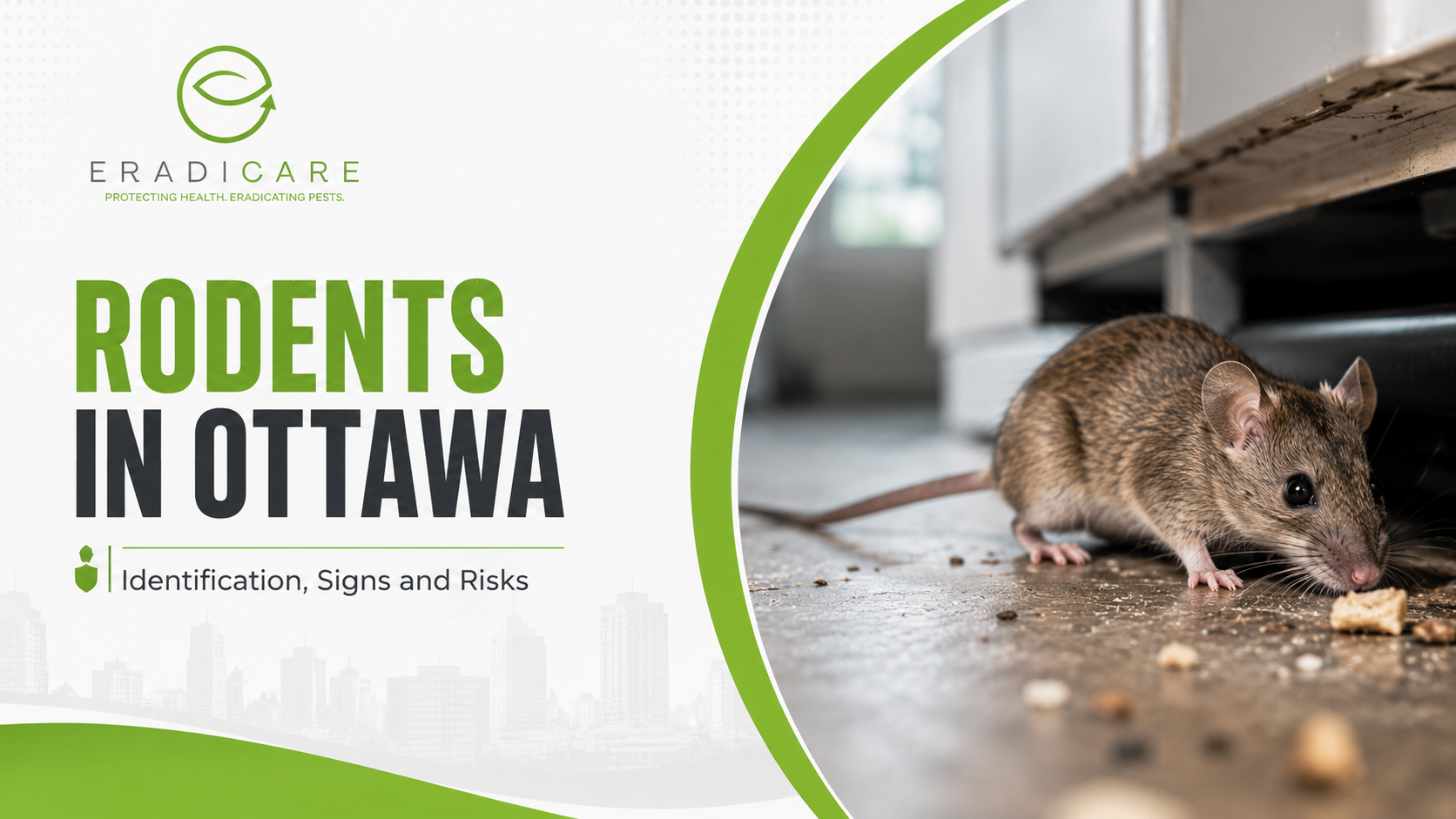
Finding droppings in a cupboard or hearing scratching behind a wall is often the first sign of a rodent problem. However, these signs do not immediately reveal whether you are dealing with mice or rats, where they are coming from, or how much of the property they are using.
Mice and rats cause most indoor rodent problems in Ottawa homes and buildings. The signs they leave behind, the locations of those signs, and the type of damage they cause can help you identify what is happening.
This guide explains how to identify common rodents in Ottawa, which signs to watch for, the risks they may create, and when you should consider a professional rodent assessment.
What Rodents Are Common in Ottawa?
Mice and rats cause most indoor rodent activity. Both can find shelter inside buildings, but their size, behaviour, droppings, and damage often look different.
House mice are small and usually stay in sheltered spaces close to food and nesting materials. You may find signs in kitchens, basements, garages, storage areas, and spaces behind appliances.
Rats are larger and often leave more obvious evidence of movement or gnawing. Property owners may notice activity around waste areas, garages, storage spaces, building exteriors, or other sheltered parts of a property.
A quick sighting does not always provide enough information to identify the rodent. Droppings, gnaw marks, nesting material, and repeated activity usually provide better clues.
How Can You Tell a Mouse From a Rat?
Size is the most obvious difference between a mouse and a rat. However, many people only catch a brief glimpse before the rodent disappears.
Droppings can provide another clue. Mouse droppings are generally smaller than rat droppings, although you should consider their size and location alongside other evidence rather than relying on them alone.
Both mice and rats gnaw materials. The scale of the damage and its location can help you build a clearer picture of the rodent moving through the property.
You should also pay attention to where you hear movement. Scratching behind kitchen cabinets, inside walls, above ceilings, or around the basement can help identify active areas, even when it does not confirm the species.
Accurate identification requires you to consider several signs together. If the evidence appears mixed or keeps returning, a pest inspection can help clarify which rodent is present.
What Are the Common Signs of Rodents in a Property?
You may never see the rodent itself. In many homes and buildings, people first notice droppings, scratching sounds, gnaw marks, damaged food packaging, or nesting material.
A single sign does not necessarily reveal the size of the problem. Fresh damage or evidence that continues appearing in the same area or across multiple locations deserves a closer look.
Rodent Droppings and Urine Signs
Droppings are one of the most recognizable signs of rodent activity. Check cupboards, spaces under sinks, areas behind appliances, basements, wall edges, and locations near stored food.
The location of the droppings matters. If they continue to appear after you clean or address an area, rodents may still be active nearby.
Rodent waste can create sanitation concerns, especially around food storage and preparation areas. Do not treat it like ordinary household dirt when you are unsure how to handle the affected area safely.
Scratching and Movement Sounds
Scratching, rustling, or movement inside a wall or ceiling can make the source difficult to locate. You may also hear activity behind cabinets or in other enclosed spaces.
These sounds often become more noticeable when the property is quiet. If the noise keeps returning, make a note of the location and time. That information can help during a rodent inspection.
Noise alone does not confirm the presence of mice or rats. Other animals and building issues can produce similar sounds, so check the surrounding area for physical evidence.
Gnaw Marks and Food Damage
Mice and rats chew materials while moving and feeding. You may notice damage to food packaging, cardboard, stored belongings, wood, or other materials.
Chewed food packages provide a particularly useful warning sign because they may reveal an accessible food source.
Do not focus only on the damaged item. Check nearby cupboards, shelves, appliances, and storage areas for droppings or other evidence of a regular feeding or travel area.
Nesting Materials and Hidden Activity
Rodents sometimes use shredded paper, damaged insulation, fabric, and other soft materials for nesting.
However, loose material alone does not prove that a nest is present. Check the surrounding space for droppings, gnaw marks, or repeated movement.
Basements, attics, garages, storage rooms, and areas behind stored belongings provide plenty of places for rodents to remain out of sight. As a result, a problem may go unnoticed until the signs become more obvious.
Where Do Rodents Hide in Ottawa Homes?
Rodents look for shelter near food or water. Kitchens, basements, garages, attics, storage rooms, and spaces behind appliances are sensible places to check when signs appear.
In the kitchen, inspect under sinks, behind the stove and refrigerator, and around food storage areas. Droppings or damaged packaging can help you determine where activity is concentrated.
Basements and utility areas may provide routes around pipes, wall openings, and building services. Garages can also offer shelter, particularly when rodents can easily reach boxes, pet food, bird seed, or other stored materials.
Attic and ceiling activity can be harder to investigate when the space is not easily accessible. If you keep hearing movement but cannot find visible evidence, note exactly where and when the sound occurs.
Remember that the place where you see a mouse may not be its nesting location. Rodents can travel between shelter, food, and water sources within the same property.
Why Do Rodent Problems Become More Noticeable in Ottawa’s Colder Months?
As temperatures drop, rodents may move indoors and use sheltered areas around buildings more frequently.
Fall gives Ottawa property owners a useful opportunity to check exterior building conditions. Inspect gaps around utility openings, garages, foundations, and other possible access areas before sustained winter weather arrives.
Rodent problems do not occur only during winter. Mice and rats can remain active indoors throughout the year when they have access to food, shelter, and entry points.
Nevertheless, seasonal changes help explain why a property that seemed quiet during summer may suddenly develop scratching sounds or droppings later in the year.
If pest problems return at similar times each year, Seasonal Pest Control Ottawa information can help explain how property conditions and seasonal changes may connect.
How Do Rodents Get Into Ottawa Homes and Buildings?
Rodents enter buildings through accessible gaps and openings. From inside the property, however, you may find it surprisingly difficult to identify the actual entry point.
Foundation gaps can give rodents access to sheltered interior areas. Openings around pipes, cables, and other utility penetrations also deserve attention when they connect exterior and interior spaces.
Inspect garage doors and the surrounding structure when you find activity inside a garage or nearby room. Depending on the location of the signs, exterior walls and roofline areas may also require attention.
Older Ottawa properties may have openings caused by previous repairs, renovations, or general building wear. Newer buildings are not automatically protected because rodents can still use any accessible route that leads toward food or shelter.
Finding a gap does not prove that rodents are using it. The suspected opening should match the signs and movement patterns found around the property.
Rodent Proofing Ottawa may offer the appropriate service path when building access conditions appear to contribute to recurring activity.
What Risks Can Rodents Create in a Property?
Rodents can create sanitation problems and damage materials. The seriousness of the concern depends partly on where the activity occurs and how established it has become.
Droppings, urine signs, or rodent activity near food storage and preparation areas require careful attention. Do not reseal packaging damaged by rodents and return it to the shelf.
Gnawing creates another concern. Rodents may damage packaging, stored belongings, insulation, wood, and other materials in the areas they use.
Electrical wiring may also become a property concern when rodents gnaw near cables. An appropriate professional should inspect any suspected electrical damage.
You should not diagnose health concerns from pest signs alone. Speak with an appropriate healthcare professional if you are worried about a specific illness or possible exposure.
From a pest control perspective, the main priorities are identifying the activity, locating the affected areas, and understanding the conditions that allow the problem to continue.
Are Rodents a Concern Around Children and Pets?
Yes. You should pay closer attention when rodent signs appear in areas used by children or pets.
A toddler spends time closer to floor level and may reach spaces that adults rarely touch. Dogs and cats may also investigate basements, garages, storage rooms, or areas behind furniture before anyone else notices rodent signs.
Check pet feeding areas carefully. Spilled food, open bags, and accessible bowls can provide a food source when rodents are already moving through the area.
When you find droppings, damaged packaging, or other evidence near a play area or pet feeding location, record exactly where the signs appeared and limit unnecessary contact with the affected space.
For broader treatment preparation and household safety questions, our guide to pet safe pest control in Ottawa explains what you should discuss with a pest control company before service.
Can You Deal With Rodents Yourself?
You may manage some small and clearly understood rodent problems with household pest control and prevention methods. The difficult part is determining whether the signs you found show the full extent of the problem.
Many people use traps as a DIY response. However, catching one rodent does not explain how it entered the building or confirm whether other rodents remain.
DIY control often becomes frustrating when fresh droppings continue to appear, scratching occurs in different areas, or sightings continue after repeated attempts.
Correct identification also matters. You should not automatically treat a mouse problem and a rat problem in the same way.
If you do not know which rodent is present, where it travels, or how it enters the building, a Pest Inspection Ottawa assessment can provide a clearer view of the activity and surrounding property conditions.
Professional help may also make sense when rodents affect food areas, commercial spaces, multiple units, or parts of a building that are difficult to inspect.
What Happens During a Professional Rodent Inspection?
A rodent inspection should answer three practical questions: what signs are present, where is the activity concentrated, and which property conditions may support it?
A technician may ask where you saw rodents, heard movement, found droppings, or noticed damage. Details about when the activity started and whether the same problem occurred before can also provide useful context.
The technician will choose inspection areas based on the signs you report. Relevant locations may include kitchens, basements, garages, storage spaces, utility areas, attics, and exterior parts of the building.
During the inspection, the technician may look for droppings, gnaw marks, possible nesting evidence, travel areas, accessible food, and potential entry conditions.
The goal involves more than choosing a place for a trap. The technician needs to understand both the rodent activity and the conditions around it before recommending an appropriate service approach.
When an inspection confirms active mouse or rat activity, Rodent Control Ottawa may provide the relevant service path.
Rodent Control vs Rodent Proofing: What’s the Difference?
Rodent control and rodent proofing address different parts of the same potential problem.
Rodent control targets active mouse or rat activity. The specific approach depends on the rodent species and the conditions found at the property.
Rodent proofing, also called exclusion, addresses building access. Its purpose is to identify gaps or openings that may allow rodents to enter.
These issues often overlap. When someone addresses active rodents without investigating entry conditions, part of a recurring problem may remain unexplained.
The opposite can also happen. Closing a suspected opening without understanding current activity does not explain what may already be happening inside the building.
The evidence should guide the approach. Some properties may need active rodent control, while recurring entry concerns may also justify a Rodent Proofing Ottawa discussion.
How Much Does Rodent Control Cost in Ottawa?
No single rodent control price applies to every Ottawa property.
The type of rodent activity, location of the signs, property layout, amount of visible evidence, and need for monitoring or follow-up can all affect the service scope.
Entry conditions may also influence the work. Rodent proofing addresses a different part of the problem than active rodent control and may require a separate service scope.
When comparing quotes, ask each company what the price includes. Two quotes may differ significantly because the companies propose different types or amounts of work.
Our guide to pest control cost in Ottawa explains the factors that can affect pricing and why quotes for similar-looking pest problems may vary.
How Can You Reduce the Risk of Rodents Returning?
Begin with the main things rodents use: food, water, shelter, and building access.
Store food in suitable containers and clean up spills and crumbs, particularly in areas where you have already found rodent signs. Store pet food and bird seed in ways that limit rodent access.
Manage waste properly and keep storage areas organized enough to spot new droppings, gnawing, or nesting material. Heavy clutter can make fresh activity much harder to notice.
Check active areas for leaks and recurring moisture. You may need separate property maintenance to correct any water problems.
Outside the building, inspect foundations, utility penetrations, garage doors, and other openings that appear relevant to the activity you found.
After rodent control, continue checking the locations where signs previously appeared. Fresh droppings, new gnaw marks, or returning scratching sounds may indicate that activity still requires attention.
Prevention cannot guarantee that rodents will never approach a building. Instead, the practical goal is to reduce the food, shelter, and access conditions that can support a recurring problem.
What About Rodents in Ottawa Rental and Commercial Properties?
Rodent problems in rental, multi-unit, and commercial buildings can be harder to trace because rodents may move through connected or shared spaces.
A report from one apartment may not reveal the rodent’s full movement pattern. Inspectors may also need to consider utility routes, storage rooms, waste areas, and common spaces.
Restaurants and food-related businesses should pay close attention to signs around storage areas, food preparation spaces, waste locations, and delivery points. In other commercial properties, activity may appear in stockrooms, staff areas, or building service spaces.
Property managers should record where people report signs and whether similar evidence appears in multiple locations. A clear activity history can make the problem easier to investigate.
Commercial Pest Management may offer a more suitable service path when rodent activity affects a business, managed property, or building with multiple occupied areas.
When Should You Call a Rodent Control Professional?
Consider a professional rodent assessment when the signs keep returning, you cannot identify the pest, or the source of the activity remains unclear.
Repeated droppings, ongoing scratching, fresh gnaw damage, or multiple sightings provide practical reasons to investigate further.
Professional help may also make sense when rodents are active around food, across multiple units, inside a commercial property, or in areas that are difficult to inspect safely.
You do not need to prove that a large infestation exists before asking for help. When repeated DIY attempts fail to explain why the activity continues, understanding the pest and the surrounding property conditions becomes the more useful next step.
Frequently Asked Questions About Rodents in Ottawa
Is one mouse a sign of an infestation?
One mouse does not reveal the full size of a rodent problem. Look for droppings, gnaw marks, scratching sounds, and further sightings before drawing conclusions about the level of activity.
Why do I hear scratching in my walls at night?
Rodents can create scratching or rustling sounds in hidden spaces, but noise alone does not confirm the presence of mice or rats. Note where and when you hear it, then check nearby areas for physical signs.
How can I tell mouse droppings from rat droppings?
Mouse droppings are generally smaller than rat droppings. Consider their size, location, and the other signs around them together when identifying rodent activity.
Can mice and rats live in the same property?
Different types of rodent activity can occur around the same property. However, one sighting or dropping does not provide enough evidence to assume that both mice and rats are present. Base your identification on the evidence you find.
Why do rodents keep coming back to my house?
Recurring activity may result from accessible food, shelter, or building entry conditions. When rodents keep returning, identifying the source provides more value than responding to each sighting separately.
Do rodents leave a noticeable smell?
Rodent activity can sometimes produce unusual odours, particularly in enclosed or heavily affected spaces. However, smell alone does not provide enough information to identify the pest.
Can my dog or cat detect rodents before I do?
Pets may react to movement or sounds that people have not noticed. If a pet repeatedly focuses on the same wall, appliance, or storage area, check the surrounding space for physical rodent signs.
Should I clean up rodent droppings myself?
Treat rodent droppings as a sanitation concern rather than ordinary household dirt. Seek appropriate guidance before disturbing the waste if you are unsure how to handle the affected area.
Are rodents active during the day?
Rodents sometimes appear during daylight hours. However, the time of a sighting alone does not confirm the size or severity of the problem.
How quickly can a rodent problem get worse?
The speed of a rodent problem can vary depending on the pest and the conditions inside the property. Fresh signs that continue to appear provide a better reason to investigate than waiting for a specific amount of time to pass.
Do traps solve a rodent entry problem?
Traps may catch rodents that interact with them, but they do not identify or correct an entry route. Recurring problems may require attention to both active rodent activity and building access conditions.
Should I call pest control if I only saw one rodent?
One sighting gives you a reason to check the property more closely, particularly when you also find droppings, damage, or hear repeated movement. If the signs continue or the source remains unclear, a professional assessment may help.
Get Help With a Rodent Problem in Ottawa
If you have found droppings, heard repeated scratching, noticed gnaw damage, or seen a mouse or rat, start by paying attention to where the activity occurs.
Signs that keep returning, entry points you cannot identify, or repeated DIY attempts that fail to explain the problem provide good reasons to inspect the property more closely.
For help understanding a suspected rodent problem and choosing the appropriate service path for your property, call Eradicare Pest Control at 613-366-4444.