

Biology
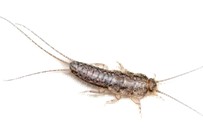
Silverfish (Lepisma saccharinum) are primitive, wingless insects known for their distinct teardrop shape and silvery-grey scales. Their flat bodies allow them to slip into tight cracks and crevices. They have long antennae, and three bristle-like tails at the end of their abdomen. Silverfish are nocturnal and extremely fast, often escaping sight before people realize they’re there.
Size: 12 to 15 mm long.
Colour: Brown, grey or silver.
Description: Silverfish are quick moving, flat, carrot-shaped insects with no wings. Their scales are silvery, and they have three tail bristles.
Order/Family: Zygentoma/Lepismatidae.
Scientific Name: Lepisma saccharina.
Silverfish belong to a group of ancient insects that have changed very little in 400 million years — making them survivors from prehistoric times.
- Silverfish can survive a full year without food, as long as water is available to them.
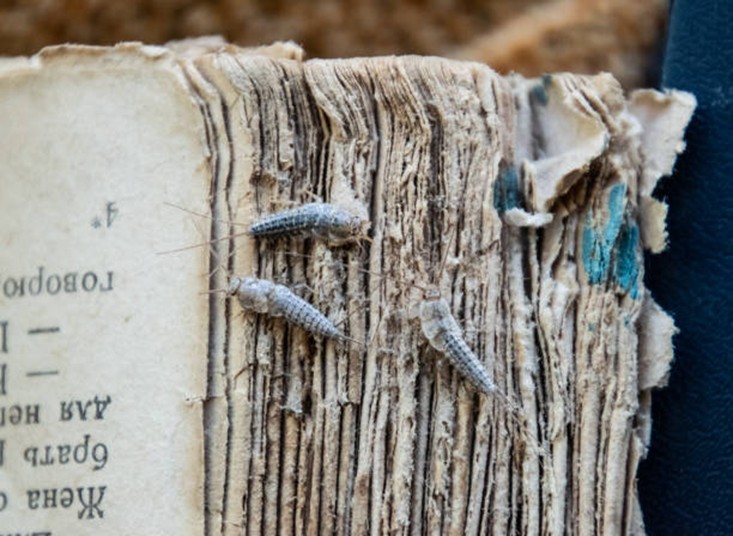
- They love to eat the glue in book bindings, making libraries and home bookshelves ideal targets.
- Silverfish can chew holes in cotton, linen, and even synthetic fabrics if food is scarce.
- Unlike most insects, silverfish continue to molt throughout their adult lives, sometimes up to 50 times.
- They can live 8 years. That’s up to 8 years of damage to your home, stored goods, and peace of mind from a single bug.
Behaviour, Habitat & Diet
Behaviour
Silverfish are shy, light-averse, and move quickly when disturbed. They are typically active at night and remain hidden during the day. They do not bite or sting, but they can damage property. Their movements are unpredictable, often wriggling in a fish-like motion which gives them their name.
Habitat
Silverfish can be found throughout the structure of a home, from basements and bathrooms to attics, ceilings, and even behind shingles. They prefer warm, humid areas and hide in dark crevices, behind baseboards, under flooring, and inside storage boxes, especially where moisture builds up.
Diet
Silverfish feed on starches, dextrin, and cellulose. They consume books, wallpaper, cardboard, fabrics, dead insects, and even dried meats or leather. When food is scarce, they may also chew on synthetic materials.
Life Cycle
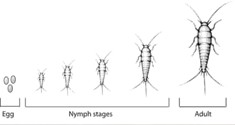
Silverfish undergo a simple metamorphosis (egg → nymph → adult). Warm, humid conditions speed up development, while dry or cold conditions slow it down dramatically.
Egg Stage
- Females lay 1–3 eggs per day.
- Eggs hatch in approximately 43 days.
- Development speed depends on temperature and humidity.
Nymph Stage
- Nymphs resemble small adults.
- Grow gradually through multiple molts.
Adult Stage
- Continue molting even after reaching maturity, unusual among insects.
- Adults live 2 to 8 years, especially in moist environments.
Female silverfish lay 1–3 eggs per day, usually hidden in cracks, behind objects, or in damp spots. Eggs hatch in about 43 days, depending on temperature and humidity.
Silverfish Crawling in the Shadows? Damage to Books, Wallpaper, and Clothes?
Eradicare’s licensed technicians will inspect your property, identify silverfish hotspots, eliminate the pests completely, and seal entry points to keep them out for good.
FREQUENTLY ASKED QUESTIONS ABOUT SILVERFISH
They may be small, but silverfish silently destroy books, wallpaper, clothes, and even dry food. If you’re seeing one, there are likely many more hiding out of sight doing damage while you sleep.
Yes. Over time, they can ruin valuable belongings, contaminate food, and leave behind allergens. The worst part? Most infestations go unnoticed until the damage is done.
One silverfish often means an active and growing infestation. They breed in hidden cracks and can live up to 8 years, causing long-term issues if not treated quickly.
Temporary at best. DIY products rarely reach the hidden nesting sites, and silverfish are excellent at avoiding surface treatments. For real results, you need professional-grade solutions.
Our technicians use targeted treatments and know exactly where silverfish hide. We don’t just kill the visible pests; we eliminate the source. Fast. Thorough. Reliable.
Yes. Eradicare uses safe, Health Canada-approved treatments that are tough on pests but mindful of your loved ones. We also give clear aftercare guidance to protect your space.