

Biology
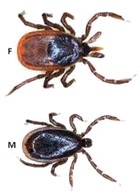
Ticks are blood-feeding arachnids with eight legs (after the larval stage). They don’t jump or fly, instead, they crawl and use a behavior called questing to latch onto passing hosts. Once attached, they can feed for several days. Some species are known to transmit serious diseases, such as Lyme disease, anaplasmosis, and Rocky Mountain spotted fever.
Size: 1 to 5 mm (unfed); up to 10 mm when engorged.
Colour: Brown, reddish-brown, or black depending on the species and feeding status.
Scientific Classification: Arachnida / Ixodida.
Common Species in Canada:
- Blacklegged Tick (Ixodes scapularis).
- American Dog Tick (Dermacentor variabilis).
Lone Star Tick (Amblyomma americanum) – increasingly reported.
Blacklegged tick is spreading fast across Canada, bringing Lyme disease into more urban and suburban areas.

- Ticks are arachnids, like spiders and mites, not insects.
- A single female tick can lay up to 5,000 eggs in one batch.
- Ticks can transmit over 15 diseases, including Lyme disease and anaplasmosis.
- Ticks can detect you from 10 meters away by sensing your body heat and carbon dioxide.
- They don’t jump or fly, ticks wait on grass tips and grab onto passing hosts.
- Only a 24–48-hour bite window is enough for an infected tick to transmit illness.
Behaviour, Habitat & Diet
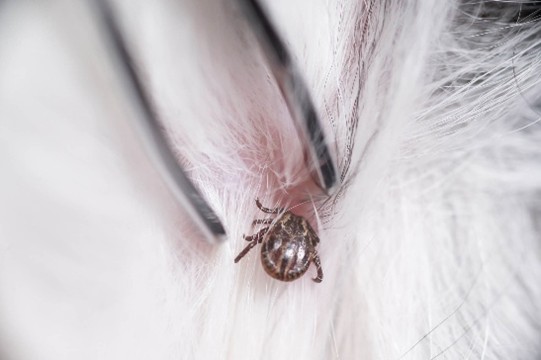
Behaviour
Ticks are silent parasites that detect hosts through body heat, movement, and carbon dioxide. After feeding, they drop off to digest, molt, or lay eggs. They can survive months without feeding and may transmit diseases like Lyme within 24–48 hours of attachment.
Habitat
Ticks thrive in moist, shaded areas like tall grass, leaf piles, shrubs, and forest edges. Around homes, they hide in dog runs, woodpiles, under decks, and along fences. They’re most active from spring to fall but may emerge during warm winter days.
Diet
Ticks feed solely on blood. Larvae feed on birds and small mammals, while nymphs and adults target larger animals, including humans. Each blood meal supports their development to the next life stage.
Once on a host, ticks crawl to hidden, warm spots like scalp, armpits, or groin to feed unnoticed.
Life Cycle
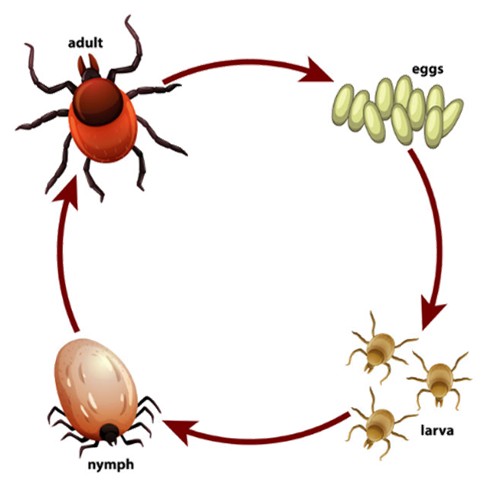
Ticks go through four stages over 2 to 3 years, depending on species and climate:
Egg Stage
- Females lay up to 5,000 eggs on the ground.
Larva Stage
- 6 legs; feeds once, then molts.
Nymph
- 8 legs; feeds again.
- Most likely to transmit disease to humans.
Adult
- Seeks a final host to feed, mate, and lay eggs.
Ticks overwinter in leaf litter or soil and become active again in spring.
Tick populations can explode rapidly because each life stage needs only one blood meal to develop and reproduce.
Ticks Lurking in the Grass? Don’t Let Them Take Over Your Yard.
Eradicare’s licensed technicians will inspect your property, find and remove ticks, treat hotspots, and seal entry points to keep them out.
FREQUENTLY ASKED QUESTIONS ABOUT SPIDERS
Absolutely. Ticks transmit serious diseases like Lyme disease, anaplasmosis, and Rocky Mountain spotted fever. A single bite can infect you or your pet within 24–48 hours.
Ticks hitch rides on wildlife, pets, and even on your clothing. They thrive in tall grass, leaf litter, and shady areas, even in well-maintained yards.
Yes. If your pet brings a tick inside, it can drop off, lay thousands of eggs, and start an infestation in carpets, cracks, or bedding.
Ticks are stealthy, they’re tiny, silent, and bite painlessly. By the time you notice symptoms, the damage may already be done.
Temporary at best. Most over-the-counter solutions don’t kill ticks at all stages or address nesting areas. That’s where Eradicare comes in.
We inspect, treat, and eliminate ticks at the source. Our licensed technicians apply targeted treatments, remove tick habitats, and seal potential entry points.
Because one tick can lead to thousands. The earlier we intervene, the easier and more affordable it is to prevent infestations and protect your loved ones.