

Biology
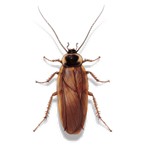
Cockroaches belong to the insect order Blattodea, with more than 3,500 known species worldwide. In Canada, the most common invaders include the German, American, Oriental, and Brown-Banded cockroaches.
These pests are drawn to warm, humid environments with easy access to food, water, and shelter, making homes, restaurants, and businesses ideal targets. Once inside, they quickly become a serious concern.
Cockroaches contaminate surfaces and food with their droppings, saliva, and shed skins, spreading bacteria and triggering allergies. Because they’re nocturnal and skilled at hiding, infestations often go unnoticed until they’ve multiplied significantly, making DIY removal extremely difficult.
They’re nearly impossible to kill without professional help. Cockroaches develop resistance to common sprays and DIY treatments.
- See a cockroach? There could be hundreds hiding in your walls.
- A single female can produce 30,000+ offspring in a year.
- They spread 30+ dangerous bacteria, including E. coli and Salmonella.
- Their droppings and shed skins can trigger asthma and allergies, especially in kids and seniors.
- In severe infestations, some cockroaches have been known to bite humans while they sleep.
Behaviour, Habitat & Diet
Behavior
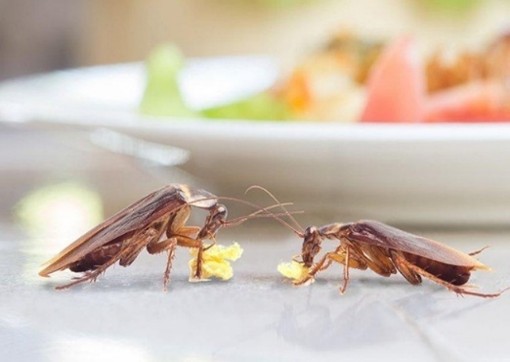
Cockroaches are primarily nocturnal, hiding during the day and becoming active at night to forage for food and water. They are fast movers and excellent at squeezing into tiny cracks and crevices. Cockroaches are highly adaptable and resilient, often forming large colonies that grow rapidly under favorable conditions.
Habitat
Cockroaches thrive in warm, dark, and humid environments. They commonly infest kitchens, bathrooms, basements, and anywhere food and moisture are easily accessible. Indoors, they hide in wall voids, behind appliances, under sinks, inside cupboards, and in cracks along floors and walls.
Diet
Cockroaches are omnivorous scavengers with a wide diet. They feed on leftover food scraps, grease, sweets, paper, glue, and even decaying matter. Their ability to eat nearly anything, including soap and hair, helps them survive in diverse environments and makes them difficult to eliminate.
Cockroaches contaminate everything they touch cutlery, toothbrushes, food, and kitchen surfaces. Spreading bacteria and allergens that trigger allergies, asthma, and serious health risks.
Life Cycle
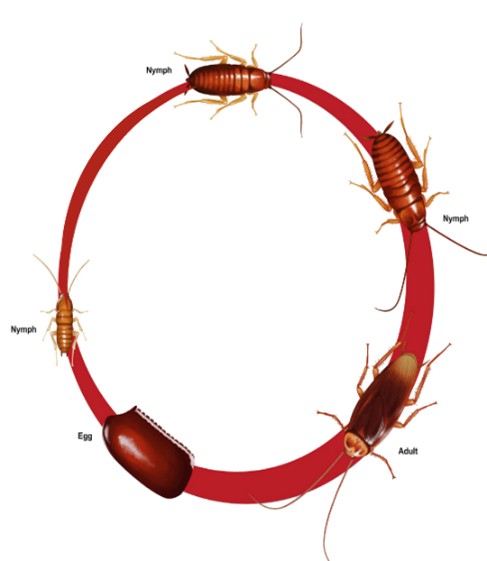
Cockroaches’ fast reproduction and growth cycles make infestations difficult to control without professional treatment.
Eggs
Female cockroaches produce protective egg cases called oothecae, each containing 10 to 50 eggs depending on the species. These egg cases are usually hidden in warm, sheltered locations to protect them from predators and environmental hazards.
Nymphs
After hatching, young cockroaches called nymphs emerge. Nymphs look like small, wingless adults and undergo several molts, shedding their exoskeleton multiple times as they grow.
Adults
Once fully matured, cockroaches become adults capable of reproduction. Adults vary in lifespan depending on the species but can live from several months up to over a year.
Even a single pair of cockroaches can multiply into thousands within months, especially in warm, food-rich environments like homes and businesses, where they breed year-round.
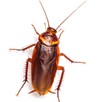
American Cockroach
Size: 28 to 43 mm in length.
Colour: Reddish-brown to mahogany, with a yellow band behind the head.
Habitat: Habitat: Found outdoors in warm, moist areas like flowerbeds, mulch, and sewer systems; indoors in basements, bathrooms, and kitchens.
Behaviour: Can fly; highly active in warm, humid environments. They are scavengers and move quickly when disturbed. Prefer dark, undisturbed areas.
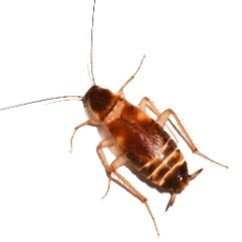
Brown-Banded Cockroach
Size: 10 to 14 mm long in length.
Colour: Light brown with two distinctive tan bands across the wings and abdomen.
Habitat: Warm, dry indoor locations like ceilings, cabinets, electrical outlets, and behind picture frames.
Behaviour: Fire ants are highly protective over the nests and will attack people and animals. Their sting can be painful, it feels like a wasp sting.
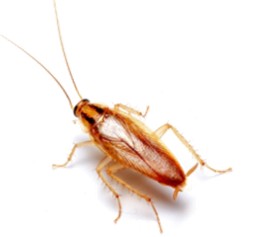
German Cockroach
Size: 13 to 16 mm long in length.
Colour: Light brown to tan with two dark stripes on the back just behind the head.
Habitat: Cool, damp places such as crawl spaces, drains, basements, porches, and sewer systems.
Behaviour: Extremely fast breeders and difficult to control. Nocturnal and prefers warmth, food, and humidity. Often hides in cracks, appliances, and wall voids.
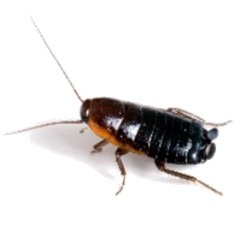
Oriental Cockroach
Size: 25 to 32 mm in length.
Colour: Shiny black to dark reddish-brown.
Habitat: Cool, damp places such as crawl spaces, drains, basements, porches, and sewer systems.
Behavior: Slower than other species. Cannot climb smooth vertical surfaces. Active mostly at night and often enters homes through plumbing or foundation gaps.
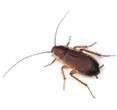
Wood Cockroach
Size: ~25 mm in length.
Colour:
Brown, with a flattened body.
Habitat: Lives outdoors under logs, bark, woodpiles, and leaf litter; occasionally enters homes during warmer months.
Behaviour: Attracted to lights at night. Unlike other species, they are not shy and will wander in open areas. They do not establish infestations indoors.
Don’t Wait For A Minor Issue To Become A Major Problem Contact Us Today To Reclaim Your Home
Our licensed professionals will inspect your home, eliminate cockroaches hiding in kitchens, bathrooms, and wall voids, and put preventative measures in place to keep them out for good.
FREQUENTLY ASKED QUESTIONS ABOUT COCKROACHES
Yes. Seeing even a single cockroach could mean many more are hiding. Cockroaches are nocturnal and avoid light, so if one is visible, it’s likely a sign of a larger infestation.
Over-the-counter products rarely eliminate the root of the problem. Cockroaches hide deep in walls, behind appliances, and in cracks. Only professional-grade treatment can fully eradicate them.
Absolutely. Cockroaches spread bacteria like E. coli and Salmonella, contaminate food, and trigger allergies and asthma, especially in children and seniors.
Very fast. A single female German cockroach can produce over 30,000 offspring in a year, turning a minor problem into a major infestation quickly.
We don’t just spray and leave. Our experts inspect thoroughly, treat infestations at the source, and apply preventative measures to ensure they don’t come back.