

Biology
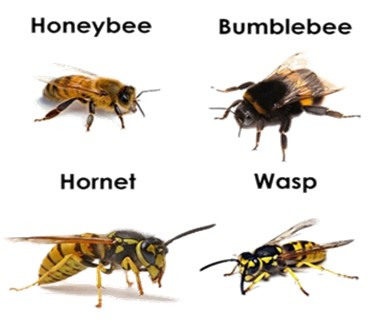
Bees, wasps, and hornets are part of the Hymenoptera order and develop through four life stages: egg, larva, pupa, and adult. Although similar in structure, they differ significantly in appearance and ecological roles. Bees are important pollinators with hairy bodies, while wasps and hornets have smooth, narrow-waisted bodies built for predation and defense.
In Canada, insect activity peaks between April and September, with the highest risk in late summer as colonies grow larger and compete more aggressively for food. The primary insects that pose a risk include:
- Bees: Usually, non-aggressive but sting when threatened.
- Wasps: Especially yellow jackets and paper wasps, the most frequent stings, highly aggressive.
- Hornets: Highly territorial and quick to defend their nests.
Bees, wasps, and hornets can sting multiple times and become highly aggressive if their nest is disturbed. Their biology drives a strong swarm defense, making professional removal the safest option.
- Bees can recognize human faces using pattern recognition.
- A single bee colony visits over 225,000 flowers daily, crucial for pollination.
- Only female bees can sting; their stinger is a modified egg-laying organ.
- Hornets can fly up to 25 mph, making them among the fastest flying stinging insects.
- Wasps act as natural pest controllers, feeding on harmful insects like caterpillars and flies.
- One teaspoon of honey requires a lifetime work of about 12 bees.
Behaviour, Habitat & Diet
Canada hosts a variety of bee species, including honeybees, bumble bees, and carpenter bees. Bees play a crucial role in pollination and ecosystem health.
Behaviour
- Bees are generally non-aggressive and sting only when provoked.
- Wasps and hornets are more aggressive and can sting multiple times, especially in late summer.
- Hornets are larger with more painful stings. Stings may cause swelling or allergic reactions.
- Social species live in colonies, while solitary bees like carpenter bees nest alone.
- Bees nest in hives, tree hollows, or burrows in wood or soil.
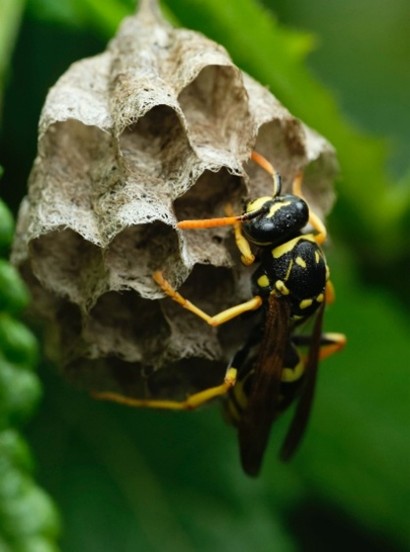
- Wasps build papery nests under eaves, in attics, or underground.
- Hornets create large, enclosed nests in trees, shrubs, or wall voids.
- Bees feed on nectar and pollen.
- Wasps and hornets consume nectar but also prey on insects to feed their larvae, making them both scavengers and predators.
Habitat
Diet
In Canada, bees, wasps, and hornets are active from April to September, with aggression peaking in late summer.
Life Cycle
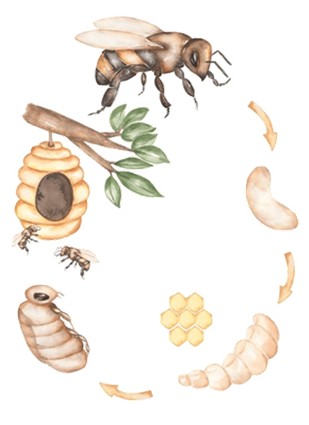
Bees, wasps, and hornets undergo complete metamorphosis with four stages:
Egg Stage
- Queens lay fertilized eggs (females) and unfertilized eggs (males) in individual nest cells.
- Eggs hatch within a few days, depending on species and temperature.
- Eggs hatch into soft, legless larvae.
- Bee larvae are fed pollen and nectar.
- Wasp and hornet larvae are fed chewed-up insects and protein by workers.
- Larvae grow rapidly and depend entirely on adult care.
- Larvae enter pupal stage by spinning cocoons or being sealed in cells.
- Major transformation occurs, developing wings, legs, and adult features.
- Duration varies, faster in warm weather.
- Workers: forage, care for the young, defend the nest.
- Males: mate and die shortly after.
- Queens: lay eggs and lead colony development.
Larva Stage
Pupa Stage
Adult Stage
Bees can nest inside walls or ceilings, causing hidden honeycomb buildup that leads to structural damage and attracts other pests like ants and rodents.
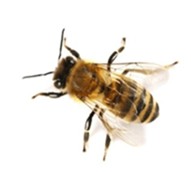
Bees
Size: 11 to 25 mm in length.
Colour: Yellow and/or black.
Habitat: Social bees build hives, often in hollow trees, man-made boxes, or wall cavities. Solitary bees nest in soil, wood tunnels, or plant stems.
Behaviour: Most bees are non-aggressive and sting only when threatened. Social species like honeybees and bumble bees live in colonies, while solitary bees like carpenter bees nest alone.
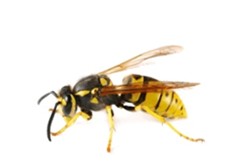
Wasps
Size: 13 to 40 mm in length.
Colour: Yellow, black, white, reddish (different wasp species have different markings).
Habitat: Yellowjackets commonly nest underground in abandoned burrows, under rocks, or inside walls. Paper wasps build, umbrella-shaped nests hanging from trees, eaves, or playground equipment.
Behaviour: Wasps can be territorial and more aggressive, especially yellow jackets in late summer when food is scarce. They can sting repeatedly and may bite if provoked.
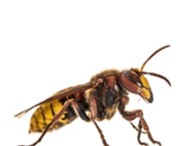
Hornets
Size: 12 to 30 mm in length.
Colour: Black, white, yellow, reddish-brown.
Habitat:
Hornets typically build large paper nests in trees, shrubs, attics, or wall voids. Some species nest underground.
Behaviour:
Hornets are highly protective of their nests and can be very aggressive if disturbed. Their sting is often more painful than that of smaller wasps.
Take the Sting Out of Summer with Eradicare’s Wasp, Hornet & Bee Control
Don’t risk painful stings or hidden nests near your home. Call Eradicare today! Our licensed experts will inspect your property, safely remove nests, and help prevent future invasions
FREQUENTLY ASKED QUESTIONS ABOUT BEES, WASPS, & HORNETS
If you notice a steady stream of wasps, hornets, or bees heading to the same spot around your roofline, wall cracks, trees, or deck, it’s a strong sign there’s a nest. Don’t wait until it becomes a full-blown problem. Eradicare offers fast inspections and expert removal.
Yes. Especially when provoked. These insects can sting multiple times and often swarm when their nest is threatened. For those with allergies, it can be serious or even life-threatening. Play it safe and let Eradicare handle it.
While bees are less aggressive, they can still sting, and a hidden hive near your home can put your family at risk. Some bees even damage wood structures. If you suspect a hive nearby, call us to assess and guide you safely.
Don’t go near it, block it, or try to spray it, this can trigger an aggressive swarm. Instead, call Eradicare. We use protective equipment and proven techniques to remove nests quickly, safely, and discreetly.
They can, especially if entry points or attractants are left untreated. That’s why Eradicare not only removes the nest but also helps you keep them from coming back with expert advice and prevention tips.
During peak season (April to September), our team is on standby. We offer prompt, priority service for active nests and emergencies. Don’t wait, call us today for peace of mind.